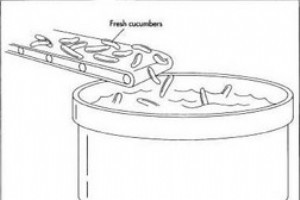
Industrial manufacturing
Automation Control System


Sociologists at Cambridge and Salford universities have found that working helps mental health, but apparently the optimal amount of work a week is eight hours. The surveys are encouraging. According to a survey from Ricoh Europe, 57% of European workers b

RPA: the best and worst Over the last year, organisational understanding of robotic process automation (RPA) has come a long way. The process has demonstrated that automation is possible and can drive significant positive business outcomes. During this tim
North America dominated the RPA software market, with a 51% share in 2018 RPA software revenue grew 63.1% in 2018 to $846 million, making it the fastest-growing segment of the global enterprise software market, according to Gartner. Gartner expects robotic

Employees today struggle to perform under the weight of mind-numbing, repetitive work, maybe solving that problem is more of an issue than fears about jobs and automation The Economist Intelligence Unit (EIU) has published a report sponsored by RPA company

Image credit: Marc Nozell -- https://www.flickr.com/photos/marcn/ Another day another report, this time it is from Oxford Economics predicting that 20m manufacturing jobs around the world could be replaced by robots by 2030. Meanwhile, Andrew Yang US presi

In the UK, the share of business processes currently being automated is being dominated by IT operations (67%), followed by administrative work and office management (60%) and customer service (58%). The Economist Intelligence Unit (EIU) has published a re

When looking specifically at respondents that perform back-office work, the desire for automation around data-related tasks is significant: 40% of U.S. back-office employees and 42% of UK back-office employees said RPA would be most beneficial for accurately processing d

As RPA initiatives advance in an organisation, it moves from automating a simple task to large and complex processes. Robotic process automation (RPA) has become a very common name amongst digital service providers (DSPs) and all of them have seen its bene

The notion of RPA was formed after an automation solution was designed for the banking sector, to address the inefficiencies of “human middleware”. This is where human workers perform repetitive tasks, in place of interoperability and integration between enterprise-wide
Is RPA overhyped, a scalable solution or a bandaid? Are decision engines the future? You hear it often enough. RPA is overhyped. It is like a bandaid. Now Information Age has spoken to one business consulting expert who has argued that decision engines r

This article will look at some of the ways in which European businesses have overcome these barriers to RPA and unlock its true value. Robotic Process Automation (RPA) is moving into the mainstream. Gartner estimated that global RPA expenditure would reach

Mesmer is headquartered in Palo Alto, California. RPA startup Mesmer has today announced its official launch as well as a $15m Series A round led by Intel Capital, with participation from True Ventures. Mesmer is founded by the Zenprise team that built and

AI-based tech advancements are making intelligent automation even more intelligent: The term ‘intelligent automation’ likely brings to mind self-driving cars. In reality, examples of intelligent automation are already all around us—pervasive in

In its report, Gartner examines market forces and the leading enterprise vendors for RPA software. Given that RPA is being adopted so rapidly by enterprises, it’s estimated to reach $2.4bn by 2024, some might say it’s about time Gartner release
With Micro Focus RPA, we augmented our core capabilities to be purpose built for RPA and we believe our innovations in making automation more resilient to change will deliver a lower TCO compared to existing solutions. -- Raffi Margaliot, Micro Focus GM for application d

Intelligent automation is the next step up from RPA, and startups need to embrace it. Automation is now at the forefront of digital transformation for enterprises across the world. Every organisation is looking for ways to incorporate automation capabiliti

The three pillars of scaling intelligent automation Scaling intelligent automation is proving more difficult than anticipated, says Chris Huff, three pillars, involving process, technology and people are key. By 2020, more than 70% of enterprises will have

AI is close to reaching an understanding of semantics as the next step in its evolution AI is a misnomer, or so it is often suggested. The first letter — artificial — is about right. As for the second word — well, there is nothing intelligent about it. Tak

Not everyone in RPA knows what a ‘good’ process is. Some are developed with little-to-no business benefits or built with complex logic destined to cause problems later down the line. When Benjamin Franklin said “an ounce of prevention is worth a pound of c

Will 2020 be a breakout year for scaling intelligent automation? According to a study from Deloitte, 2019 saw a doubling in the number of companies applying intelligent automation — that’s technologies such as robotics process automation, natural language
Automation Control System