



Understanding Electron Tubes: Components and Functionality
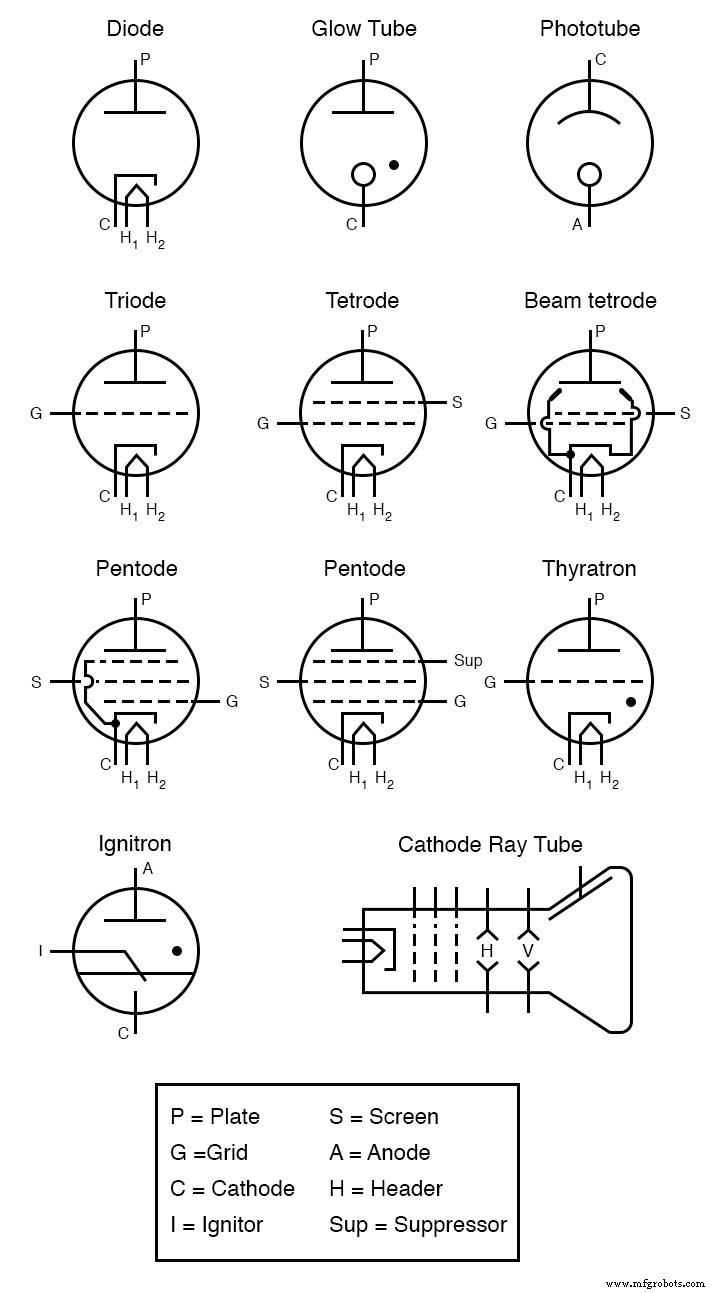
Electron tubes, or vacuum tubes, form the backbone of many legacy and high‑end audio and radio systems. Their operation hinges on a handful of carefully engineered electrodes that control electron flow.
- Cathode: The heated electrode that emits electrons through thermionic emission.
- Anode: A high‑potential electrode that attracts electrons emitted by the cathode.
- Grid: The control electrode whose variable potential modulates the electron current between cathode and anode.
- Filament: In indirect‑heating designs, the filament heats the cathode without direct electrical connection, allowing the cathode to operate at potentials above ground and enabling parallel filaments in a single device.
- Control grid: Maintained negative relative to the cathode, it regulates electron flow into the anode.
- Screen grid: Held at a fixed positive potential below the anode, it shields the control grid from the anode, improving performance; it is decoupled to ground via a capacitor for effective screening.
- Suppressor grid: In pentodes, this low‑voltage grid (often tied to the cathode) creates a negative potential region between the screen grid and the anode, suppressing secondary emission and eliminating the tetrode kink while enabling high gain and high‑frequency operation.
Integrated Circuits: Fundamentals of Digital Logic Gates
Explore the Periodic Table – Landscape View
Industrial Technology
- Understanding Gas Discharge Tubes: From Lightning to Modern Thyristors
- A Primer on Vacuum (Electron) Tubes: Foundations of Modern Electronics
- Beam Power Tubes: Enhancing Efficiency with Electron Beam Focus
- Combination Tubes: Merging Multiple Functions into a Single Glass Envelope
- Gas‑Filled Ionization Tubes: Principles, Types, and Applications
- Display Tubes: From CRTs to Cat‑Eye Indicators
- Microwave Tube Technology: From Klystrons to Magnetrons
- Tubes versus Semiconductors: When Vacuum Tubes Still Outshine Solid‑State Devices
- Conventional vs. Electron Flow: What Engineers Use and Why
- Gold Nanoparticles Boost Electron Transport in PF‑NR2 Cathode Interface for High‑Performance iPLEDs