



Understanding Amplifier Gain: Voltage, Current, and Power
The Voltage Gain
Amplifiers are designed to increase the magnitude of an input signal. The ability to quantify this increase is expressed as the gain, the ratio of output to input magnitude. Whether you’re comparing power, voltage, or current, the gain is a unitless figure that tells you how many times the input has been amplified.
In engineering notation, gain is represented by the capital letter A.
Calculating Voltage Gain
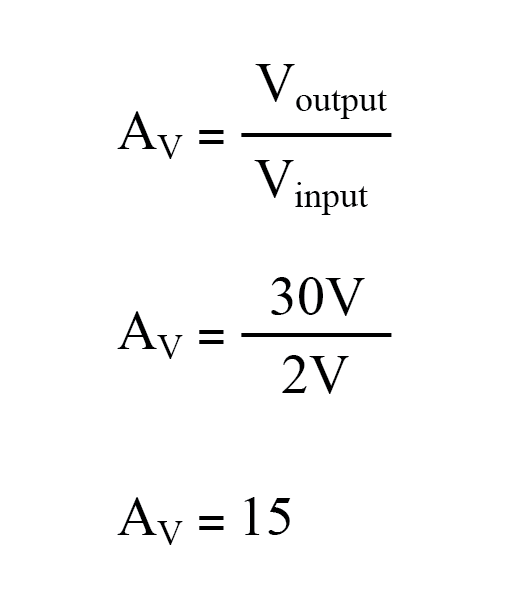
Consider an amplifier that receives an AC voltage signal of 2 V RMS and delivers 30 V RMS at its output. The voltage gain is calculated as 30 V ÷ 2 V, yielding a gain of 15:
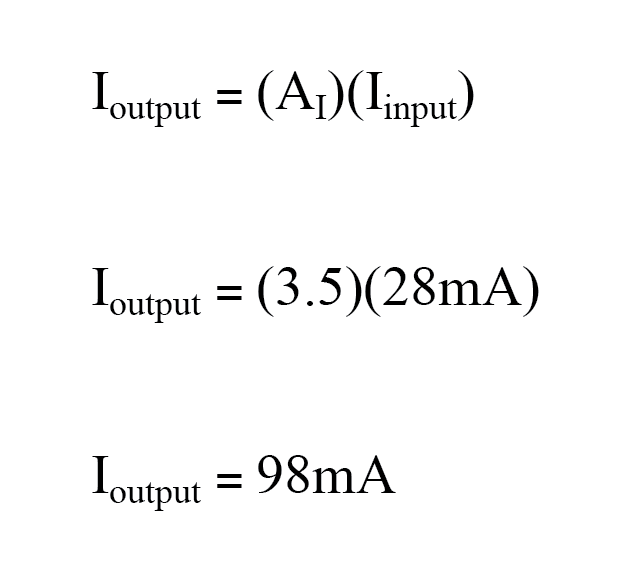
Conversely, if an amplifier’s AC current gain is 3.5 and it receives an AC input of 28 mA RMS, the output current is 3.5 × 28 mA = 98 mA:
These examples explicitly reference AC signals because amplifiers often behave differently with AC versus DC inputs. In many circuits, the device is optimized to amplify changes or variations—i.e., the AC component—while treating a steady DC level differently. Therefore, it’s essential to identify whether you’re working with AC or DC when calculating or applying gain.
Types of Electrical Amplifier Gain
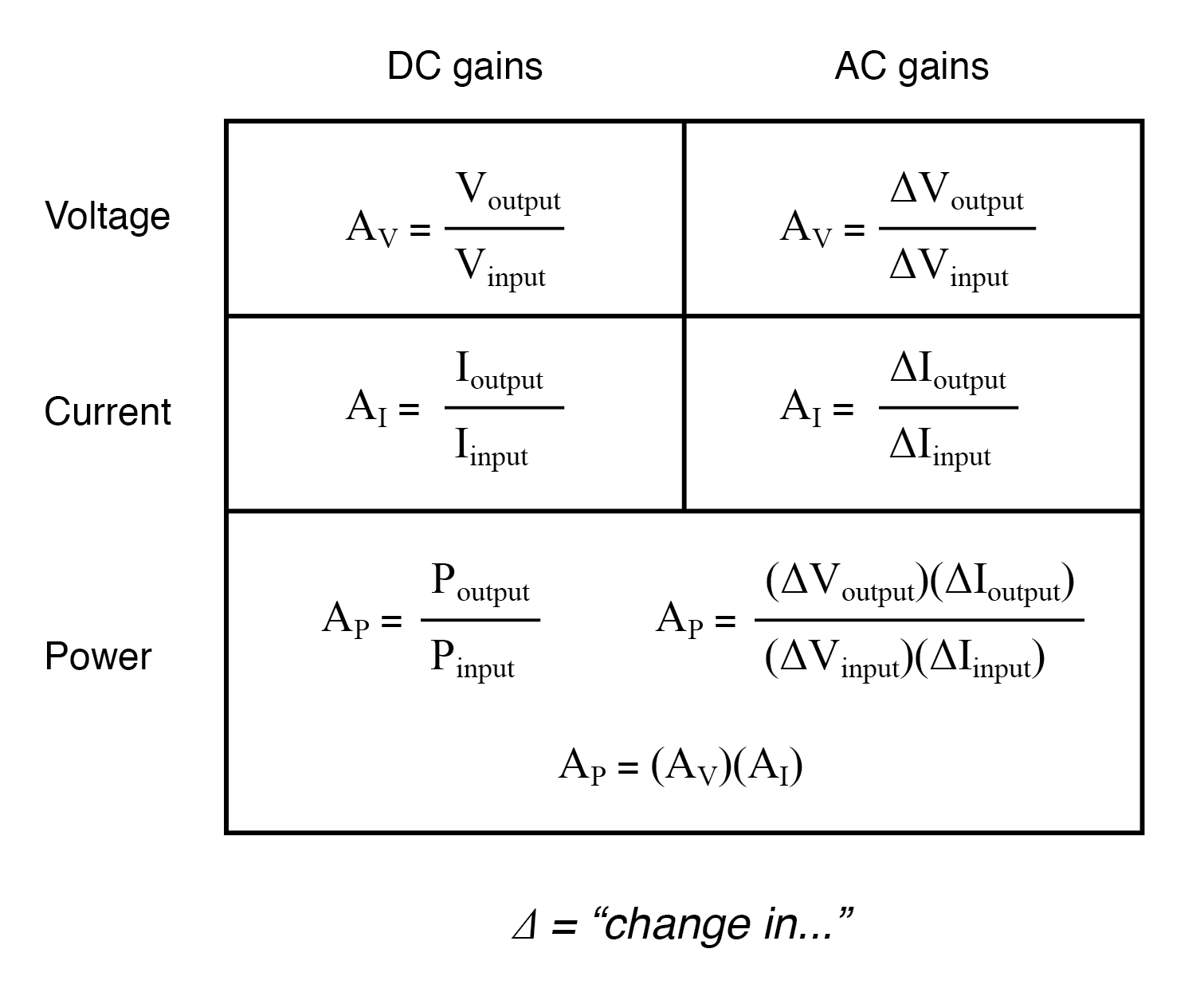
Amplifier gain can be expressed in terms of voltage, current, or power, and can apply to both AC and DC signals. Below is a concise summary:
- Voltage Gain: ΔVout / ΔVin (AC voltage ÷ AC voltage)
- Current Gain: ΔIout / ΔIin (AC current ÷ AC current)
- Power Gain: Pout / Pin (power out ÷ power in)
The triangle symbol (Δ) denotes a change, reinforcing that these ratios often relate to AC variations.
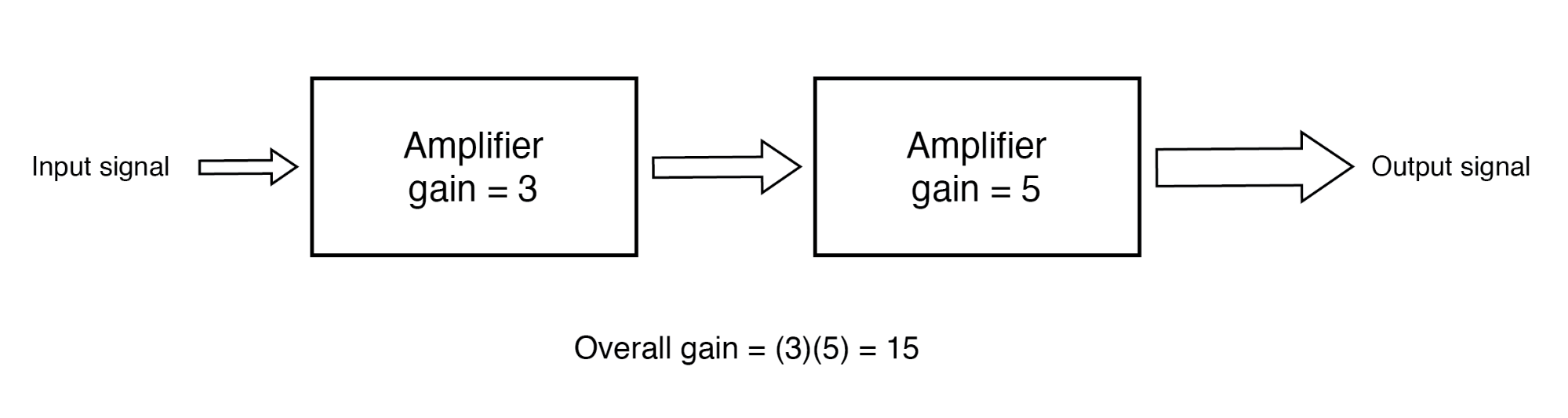
When multiple amplifiers are cascaded, the overall gain equals the product of the individual gains. For example, a first stage with a gain of 3 followed by a second stage with a gain of 5 yields a total gain of 3 × 5 = 15. A 1 V input would thus become 3 V after the first stage and 15 V after the second:
In practice, always check the datasheet of each stage to confirm that the combined gain meets your system requirements.
RELATED WORKSHEETS:
- Elementary Amplifier Theory Worksheet
Industrial Technology
- Common‑Emitter Amplifier: Design, Measurement, and Feedback Techniques
- Designing a High‑Gain Multi‑Stage Common‑Emitter Amplifier with Negative Feedback
- Designing a High‑Gain Differential Amplifier with NPN Transistors
- Non‑Inverting Amplifier: Build, Test, and Master Op‑Amp Gain Control
- Common‑Collector Amplifier: Emitter‑Follower Fundamentals & Applications
- Cascode Amplifier: Combining Common‑Emitter and Common‑Base for Wide Bandwidth and High Input Impedance
- The Operational Amplifier: Foundations, Features, and Key Applications
- Designing a Practical Differential Amplifier with Controlled Gain
- Understanding and Designing an Instrumentation Amplifier
- Understanding Voltage Amplifiers: How They Boost Signal Voltage