



Fundamentals of AC Circuit Calculations: From Resistance to Kirchhoff’s Laws
Across the upcoming chapters, you’ll see that AC circuit analysis can become intricate, especially when inductors and capacitors enter the picture. Yet, for the simplest AC networks—just a source and a resistor—everything behaves just as it does in DC.
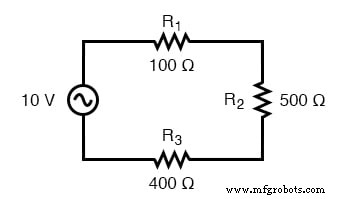
AC resistive circuits obey the same rules as DC.
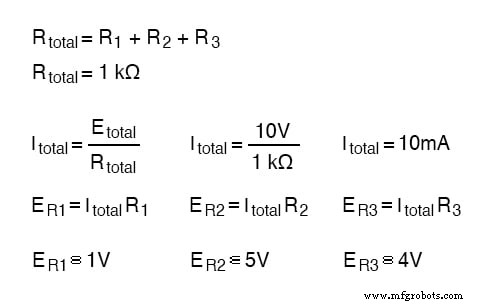
Series resistances still add, parallel resistances still reduce, and Ohm’s and Kirchhoff’s laws remain valid. Later we’ll explore how these laws extend to reactive elements, but for pure resistors the mathematics stays simple.
Because the equations are identical, we can reuse the familiar “table” technique used for DC analyses:
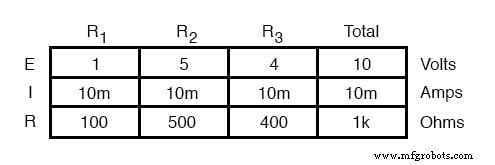
One important rule: all AC voltages and currents must be expressed in the same units—peak, peak‑to‑peak, average, or RMS. If the source is given in peak volts, every calculated value is in peak units. If it’s specified in RMS volts, all derived currents and voltages are RMS as well. In practice, the default assumption in most industrial settings is RMS unless otherwise noted.
Review
- DC laws—Kirchhoff’s Voltage & Current Laws, Ohm’s Law—apply unchanged to AC resistive networks.
- The table method remains a reliable tool for AC analysis.
RELATED WORKSHEETS:
- Series DC Circuits Practice Worksheet with Answers Worksheet
Industrial Technology
- Building and Troubleshooting a Basic 6‑V Battery‑Lamp Circuit
- Advanced Motor Control Circuits: Latching, Stop, and Time‑Delay Techniques
- Complementary NPN/PNP Audio Amplifier Circuit – Direct Coupling for Moderate Power
- Understanding Simple Series Circuits: Key Principles and Practical Examples
- Parallel Circuits Explained: Voltage, Current, and Resistance Principles
- Building Resistor Circuits: From Alligator Clips to PCBs
- Analyzing Complex RC Circuits Using Thevenin’s Theorem
- Series RC Circuit Analysis: Impedance, Phase Relationships, and SPICE Validation
- Parallel Resistor–Capacitor AC Circuits: Analysis, Impedance, and Ohm’s Law
- Impact of Resistance on Resonance in Series‑Parallel LC Circuits