Industrial manufacturing
Manufacturing process

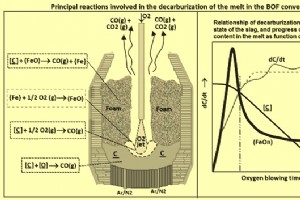
Foaming of Slag in Basic Oxygen FurnaceIn basic oxygen furnace (BOF) steelmaking, a supersonic oxygen (O2) stream is injected onto the surface of the hot metal bath. The impurity elements in the bath such as carbon (C), silicon (Si), manganese (Mn), and phosphorus (P) are oxidized and removed from t
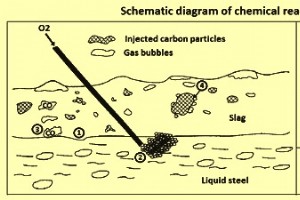
Foaming of Slag in Electric Arc FurnaceSlag foaming has become an important and critical practice for the modern electric arc furnace (EAF) since a good foaming slag contributes considerable efficiency and other benefits to the process. The quality of the slag foaming is an important factor in the

Consteel Electric Arc Furnace ProcessConsteel process is a patented process. It is an innovative energy conservation technology for scrap pre-heating in an electric arc furnace (EAF) developed by ‘Intersteel Technology Inc., Charlotte, North Carolina (since 1994 a part of Techint, Tenova S.p.A.). Th
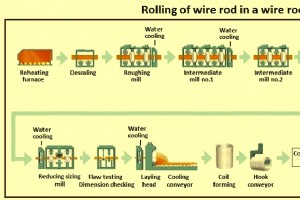
Important aspects regarding Rolling of Wire RodsWire rods are the steel product normally of round cross section which is produced from hot rolling of steel billets. Wire rods are known for their long subsequent processing which they undergo in the secondary and tertiary processing units until the f
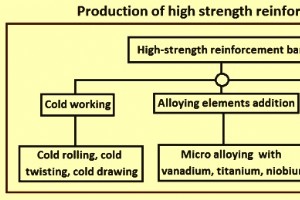
Production and Characteristics of High Strength Reinforcement BarsDuring the last few decades, reinforced concrete construction has generally utilized reinforcement bars with yield strength of 415 MPa (415 N/sq mm) for most beams, girders, and columns, and less frequently reinforcement bars with yie
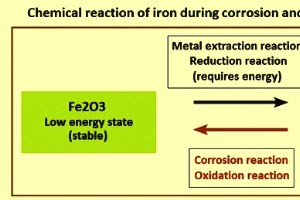
Corrosion in Carbon SteelsAs per ISO 8044:2010, ‘corrosion is the physico-chemical interaction between a metal and its environment, which results in changes in the metal’s properties and which may lead to significant functional impairment of the metal, the environment, or the technical system of whi
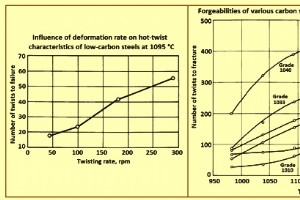
Forging of Carbon and Alloy SteelsForging of carbon (C) and alloy steels constitutes a metal working process, which has the ability to form the material to the desired component shape, while refining the cast structure of the forging material, healing shrinkage voids, and improving the mechanical pr
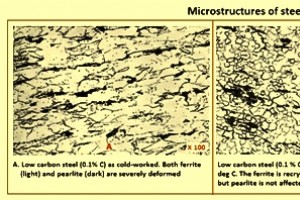
Annealing of SteelsWhen a metal is cold worked (deformed at room temperature), the microstructure becomes severely distorted because of an increased dislocation density resulting from the deformation. Cold working is also referred to as work hardening or strain hardening. As a metal is cold worked,
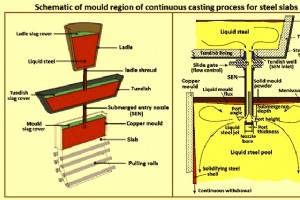
Continuous Casting MouldIn the continuous casting process, liquid steel flows from a ladle, through a tundish into the mould. The mould is regarded as the heart of the continuous casting process and plays a very important role in the efficiency of the process and the strand quality. It is in the mo
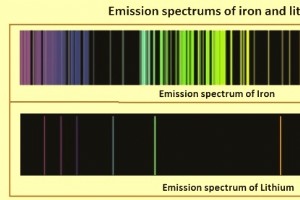
Metal Analysis by Optical Emission SpectroscopyOptical emission spectroscopic techniques originated in experiments performed in the mid 1800s, yet they remain some of the most useful and flexible means of performing elemental analysis. Free atoms emit light at a series of narrow wavelength intervals
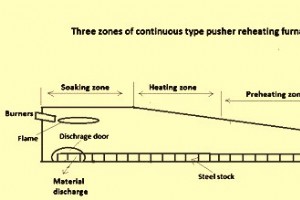
Rolling of steel and major equipment in a Cross-country Rolling MillMost of the steel products are rolled from the cast products from continuous casting machine through a series of rolling and finishing operations. The process is called simple rolling, when two rolls of equal diameter and with axis
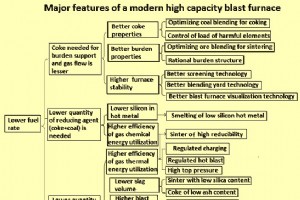
Main Features of a Modern High Capacity Blast FurnaceThe performance of an integrated steel plant is highly dependent on the performance of its ironmaking units. In integrated steel plants, production of hot metal (HM) in a blast furnace (BF) is a preferred route globally for ironmaking. The specifi
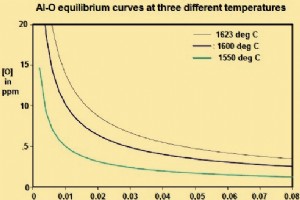
Utilization Optimization of Ferroalloys during SteelmakingFerroalloys are alloys of iron with a high percentage of one or more of other elements such as silicon (Si) and manganese (Mn) etc. They are brittle and unsuitable for direct use in fabricating of products of use. Ferroalloys are important ra
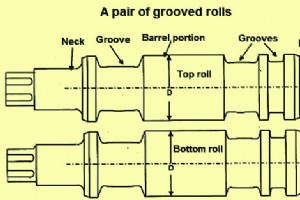
Metallurgy of Rolling mill RollsRolls are implements or tools used in rolling mills to reduce the cross section of the material being rolled. They are highly stressed tools and are subject to wear. They are needed both for the rolling of sectional as well as flat products. In recent past, rolling te
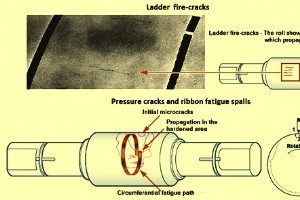
Abnormalities and Failures of Rolling Mill RollsRolls are changing parts of a rolling mill which are used to reduce the cross section and shape of the material being rolled. They are highly stressed parts of a rolling mill and are subject to wear. They are used both in the flat product mills as well
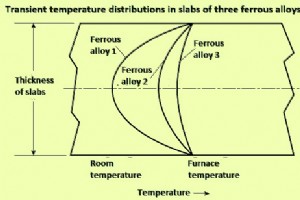
Fuel Combustion and Heat Transfer in a FurnaceHeat is needed in a furnace for heating of the furnace charge (material to be heated in the furnace) and sometimes for the chemical reactions. The three sources of heat energy are (i) combustion of fuels, (ii) electric energy, and (iii) chemical energy a
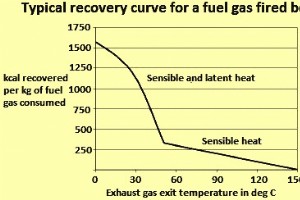
Waste Heat Recovery TechnologiesWaste heat is the energy which is associated with waste streams of air, exhaust gases, and/or process products which leave a process and enter the atmosphere. It is the energy which is generated in various processes and which is not put into any practical use and is l
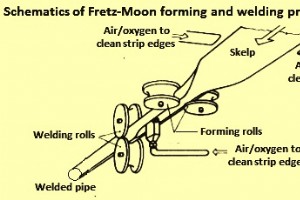
Production processes for Welded PipesSteel pipes are long, hollow tubes which are used mainly to convey fluid or fluidized products from one location to another. They are produced mainly by two distinct production processes which result in either a welded pipe or a seamless pipe.Welded steel pipes a

Tempcore process for the Production of TMT Reinforcement barsTempcore process for the production of reinforcement bar (rebar) is a patented process in which the hot rolled bar is intensively surface quenched by water, immediately as the bar emerges from the last hot rolling stand of the rolling mill
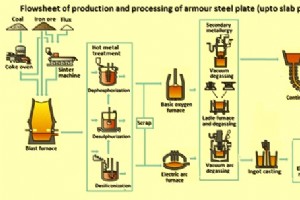
Production and Processing of Armour SteelIn the present day environment, there are accelerated efforts to deliver lightweight armour technologies which can defeat armour-piercing (AP) projectiles at reduced areal weights. While many of these efforts involve the application of lower density metals su
Manufacturing process