Industrial manufacturing
Manufacturing process

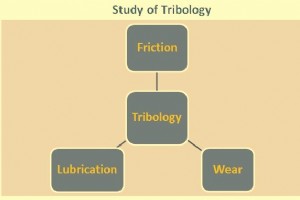
Basics of TribologyExpenditure on machine condition monitoring and maintenance constitutes a significant cost in a steel plant. Tribology helps in reducing this expenditure. Tribology is a new word coined by Dr. H. Peter Jost in England in 1966. ‘The Jost Report’, provided to the British Parliament
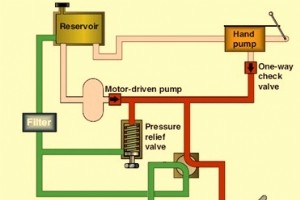
Basics of Hydraulics and Hydraulic SystemsHydraulics is the generation of forces and motion using hydraulic fluids which represents the medium for the transmission of power. Hydraulic systems are extremely important for the operation of heavy equipments. The word ‘hydraulics’ is based on the Greek w
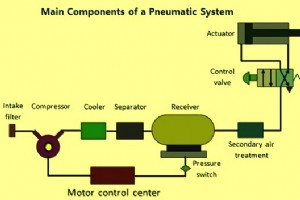
Basics of Pneumatics and Pneumatic SystemsPneumatics has long since played an important role as a technology in the performance of mechanical work. It is also being used in the development of automation solutions. Pneumatic systems are similar to hydraulic systems but in these systems compressed ai
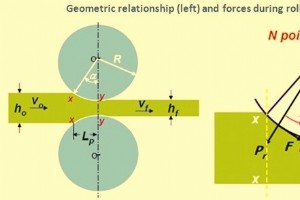
Basics of Rolling of Steel Liquid steel is usually cast in continuous casting machines in the shape of billets, blooms, or slabs. In some plants, it is also being cast in continuous casting machines in the shape of thin slabs or dog bone sections. These shapes are processed by hot rolling by passing
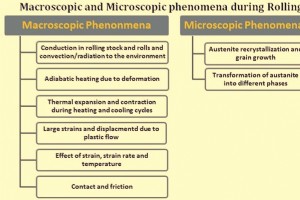
Understanding Rolling Process in Long Product Rolling Mill Steel rolling consists of passing the material, usually termed as rolling stock, between two rolls driven at the same peripheral speed in opposite directions (i.e. one clockwise and the second anti-clockwise) and so spaced that the distance
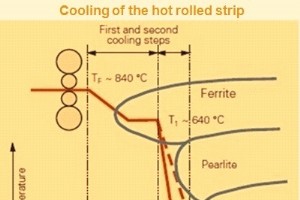
Rolling of steel in Hot Strip MillHot strip mills in these days are either conventional hot strip mills or strip mills for rolling thin slabs. The primary function of the conventional hot strip mill (HSM) is to reheat the semi-finished steel slabs (rolled or continuously cast) to the rolling tempera
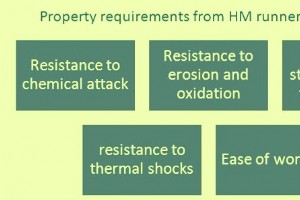
Remedial measures and Campaign Life of a Blast Furnace The cost of rebuilding or relining a blast furnace (BF) is very high. Hence techniques to extend BF campaign lives are important and need to be pursued very actively.Large BFs usually have a slightly higher campaign output per unit volume. This
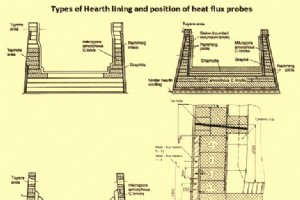
Improved Designs and Campaign Life of a Blast FurnaceThe cost of rebuilding or relining a blast furnace (BF) is very high. Hence techniques to extend BF campaign lives are important and need to be pursued very actively.Large BFs usually have a slightly higher campaign output per unit volume. This d
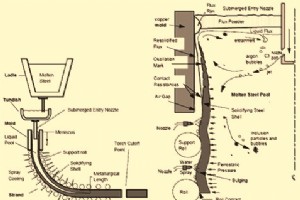
Understanding the Process of Continuous Casting of SteelContinuous casting (CC) of steel is a process whereby liquid steel is solidified into a semi-finished steel product (billet, bloom, beam- blank, round or slab) for subsequent rolling in the rolling mills. The basic operation of a CC machine is
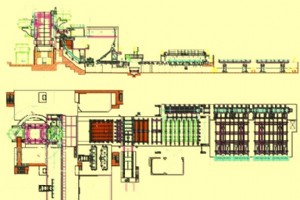
Continuous Casting Machine and its EquipmentContinuous casting (CC) is a method of producing an infinite solid strand from liquid steel by continuously solidifying it as it moves through a CC machine. It is the predominant process route in a modern steel plant which links steelmaking and hot rolling
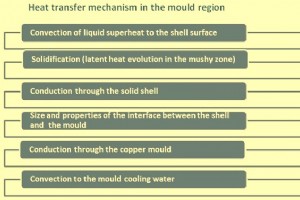
Heat Transfer during Continuous Casting of SteelDuring continuous casting (CC) of steel, careful control of the strand cooling and growth of the shell along the CC machine is of great importance. These factors play an important role on the formation of cracks and other defects which can be formed in
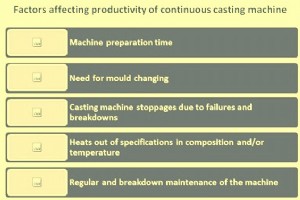
Productivity and Product Quality in Continuous Casting MachineContinuous casting is the process by which liquid steel is solidified into a semifinished steel product (billet, bloom, or slab etc.) for subsequent rolling in the hot rolling mills. Continuous casting of liquid steel was introduced for c
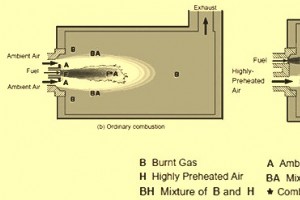
Combustion System of a Reheating FurnaceThe main function of a reheating furnace is to raise the temperature of the semi-finished steels (billets, blooms, slabs or rounds) typically to temperatures between 1000 deg C and 1250 deg C, until it is plastic enough to be rolled to the desired section, siz
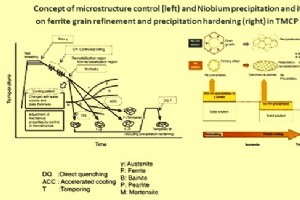
Thermo Mechanical Control Processing in Rolling MillsThermo mechanical controlled processing (TMCP) is a technique designed to improve the mechanical properties of materials by controlling the hot-deformation process in a rolling mill. This was originally designed to produce the required external sh

Universal Beams and its RollingUniversal beams are also known as parallel flange beams or wide flange beams. The cross section of a universal beam is either I or H shape. H shape beams are also referred as universal columns. The horizontal portion of the cross section of a universal beam is known as

Ultra Low Carbon Dioxide Steelmaking – ULCOS Climate change has been identified by the steel industry around the world as a major environmental challenge for more than two and a half decades. Long before the findings of the Intergovernmental Panel on Climate Change (IPCC) in 2007, major steel produc
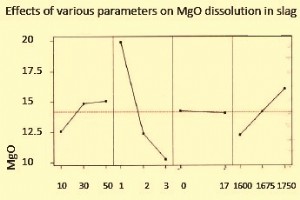
Role of Slag in Converter SteelmakingThe oxygen converter process is the primary steelmaking process for the production of carbon and low-alloy steels. The process is essentially an oxidizing process of refining of the high carbon hot metal (HM) to low carbon liquid steel. The oxidizing process is c

Slag and its Role in Blast Furnace IronmakingBlast furnace (BF) is the oldest (more than 700 years old) of the various reactors which are being used in the steel plants. It is used for the production of liquid iron (hot metal). The blast furnace is a complex high temperature counter current reactor

Wire Rods and Wire Rod MillsSteel wire rods are an all-round talent since they are the key product of steel industry with multiple uses. They are used as the material for fasteners, springs, bearings, wire ropes, chains, cables, wire meshes, wire fencings, tyre cord, reinforcement in railway sleeper

Billet Inspection and Conditioning FacilitiesA considerable percentage of steel bars and wire rods are used for the safety-related parts of automobiles after undergoing post-processing steps (secondary and ternary processing). Quality requirements for these steel bars and wire rods are becoming inc
Manufacturing process