Industrial manufacturing
Manufacturing process

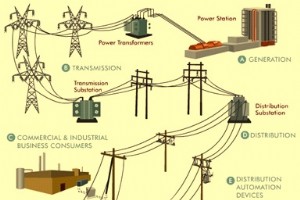
Transmission of Electric PowerTransmission of electric power is a process by which the electric power produced at power plants is transported in bulk quantities over long distances for eventual use by consumers. Electric power is sent from generating power plants to the end consumer by transmission
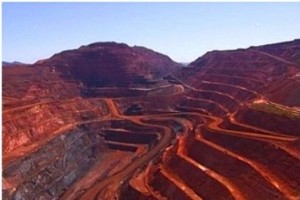
Mining of Iron OresIron ore is a type of mineral and rock from which metallic iron is extracted economically. This ore is normally rich in iron oxides and vary in color from dark grey, bright yellow and deep purple to rusty red. The iron itself is usually found in the form of magnetite (Fe3O4), hema
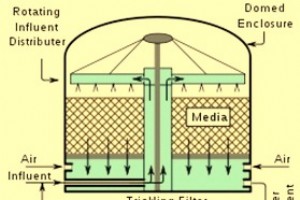
Treatment of Industrial WastewaterWater is used in the industry for process needs, for cooling, for steam generation, for dust suppression and many other uses. Industrial wastewater is the aqueous discard that results after the water is used for the above purposes. Industrial wastewater is the resul
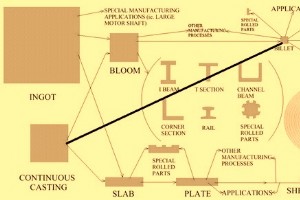
Rolling Process for SteelRolling is the process of plastically deforming steel by passing it between rolls. Rolling is defined as the reduction of the cross sectional area of the steel piece being rolled, or the general shaping of the steel products, through the use of the rotating rolls. Rolling o
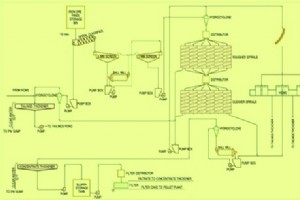
Beneficiation of Iron OresIron ore is a mineral which is used after extraction and processing for the production of iron and steel. The main ores of iron usually contain Fe2O3 (70 % iron, hematite) or Fe3O4 (72 % iron. magnetite). Ores are normally associated with unwanted gangue material. Grade of
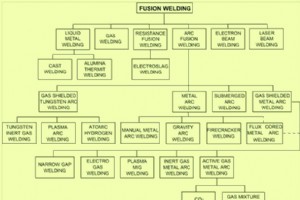
Welding Processes Welding is a fabrication process that joins materials by causing coalescence. Welding is normally carried out by melting the work pieces and adding a filler material to form a pool of molten material that cools to become a strong joint, either with pressure sometimes used in conjun
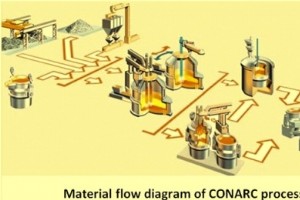
CONARC Process for SteelmakingCONARC process for steelmaking was developed by Mannesmann Demag Huettentechnik (now it is SMS Siemag). The objective for the development of this process was to utilize the benefits of both the conventional top blown converter steelmaking and electric arc furnace (EAF).
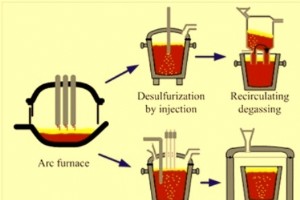
Ladle MetallurgyAfter tapping of steel from a primary steelmaking furnace such as BOF, EAF or EOF, molten steel for high quality or specialty applications is subjected to further refining in a number of alternative processes collectively known as ladle metallurgy. Ladle metallurgy is sometimes also
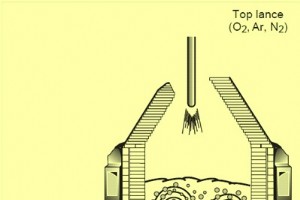
Argon Oxygen Decarburization ProcessArgon oxygen decarburization (AOD) is a process primarily used in production of stainless steel and other high grade alloys such as silicon steels, tool steels, nickel-base alloys and cobalt-base alloys with oxidizable elements such as chromium and aluminum. AOD w
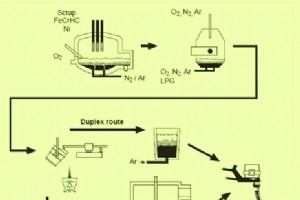
Stainless Steel Manufacturing ProcessesStainless steels contain from 10 % to 30 % chromium. These steels also contain varying amounts of nickel, molybdenum, copper, sulphur, titanium, and niobium etc. The majority of production of stainless steel was through the electric arc furnace (EAF) till arou
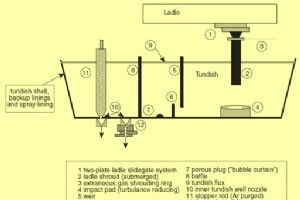
Tundish MetallurgyTo transfer liquid steel from a teeming ladle to the continuous casting machine mould, an intermediate vessel, called a tundish, is used. Tundish is a rectangular big end up, refractory lined vessel, which may have a refractory lined lid on the top. The tundish bottom has one or mo
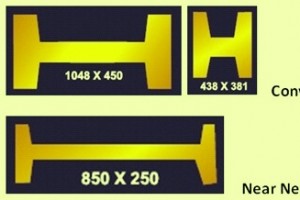
Beam Blank Casting TechnologyThe development of the direct casting of beam blanks is one of the most outstanding success stories in the evolution of the continuous casting of steel. The continuous casting of near net shape cross sections, called ‘beam blanks’ or ‘dogbones’, has been an efficient com
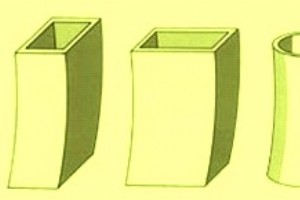
Role of Mould in Continuous Casting of Steel Moulds play an important role in the process of continuous casting of liquid steel. They are the heart of the continuous casting process. In the process of continuous casting, liquid steel is poured from the tundish into the casting mould through the subm
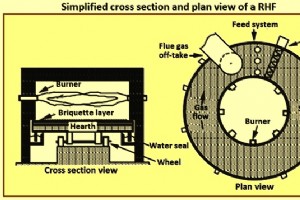
FASTMET and FASTMELT Processes of IronmakingFASTMET process is a coal based process of ironmaking. It enables the conversion of metallic oxides from either iron ore fines or steel plant metallurgical waste, into metalized iron. FASTMELT process is the FASTMET process with the addition of an ‘electri
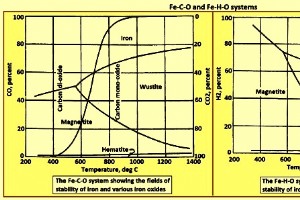
Chemistry of the Ironmaking by Blast Furnace ProcessThe modern blast furnace (BF) operating with a low coke rate is an efficient processing unit primarily because of the intrinsic characteristics of a counter-current gas-solids reactor. A successful use of this concept needs that each of the materia
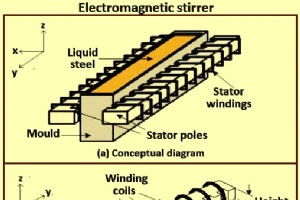
Electromagnetic Stirring in Continuous Casting ProcessIn the continuous casting process of liquid steel, methods of improving the quality of the cast steel product are always important. This has also remained important for the development of the process. In addition to modifying the jet flow angle a
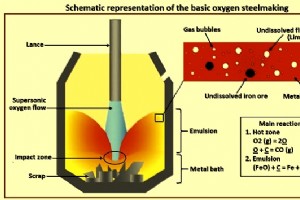
Chemistry of Steelmaking by Basic Oxygen SteelmakingBasic oxygen steelmaking (BOS) is the most widely used primary steelmaking process for the production of crude steel from hot metal (HM). The process vessel is known as converter. It plays a predominant role in integrated steel plants for the produ
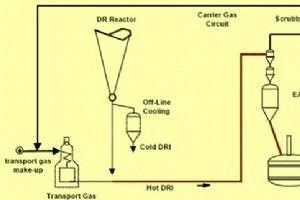
Discharge options for Direct Reduced Iron and its Hot TransportThe two main methods of producing direct reduced iron (DRI) are (i) gas based process in a vertical shaft furnace and (ii) coal based process in a rotary furnace. In both the processes the reduction reactions take place in solid state a
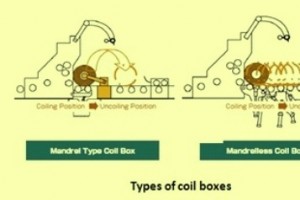
Main Features of a modern Hot Strip MillThe objective of a hot strip mill (HSM) is to reheat and roll thick slabs into thin strip with a wide range of thickness. Because of its huge size and large investment a hot strip mill need to have a life time of several decades. The mill must be capable of me
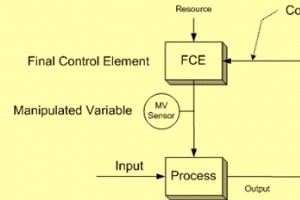
Process Control SystemA process is broadly defined as an operation that uses resources to transform inputs into outputs. It is the resource that provides the needed energy to the process for the transformation to occur. In the context of an industry the term ‘process’ as used in the term ‘process co
Manufacturing process