Industrial manufacturing
Manufacturing process

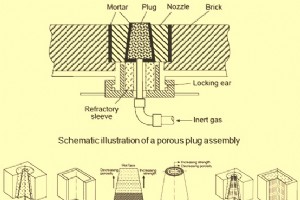
Argon Rinsing of SteelsGas rinsing process is a method where rinsing of liquid steel in the teeming ladle is carried out through injection of inert gas into the steel bath. Argon (Ar) gas is preferred for rinsing since it is not only inert in nature but its solubility in steel is also very low. Rins
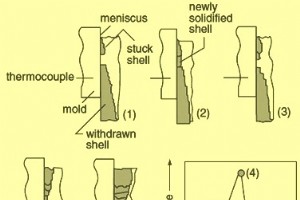
Breakouts during Continuous Casting of Liquid SteelOne of the worst catastrophic process failures that can occur during the process of continuous casting (CC) of liquid steel is the breakout of the liquid steel. Breakout occurs when solidifying strand steel shell ruptures or tears beneath the mould.
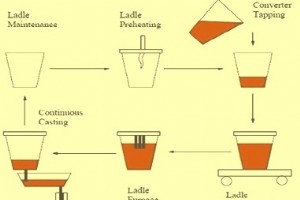
Steel Teeming Ladle and its Refractory LiningSteel teeming ladle (STL) is needed in a steel plant to contain and transport liquid steel from the steel making furnace to the casting facility. These days STL is used in a significantly more complex manner than the older steel melting shops where ladles
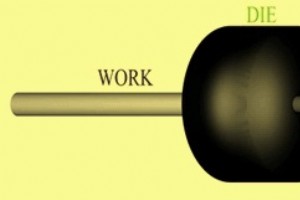
Bar, Rod and Wire Drawing Drawing is a metal working process that forms steel work piece by reducing its cross section. This is accomplished by forcing the work piece through a die of smaller cross sectional area than the work piece. In the process of drawing the work piece is pulled through the die
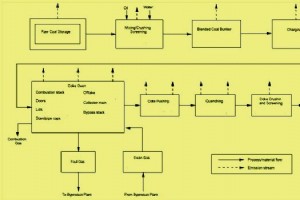
Coke making in Byproduct Coke Oven Batteries Coke causes up to 50 % of the costs during the hot metal production. The cost effective production of high quality coke is thus of prime importance for the competitive ability of the iron production.Metallurgical coke is used in iron and steel industry pr
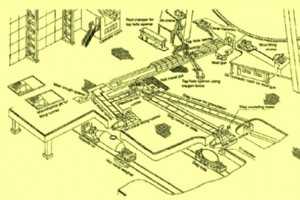
Blast Furnace Cast House and its Operation The blast furnace (BF) cast house is the working area where hot metal and liquid slag are tapped from the blast furnace and either poured into ladles (torpedo car or open top ladle) or led off for solidification (pig casting and slag granulation) or treatme
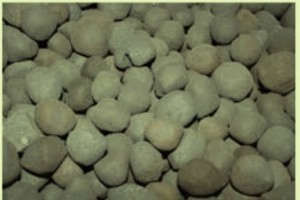
Use of Iron Ore Pellets in Blast Furnace Burden Pelletizing is a process that involves mixing very finely ground particles of iron ore fines of size less than 200 mesh with additives like bentonite and then shaping them into oval/spherical lumps of 8-20 mm in diameter by a pelletizer and hardening t

Roll Pass Design Long products are normally rolled in several passes, whose numbers are determined by the ratio of the initial input steel material (square or round billet or bloom) and final cross section of finished product. The cross section area is reduced in each pass and form and size of the s
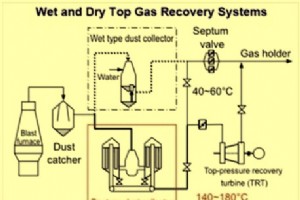
Blast Furnace Gas Top Pressure Recovery Turbine Modern blast furnaces in steel plants operate at a high top gas pressure. The blast furnace (BF) gas leaving the BF at the top still maintain a pressure of around 1.6 kg/sq cm (g) to 3 kg/sq cm (g) and has a temperature of around 200 deg C. This BF ga
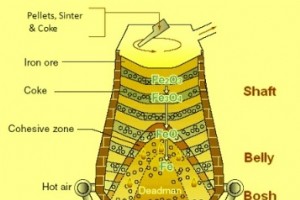
Factors affecting Coke rate in a Blast Furnace BF is a counter current reactor in which the reducing gas is produced by the gasification of the carbon of the BF coke with the oxygen of the hot blast injected via tuyeres in the lower part of the furnace. The reducing gas flows upwards reducing the ir
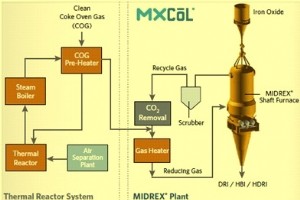
Production of DRI with Coke Oven Gas as Reductant Direct reduced iron (DRI) is technically defined as iron ore which has been reduced to metal without melting it. A DRI production process is one in which the solid metallic iron is obtained directly from solid iron ore without subjecting the ore or t

Phases in the Design and Construction of a Steel Plant Steel plant is a project which is highly capital intensive and need a very long time for its construction and commissioning. Further steel plant is to operate for a very large number of years after commissioning and during this period steel plan
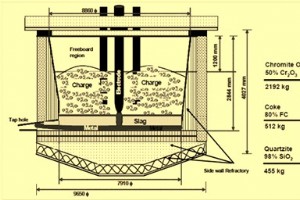
Submerged Arc Furnaces industrial utilization of electrical energy started with the development of the dynamo machine by Werner von Siemens. Electric arc furnaces have been used for many years both for the melting of scrap iron (open arc furnaces) and for reduction processes (submerged arc furnaces)
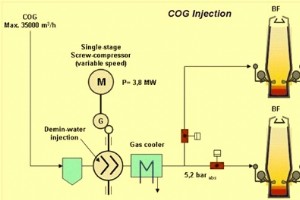
Coke Oven Gas Injection in a Blast Furnace The iron and steel industry is one of the main consumer of energy and hence responsible for high emissions of carbon di oxide (CO2). Despite remarkable decrease in specific CO2 emissions by most of the steel plants, the total amount of CO2 emissions is grow
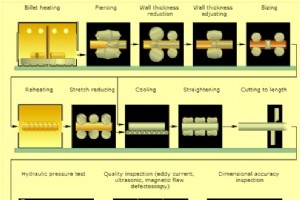
Production of Seamless Pipes Pipes are either seamless or welded. The manufacturing processes for seamless pipes were developed towards the end of the nineteenth century. In spite of many earlier tests, trials and technologies, the invention of the cross roll piercing process by the Mannesmann brot
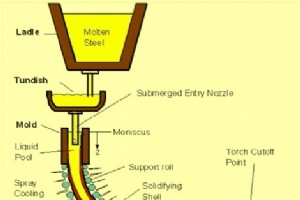
Secondary Cooling Technology in Continuous Casting Process A wide range of steel grades ranging from ultra low carbon (ULC) and low carbon grades to high carbon and different grades of special steels are required to be cast in continuous casting machine (CCM). The casting of these grades is to be ac
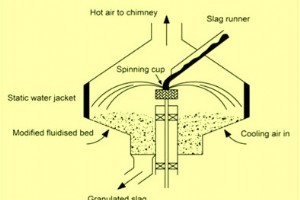
Dry Granulation of Blast Furnace Slag for Energy Recovery Around 300 kg of liquid slag is produced as byproduct while producing one ton of hot metal in a blast furnace (BF). This slag is at a temperature of around 1500 deg C and has a sensible heat of approximately 400 M Cal per ton. BF slag is rich
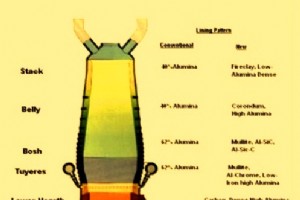
Refractory lining of blast furnace A modern blast furnace (BF) is refractory lined to protect the furnace shell from the high temperatures and abrasive materials inside the furnace. The refractory lining is cooled to further enhance the protection against the dispatch of excess heat that can destroy
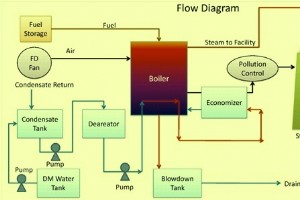
Basics of Steam BoilerA steam boiler is an enclosed container where water is heated under controlled conditions to convert it into steam. Boiler is basically a heat exchanger where heat is transferred to water. It is also sometimes referred to steam generator. Thermal energy for heating water is sup
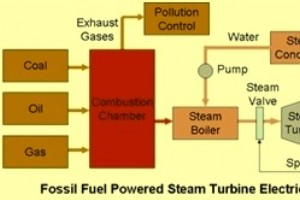
Steam Turbine and Power GenerationA steam turbine is a mechanical device that converts thermal energy of the pressurized steam into useful mechanical work. It is the heart of a power plant. It has a higher thermodynamic efficiency and a lower power-to-weight ratio. It derives most of its thermodynam
Manufacturing process