Industrial manufacturing
Manufacturing process

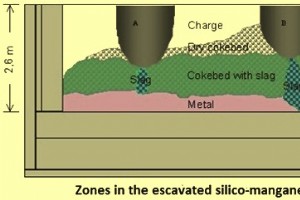
Production of Silico-Manganese in a Submerged Arc FurnaceSilico-manganese (Si-Mn) is an alloy used for adding both silicon (Si) and manganese (Mn) to liquid steel during steelmaking at low carbon (C) content. A standard Si-Mn alloy contains 65 % to 70 % Mn, 15 % to 20 % Si and 1.5 % to 2 % C. Si-Mn

Production of Ferro- ManganeseFerro-manganese (Fe-Mn) is an important additive used as a deoxidizer in the production of steel. It is a master alloy of iron (Fe) and manganese (Mn) with a minimum Mn content of 65 %, and maximum Mn content of 95 %. It is produced by heating a mixture of the oxides of
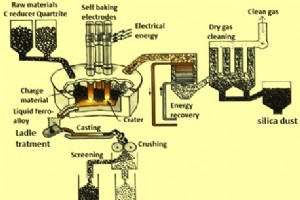
Production of Ferro-SiliconFerro-silicon (Fe-Si) is a ferro-alloy having iron (Fe) and silicon (Si) as its main elements. The ferro-alloy normally contains Si in the range of 15 % to 90 %. The usual Si contents in the Fe-Si available in the market are 15 %, 45 %, 65 %, 75 %, and 90 %. The remainder
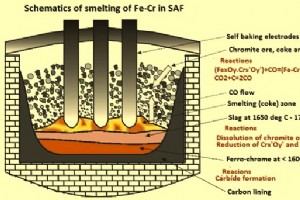
Production of Ferro-ChromeFerro-chrome (Fe-Cr) is an alloy comprised of iron (Fe) and chromium (Cr) used primarily in the production of stainless steel. The ratio in which the two metals (Fe and Cr) are combined can vary, with the proportion of Cr ranging between 50 % and 70 %.Fe-Cr is frequently cl
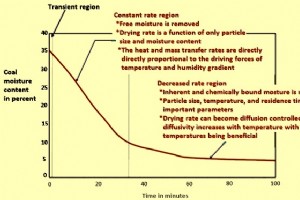
Drying Technologies of Lignite CoalsCoals are generally ranked as anthracite, bituminous, sub-bituminous, and lignite, with anthracite being the oldest and lignite the youngest in the age. As coal ages, its moisture content decreases and heating value increases. The lignite coal is often being refer
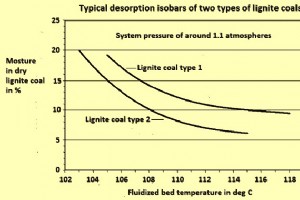
WTA technology for drying of lignite coalWTA (Wirbelschicht Trocknung Anlage) technology for drying of lignite coal has been developed by German company RWE Power AG. WTA is the German abbreviation which stands for fluidized-bed drying with internal waste heat utilization. RWE Power AG holds a good
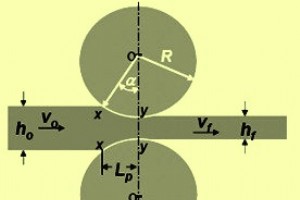
Rolling of hot strip and strip defectsRolling is one of the most important industrial metal forming operations. Hot Rolling is employed for rolling of steel slabs to hot strips in hot strip mills. Like any other hot rolling operations, rolling of hot strip is also a plastic deformation of the mater
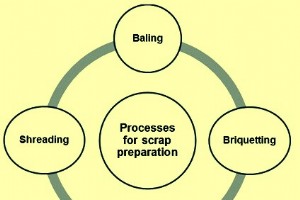
Steel Scrap and Scrap Sorting and Preparation ProcessesRecycling of steel scrap is receiving increased impetus these days due to the focus of an emerging environmental initiative since the increased consumption of scrap reduces the needs for additional resource extraction and hence reduces the envir

Coal based Direct Reduction Rotary Kiln Process The coal based direct reduction rotary kiln process was developed for converting iron ore directly into metallic iron without the melting of the materials. The process has the advantage of low capital expenditure and no requirement of coking coal. The
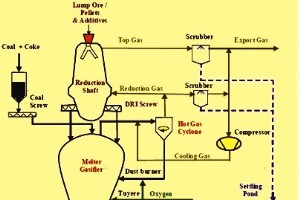
Corex Process for Production of IronDuring the late twentieth century, several new initiatives have been taken for the development of the smelting reduction technology which can become alternative route for the production of liquid iron (hot metal) since the conventional blast furnace (BF) ironmakin
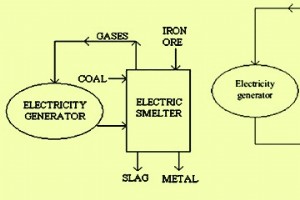
Development of Smelting Reduction Processes for IronmakingSmelting reduction (SR) processes are the most recent development in the production technology of hot metal (liquid iron). These processes combine the gasification of non-coking coal with the melt reduction of iron ore. Energy intensity of SR
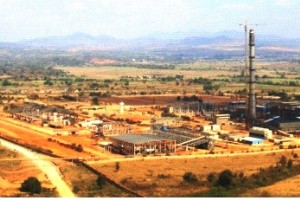
Romelt Process for IronmakingRomelt process for ironmaking is a smelting reduction process for the production of hot metal (liquid iron). The process has been developed by The National University of Science & Technology ‘MISiS’, Russia (formerly known as Moscow Institute of Steel and Alloys). Th
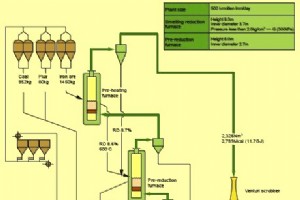
Direct Iron Ore Smelting Process for IronmakingDirect iron ore smelting (DIOS) process is a smelting reduction process for the production of hot metal (liquid iron). It is a two-stage process which has been developed in Japan. It uses non-coking coal in a powder or granular form to smelt iron ore fi

Midrex Process for Direct Reduction of Iron OreMidrex is an ironmaking process, developed for the production of direct reduced iron (DRI). It is a gas-based shaft furnace process is a solid state reduction process which reduces iron ore pellets or lump ore into DRI without their melting using reduci
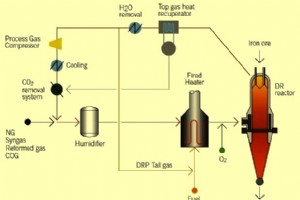
HYL Process for Direct Reduction of Iron OreHYL process is designed for the conversion of iron ore (pellet/lump ore) into metallic iron, by the use of reducing gases in a solid-gas moving bed reactor. Oxygen (O2) is removed from the iron ore by chemical reactions based on hydrogen (H2) and carbon mo
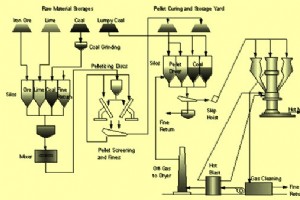
Tecnored Process for IronmakingTecnored process was developed by ‘Tecnored Desenvolvimento Tecnológico S.A.’ of Brazil and is based upon a low pressure moving bed reduction furnace which reduces cold bonded, carbon bearing, self-fluxing, and self-reducing pellets. Reduction is carried out in a short
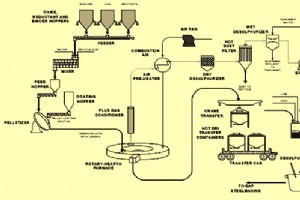
Ironmaking in Rotary Hearth FurnaceIronmaking in the rotary hearth furnace (RHF) is a direct reduction process which utilizes non-coking coal for the reduction of iron ore. The RHF is the process reactor which consists of a flat, refractory hearth rotating inside a stationary, circular tunnel kiln.
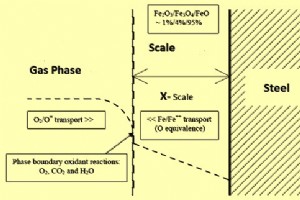
Scale Formation in Reheating Furnace Reheating furnaces constitute an important element in the rolling of steels, in which the semi-finished steel products are heated to a desired temperature for achieving the plastic properties in the products for rolling. The basic purposes of heating the semi-fin
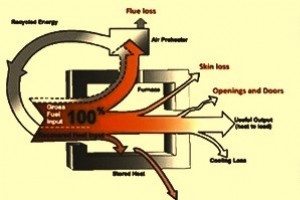
Heating of Steel in Reheating FurnaceReheating furnace is important equipment in the process of hot rolling. It is the heart of any hot rolling mill. Reheating of steel is a continuous process. The steel material to be rolled is charged at the entrance of the reheating furnace. The steel material is
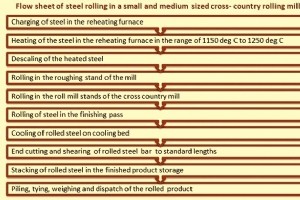
Rolling of Steel in small and medium sized Rolling MillsRolling of steel consists of passing the material, usually termed as rolling stock, between two rolls driven at the same peripheral speed in opposite directions (i.e. one clockwise and the second anti-clockwise) and so spaced that the distance
Manufacturing process