Industrial manufacturing
Manufacturing process

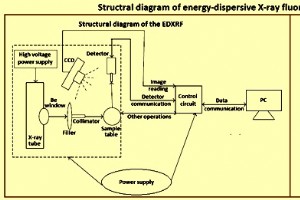
Analysis by X-ray Fluorescence SpectrometryX-ray fluorescence (XRF), is an emission spectroscopic technique which has found wide application in the area of elemental identification and determination. The technique depends on the emission of characteristic x-radiation, normally in the 1 keV to 60 keV
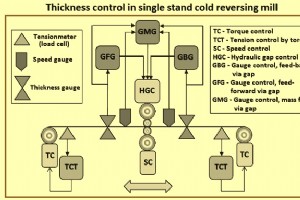
Shape and Gauge Control of Strip in a Cold Rolling MillThe economic efficiency of metal rolling processes is strongly correlated to the quality level of the end-rolled products. The latest efforts to increase the quality of the end rolled products in rolling processes have been mainly focused on the
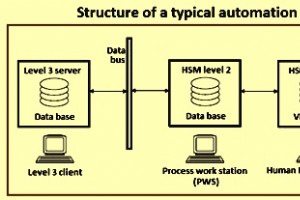
Automation and Thickness Control in Hot Strip MillThe economic efficiency of metal rolling processes is strongly correlated to the quality level of the end-rolled products. Rolling of flat steel products is a complex process where the quality of the product is influenced by a range of factors such a

Shape Control Technologies in Hot Strip MillThe shape of a rolled strip is characterized by its transverse section profile (crown) and by its flatness. The accuracy of the strip shape is an important parameter which determines the quality of the hot rolled strip. Strip shape is an indispensable fact
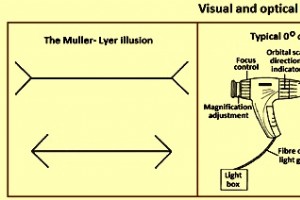
Non destructive Testing TechniquesThere can be inherent microscopic flaws in materials due to crystal lattice imperfections. Also, manufacturing processes such as welding, casting, forging, and surface treatment, etc. can cause further flaws or defects. Further, materials are used under various cond
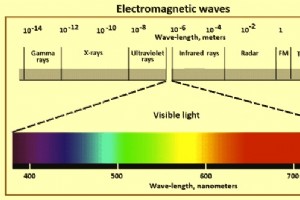
Optical Microscopy Microscopy studies the enlargement of the image of the objects which are too small to be properly seen by the unaided eye. Microscopy fulfills its task by making use of the radiations (Fig 1) emitted, absorbed, transmitted, or reflected by the sample which is to be observed. The n
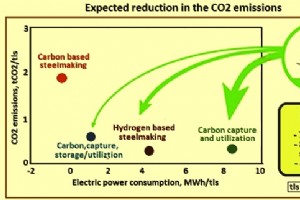
Carbon Neutral SteelmakingIron and steel production industry is the single largest sector in terms of total global fossil and industrial emissions, making up around 7 % to 9 % of greenhouse gas (GHG) emissions. At the same time, steel is the primary material component for modern industrial societies
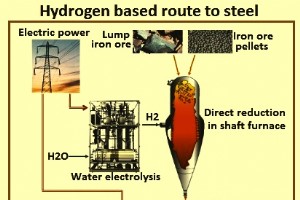
Hydrogen SteelmakingIron and steel production industry is the single largest sector in terms of total global fossil and industrial emissions, making up around 7 % to 9 % of greenhouse gas (GHG) emissions. At the same time, steel is the primary material component for modern industrial societies. Furt
Contribution of Steel to the Circular EconomyThere are two types of economies which exist around the world. These are (i) linear economy, (ii) circular economy. A circular economy is an alternative to a traditional linear economy in which the resources are kept in use for as long as possible, extrac
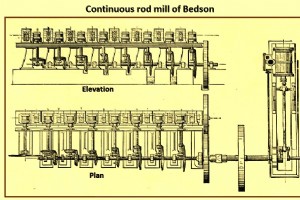
Historical Development of Rolling MillsIn metalworking, rolling is a metal forming process in which metal is passed through one or more pairs of rolls to reduce the thickness, to make the thickness uniform, to give it a desired shape, and / or to impart a desired mechanical property. In rolling, wor
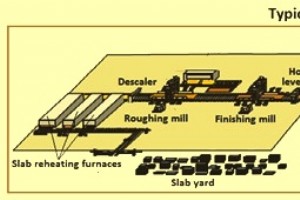
Rolling of Steel Plates in a Plate Rolling MillPlate steel is defined as a flat, as-rolled or heat treated product of thickness of at least 5 mm and width of at least 1,200 mm. Plate steel is widely used steel product. It falls normally in the categories of carbon steel, high strength low alloy (HSL
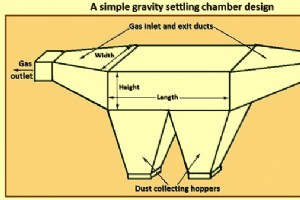
Flue Gas Cleaning Technologies and SystemsEnvironmental pollution is one of the biggest problems all over the world at present. From a series of global environmental problems, more and more people have now realized that environment and resources are the basic necessities for the survival and develop
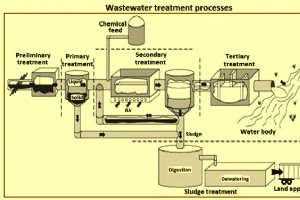
Wastewater and Water Treatment TechnologiesCheap and plentiful, water was for centuries a production utility which the steel industry took for granted. But in the present scenario, water resources are becoming increasingly scarce due to the growing imbalance between fresh water availability and cons
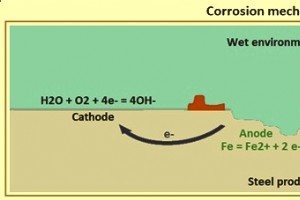
Basic Concepts of Corrosion of Iron and SteelIron and steel materials in practical use are normally exposed to corrosion in the atmospheric and aqueous environments. Corrosion is the deterioration of these materials by chemical interaction with their environment. It is one of the problems frequently
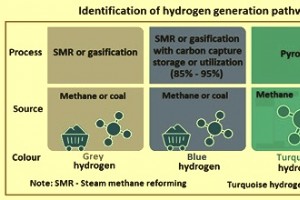
Hydrogen and Decarbonization of Steel ProductionThe main drivers for a sustainable energy future centre around the need to (i) reduce global carbon dioxide (CO2) emissions and improve the air quality, (ii) ensure security of energy supply and move towards the use of sustainable energy resources, and
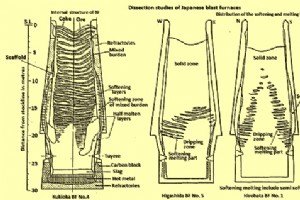
Understanding Ironmaking in Blast Furnace and Dissection studies in JapanThe blast furnace (BF) ironmaking is the most viable means of producing hot metal (HM) mainly due to its well established and proven performance, flexible raw material usage, and high thermal energy conservation capability. The
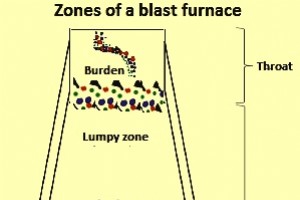
Preparation and Charging of Blast Furnace BurdenBlast furnace (BF), except at its hearth, is basically a passage for gases and burden particles which move in the counter-current directions in the BF. The basic requirement for stable operation of the BF is to maintain in the furnace a moving layer of
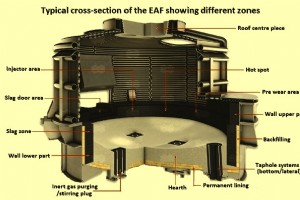
Refractory Lining of the Electric Arc FurnaceRefractories are those materials which withstand high temperature without a significant change in chemical or physical properties. Refractory materials are very important to the electric arc furnace (EAF) operation as they allow the containment of the liq
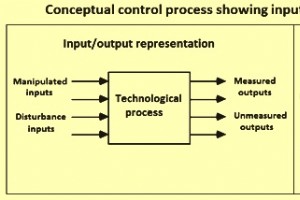
Process Control of Technological ProcessesTechnological processes consist of handling, working, refining, combining, and manipulating materials and fluids to profitably produce end products. These processes can be precise, demanding, and potentially hazardous processes. Small changes in a process ca
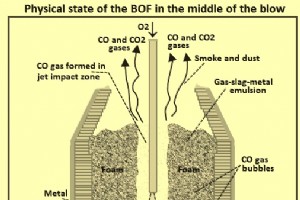
Slopping of Slag in Basic Oxygen FurnaceSteelmaking in basic oxygen furnace (BOF) is a batch process in which steel is made from liquid iron. The concentration of elements such as carbon (C), manganese (Mn), and phosphorous (P) have an impact on the steel quality. For the steel to be cast, it needs
Manufacturing process