Industrial manufacturing
Manufacturing process

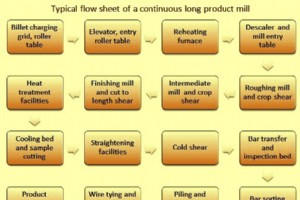
Rolling of Steel in a Modern Long Product Rolling MillLong product is a common name for (i) reinforcement steel bars, (ii) shaped steel bar products such as rounds, flats, squares, and hexagon etc., (iii) sectional products such as angles (equal and unequal), channels, beams, tees, and special profi
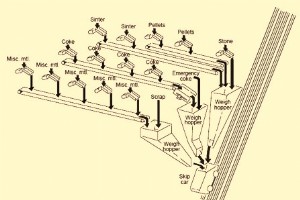
Blast Furnace Stock House A blast furnace (BF) needs for the production of hot metal (HM) (i) iron bearing raw materials like sinter, pellet, and calibrated lump ore also known as sized iron ore, (ii) fuels and reductant like BF coke, nut coke and pulverized coal, (iii) fluxing materials like lime s
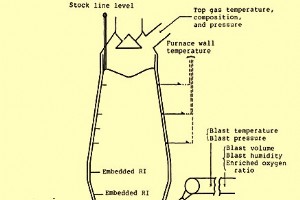
Probes, Instruments and measurements for Monitoring of Blast Furnace A blast furnace (BF) works with the principle of countercurrent gas to solid heat exchange from tuyere raceway to the stock line and of a countercurrent oxygen (O2) exchange from fusion zone to the stock line. Solid burden material
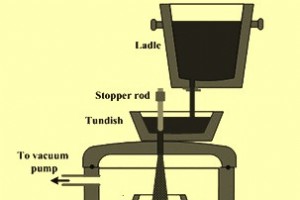
Vacuum Degassing Processes for Liquid SteelDuring the primary steelmaking process, gases like oxygen (O2), hydrogen (H2) and nitrogen (N2) dissolve in the liquid steel. These gases have a harmful effect on the mechanical and physical properties of steel. Dissolved O2 from liquid steel cannot be remo
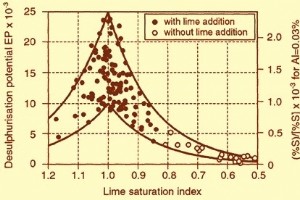
Desulphurization of Liquid SteelSolubility of sulphur (S) in liquid iron (Fe) is quite high. But the solubility of S in solid iron is limited. It is 0.002 % in ferrite at room temperature and 0.013 % in austenite at around 1000 deg C. Hence, when liquid steel cools down, sulphur is liberated from th
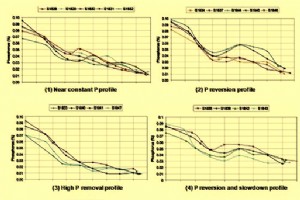
Dephosphorization of Steels The effects of phosphorus (P) on the properties of steels are summarized in Tab 1. It can be seen that P has both positive and negative effects on the steel’s properties.Tab 1 Effects of phosphorus on properties of steelsSl.No.PropertyEffect of phosphorus1StrengthStrong p
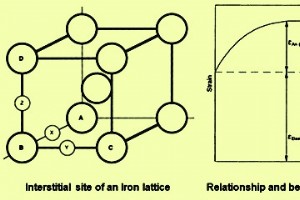
Behaviour of Iron and Steel Materials during Tensile TestingThe mechanical properties of iron and steels are often assessed through tensile testing. The testing technique is well standardized and can be conducted economically with a minimum of equipment. Since iron and steel materials are being util
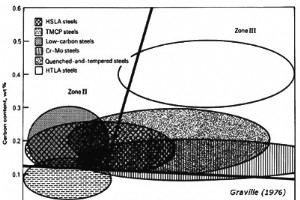
Welding of Carbon and Low Alloy Steels and Hydrogen Induced CrackingArc welding is a process by which steels are joined by coalescence. Normally the process uses a compatible filler material. Before a well-bonded joint is produced, the joint surface is to be heated above the melting temperature in o
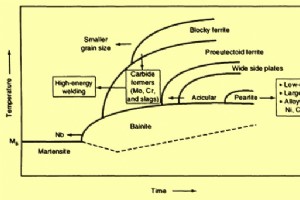
Heat Affected Zone and Weld Metal Properties in Welding of Steels There are many factors which control the properties of the weld metal and heat affected zone (HAZ) while welding of carbon (C) and low alloy steels. The weld metal and HAZ are frequently referred as steel weldments. The welding proces
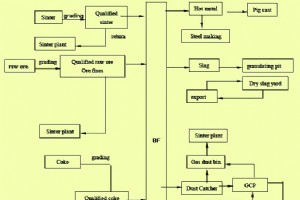
Mini Blast Furnace and Iron makingMini blast furnaces (MBF) are generally viewed as miniature versions of the conventional large blast furnaces (BF). These furnaces are ideally suited for small scale operations. In fact, they are basically the forerunner to modern conventional last blast furnaces an
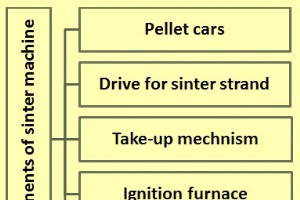
Sintering Technology for Iron ores and Optimization of Sinter Machine Design The technology of sintering in its most basic form is very simple and has been in use since early twentieth century. However, while the basic technology is simple, control of the process relies on a number of extremely comp
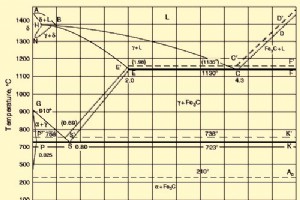
Metallurgical Principles in the Heat Treatment of SteelsHeat treatment of steels is carried out for achieving the desired changes in the metallurgical structure properties of the steels. By heat treatment, steels undergo intense changes in the properties. Normally very stable steel structures are ob
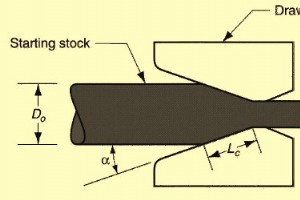
Wire and Rod Drawing Process for Steel Drawing of wire from steel rod is a metal working process used for the reduction of the cross-section of the rod. Similarly rods are drawn from steel rounds of larger diameters. During drawing the volume remains the same and hence there is increased in the leng
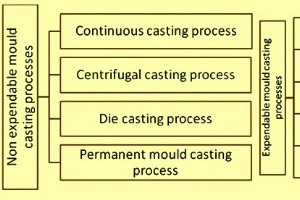
Processes for Casting of MetalsCasting of metals is a process of manufacturing materials made of metals. It is a forming process for the forming of hot liquid metals. It is the simplest, most direct route to a near net shape product, and often the least expensive. It is a process, in which liquid m
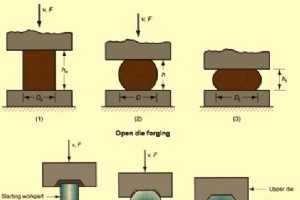
Processes for Forging of MetalsMetal forging is a deformation process where metal is pressed, pounded or squeezed under great pressure into high strength parts known as metal forgings. The forging process is entirely different from the casting (or foundry) process, as metal used to make forged parts
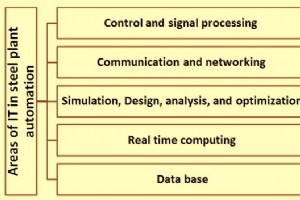
Automation in Steel IndustrySteel is an alloy of iron usually containing less than 1 % carbon. Because of its versatile properties and its recycling possibilities, steel is the basic material for sustained development in modern industrial society. It provides a broad range of uses in almost all imp
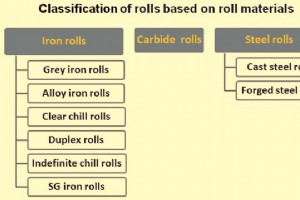
Rolling mill Rolls and Roll Shop Rolls are the main and very costly consumables in a rolling mill. They are used to roll steel in the rolling mill and their performance depend on many factors which include the materials used and the loads to which they are subjected to during service. The roll desig
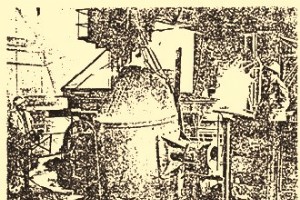
History of Basic Oxygen Steelmaking Basic oxygen steelmaking (BOS) is the process of making steel by blowing pure oxygen (O2) in a liquid metal bath contained in a vessel which is known as basic oxygen furnace (BOF), LD converter, or simply converter.The history of steelmaking began in the 19th cent
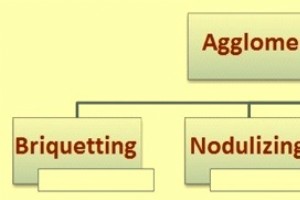
Iron Ore Agglomeration Processes and their Historical DevelopmentThere are four types of agglomerating processes which have been developed (Fig 1). They are (i) briquetting, (ii) nodulizing, (iii) sintering, and (iv) pelletizing.Fig 1 Agglomeration processesBriquetting is the simplest and earliest a
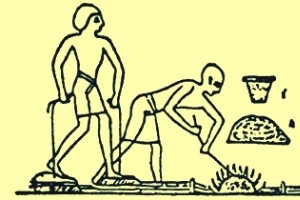
Evolution of Blast Furnace Iron MakingThe origin of the first smelting of iron is concealed in the unrecorded history of human civilization. The first evidence of iron implements being used in ancient times actually comes from Egypt where an iron tool was found in a joint between two stones in a pyr
Manufacturing process