



Creating Custom Exceptions in Java: A Step‑by‑Step Guide
What is a Custom Exception in Java?
A custom exception is a user‑defined class that extends java.lang.Exception (or RuntimeException for unchecked scenarios). By creating your own exception type you can represent domain‑specific error conditions, make error handling clearer, and provide richer context to callers.
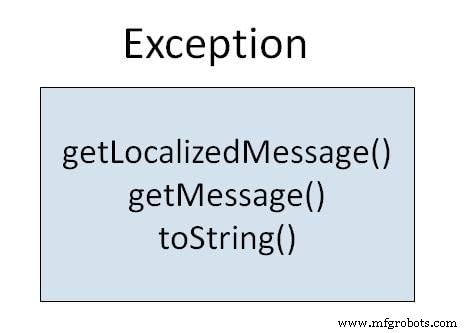
In practice you rarely need to override all methods from Exception. The most common customization involves adding constructors that accept an error code, message, or underlying cause. Below is a concise example that demonstrates the essential steps.
Example: Defining and Throwing a Custom Exception
Step 1 – Create the exception class
public class MyException extends Exception {
    private final int errorCode;

    public MyException(int errorCode) {
        super("Error code: " + errorCode);
        this.errorCode = errorCode;
    }

    @Override
    public String toString() {
        return "MyException{errorCode=" + errorCode + "}";
    }
}
Step 2 – Use the exception in client code
public class JavaExceptionDemo {
    public static void main(String[] args) {
        try {
            // Simulate a failure condition
            throw new MyException(2);
        } catch (MyException e) {
            System.out.println(e);
        }
    }
}
When you run the program you’ll see the following output:

In the example above the throw keyword creates an instance of MyException and immediately hands it off to the nearest matching catch block. The overridden toString() method ensures the printed message is informative.
Key Takeaways
- Extend
Exception(orRuntimeException) to create a custom type. - Provide constructors that pass meaningful messages to the superclass.
- Override
toString()orgetMessage()for clearer debugging output. - Use
throwto raise the exception; catch it where you can handle or propagate it further.
By following these practices you’ll write more maintainable, self‑documenting Java code that gracefully handles domain‑specific error conditions.
Java
- Creating Frictionless User Experiences: A UX Design Blueprint
- Mastering Java Anonymous Inner Classes: Definition, Syntax, and Practical Examples
- Java Exceptions: Types, Hierarchy & Handling
- Mastering Java’s ObjectInputStream: A Comprehensive Guide
- Mastering Java ObjectOutputStream: Serialization, Methods, and Practical Examples
- Mastering Java’s PrintStream Class: Print, Println, and Printf Explained
- Mastering Java Reader Class: Subclasses, Methods, and Practical Example
- Creating an Array of Objects in Java: A Step‑by‑Step Guide
- Mastering Java Packages: Creation, Importing, and Best Practices
- Java Swing Tutorial: Building Robust GUI Applications