



Stair‑Climbing Hand Trucks: Design, Benefits, and Why They Beat Traditional Models
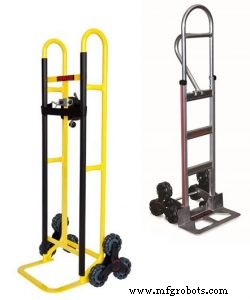
Hand trucks—commonly called dollies—are essential for moving heavy or bulky items efficiently. Their classic L‑shaped frame, sturdy handles, and two wheels allow operators to lift and roll loads with minimal effort. While traditional hand trucks suffice for flat surfaces, stair‑climbing models are engineered specifically for vertical movement.
What Makes a Stair‑Climbing Hand Truck Unique?
Stair‑climbing hand trucks retain the familiar L‑shaped design but feature a specialized wheel system. Instead of two wheels, they employ six wheels arranged in a tri‑star configuration—two sets of three wheels each. This arrangement distributes weight evenly and grips stair treads, enabling smooth ascent and descent without the need to lift the load manually.
Comparing Stair‑Climbing to Conventional Hand Trucks
The primary distinction lies in wheel count and layout. Conventional hand trucks have a pair of wheels that work well on level ground but struggle on stairs. Stair‑climbing trucks’ tri‑star wheels press against the side of each stair, providing stability and reducing the operator’s physical strain. As a result, the truck can be rolled up or down with a simple push or pull, rather than being lifted repeatedly.
Key Advantages of Stair‑Climbing Hand Trucks
- Effortless Stair Navigation: The tri‑star wheel system ensures a secure fit on stair treads, allowing continuous rolling rather than intermittent lifting.
- Load Protection: The wider lip at the bottom of the frame keeps items centered, preventing spills or falls that could damage goods or create hazards.
- Higher Capacity: Many stair‑climbing models include an extended lip and reinforced frame, enabling them to carry heavier loads than standard hand trucks.
- Versatile Applications: Ideal for warehouses, hospitals, construction sites, and any setting where vertical transport of goods is frequent.
See Monroe’s Screws.
Industrial equipment
- Choosing the Right Hand Truck: A Practical Guide for Safe, Efficient Heavy‑Load Transport
- Choosing the Right Hand Truck: 5 Key Factors to Consider
- Heavy‑Duty Truck Manufacturing: Design, Production, and the Road Ahead
- Understanding the Oxygen (O2) Sensor: Role, Placement, and Failure Signs
- Choosing the Right Lift Truck: A Guide to the Best Types for Your Business
- Articulated Trucks Explained: How They Power Construction and Heavy Transport
- Understanding Hand Pumps: How They Work and Their Uses
- Exploring the Essential Hand Tools Every Carpenter and DIY Enthusiast Should Know
- Knurling Explained: Mastering Textured Finishing Techniques
- Decoding 'N' in Pump Calculations: Its Role and Significance