



SamurAI: Low‑Power AI Chip Sets New Benchmark for Image Recognition in IoT
At the 2020 VLSI Symposium, French research institutes CEA‑Leti and LIST unveiled SamurAI, a compact AI accelerator that redefines power efficiency for image‑recognition workloads in the Internet of Things.
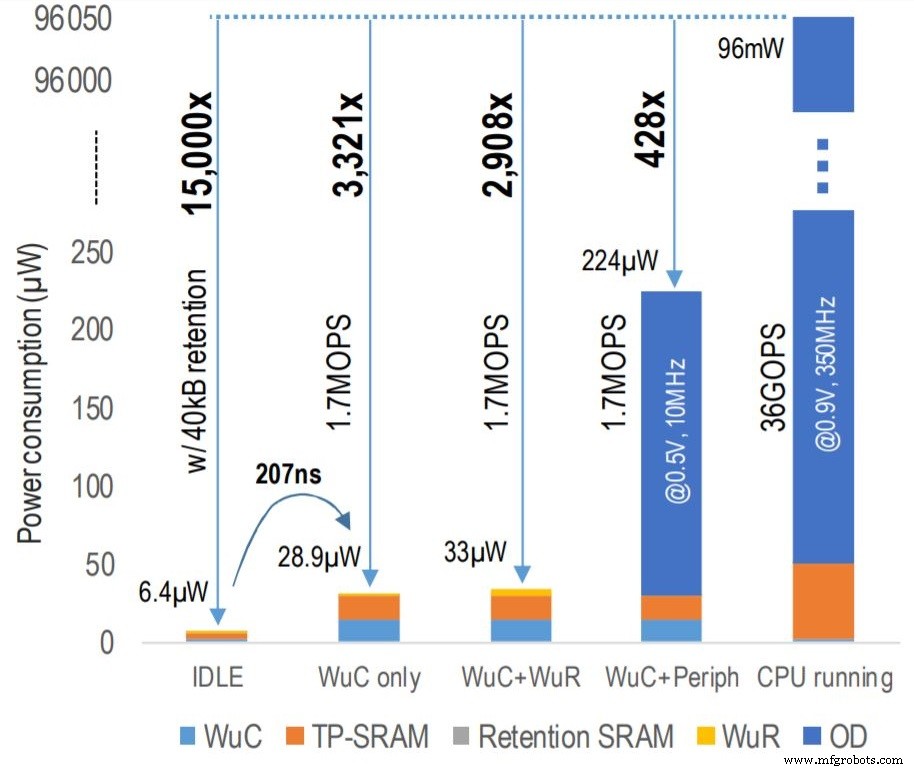
SamurAI integrates a low‑power IoT node and a dedicated AI accelerator, achieving a staggering 15,000× reduction in peak‑to‑idle power consumption while delivering up to 1.3 tera‑operations per second per watt (TOPS/W) or 36 GOPS for machine‑learning tasks.
In a real‑world occupancy‑detection prototype, the chip powered a system that included a PIR sensor, a 224×224‑pixel black‑and‑white camera, FeRAM and a low‑power radio. The system averaged 105 µW per day, with SamurAI consuming 26 % of that budget.
SamurAI System Overview
SamurAI is built around two on‑chip subsystems:
- A clockless, event‑driven wake‑up controller that can launch the system in 207 ns.
- An on‑demand subsystem that houses a RISC‑V CPU with deep‑sleep mode, the PNeuro AI accelerator, and cryptography accelerators.
This dual‑subsystem architecture yields a peak‑to‑idle power ratio of 15,000×. In idle mode the chip consumes just 6.4 µW; when the CPU and AI accelerator are active, power rises to 96 mW.
Fabricated in STMicro’s 28 nm fully‑depleted silicon‑on‑insulator (FD‑SOI) process, the 4.5 mm² die contains six switchable power domains and operates without body biasing.
PNeuro AI Accelerator
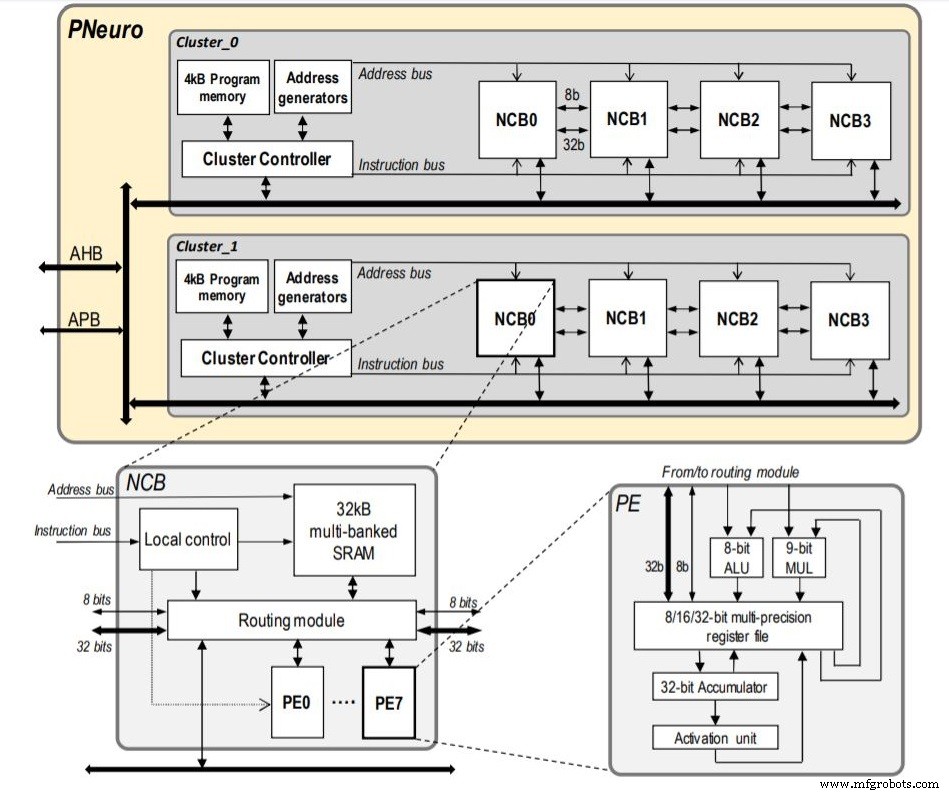
The accelerator, named PNeuro, is a single‑instruction, multiple‑data (SIMD) programmable engine. It comprises two clusters of 32 × 8‑bit processing elements backed by 264 kB of multi‑banked SRAM. The block can perform 64 MACs per cycle.
Key performance figures:
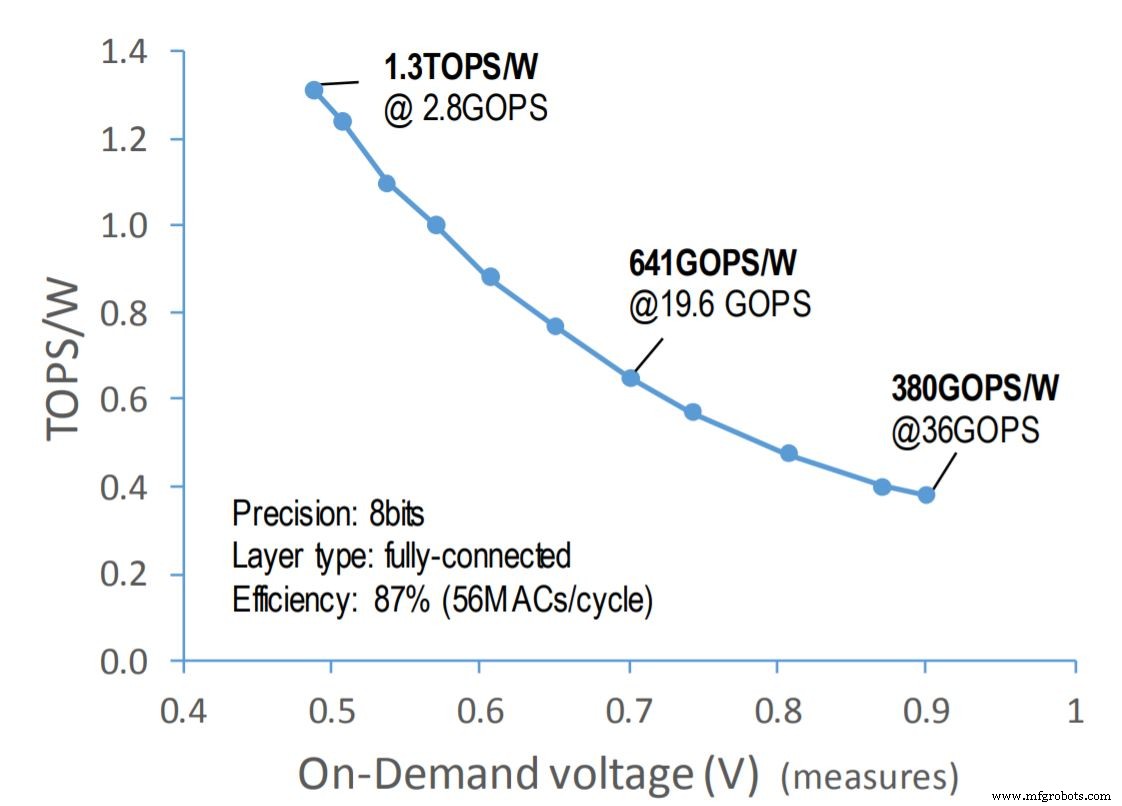
- 1.3 TOPS/W at 2.8 GOPS on a 0.48 V supply.
- 36 GOPS for 8‑bit fully‑connected neural‑network layers on a 0.9 V supply.
Deploying PNeuro halves the system’s total power consumption relative to executing machine‑learning workloads on the RISC‑V core.
Designed for IoT scenarios that require sporadic compute bursts between long sleep periods, SamurAI enables on‑device AI processing. This approach eliminates cloud dependency, reduces latency, and preserves privacy, making it ideal for applications such as person detection or scene identification using cameras or other sensors.
>> This article was originally published on our sister site, EE Times Europe.
Embedded
- Power Sources: AC and DC Explained
- Bulldozer Technology: Design, Manufacturing, and Future Innovations
- Aspinity Unveils RAMP: Analog Processor Cuts Edge Power by 10×
- How to Choose the Right External AC/DC Power Supply for Your Product
- Fundamentals of Facial Recognition: How AI Identifies Faces
- Software‑Driven Power Analysis: Optimizing Semiconductor Design for Efficiency
- ON Semiconductor Launches Low‑Power, High‑Frame‑Rate ARX3A0 Image Sensor for Intelligent Vision
- GreenWaves Unveils GAP9: Ultra‑Low‑Power AI Accelerator Achieves 50 mW Power with 50 GOPS Performance
- Esperanto Unveils 1,093‑Core RISC‑V AI Accelerator for Data‑Center Inference
- Choosing an Internal AC‑DC Power Supply for Your Product