Industrial manufacturing
 MfgRobots >> Industrial manufacturing > >> Industrial Internet of Things >> Internet of Things Technology
Internet of Things Technology

LONDON — A coalition of 18 leading vendors and research institutions has signed a cooperation agreement to establish the Edge Computing Consortium Europe (ECCE). The consortium’s mission is to deliver a standardized reference architecture and technology stack that can be deployed across smart manufa
Editor's Note: The Industrial Internet of Things (IIoT) promises to provide deep insight into industrial operations and enhance efficiency of connected machines and systems. Large-scale IIoT applications rely on layered architectures to collect data from a broad range of sensors, move
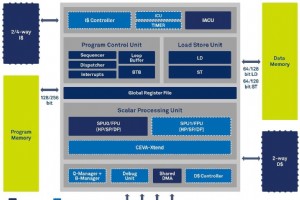
CEVA has unveiled the CEVA‑BX hybrid processor alongside its WhisPro speech‑recognition engine. The CEVA‑BX fuses digital‑signal processor (DSP) and microcontroller (MCU) capabilities into a single silicon solution, meeting the rising demand for both high‑throughput signal processing and versatile c

My home is powered by Amazon Alexa, with Echo, Echo Dot, and Echo Tap devices scattered throughout. When I first saw the second‑generation Echo redesign, I was underwhelmed by its appearance; I prefer a more “metallic” aesthetic. As a result, I began collecting first‑generation units while they were
SAN JOSE, Calif. — Deep neural networks are steadily moving into industrial environments, poised to transform factory automation. Early adopters already embed neural networks as the intelligence behind computer‑vision cameras. Over time, these networks will infiltrate robotic arms, sensor gateways,
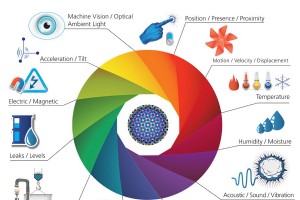
In modern industrial plants, sensors form the backbone that supplies real‑time data to controllers, monitoring systems, and operational technologies. Beyond process control, sensors enable quality assessment, asset tracking, and worker safety. Cloud‑based analytics and AI now turn sensor data into c
While Industry 4.0 and the industrial internet of things (IIoT) dominate headlines, the nuances that vanish when traditional IoT concepts are applied to factory processes often go unnoticed. IIoT was conceived on the premise that the same breakthroughs driving IT could accelerate operational technol

Last week, Munich welcomed approximately 80,000 visitors to Electronica, one of the world’s largest biennial electronics trade shows. EE Times and Aspencore participated in the event, hosting the Embedded Forum and engaging with exhibitors and senior executives to uncover the latest industry trends.

Traditional manufacturing—assembling raw materials through multiple phases—has been eclipsed by smart manufacturing, which augments the classic process with information technology, flexibility, and advanced computer control. This article explores the rapidly evolving field of smart manufacturing and
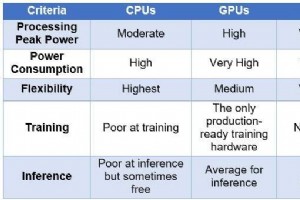
Accelerating Deep Learning with FPGAs: Speed, Flexibility, and Energy Efficiency I recently attended the 2018 Xilinx Development Forum in Silicon Valley, where I discovered Mipsology, a startup that claims to have solved the AI‑related challenges of deploying neural networks on field‑programmable ga
Industrial Internet of Things (IIoT) unlocks unprecedented visibility into manufacturing processes, driving smarter decision‑making and higher efficiency. Enterprise‑grade IIoT solutions rely on multi‑layered architectures that safely gather data from diverse sensors, transmit it to the cloud, and a
This article is part of the AspenCore Special Project on Semi‑Autonomous Motorcar technology. Explore the other articles in this Special Project: Special Project Intro How to Build a Car for Someone Who Can’t Drive The Eyes Have It Let’s Modify a Car Visit the Special Projects homepage
LONDON — A recent Industrial Internet of Things (IIoT) security Special Report highlighted a widespread gap in awareness across the ecosystem regarding the critical need for robust security in connected devices. A follow‑up survey confirms that fragmentation and security remain the foremost challeng
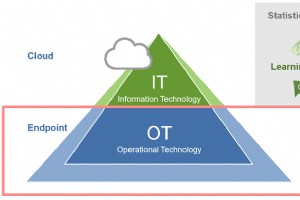
TOKYO — In the age of smart manufacturing, artificial intelligence is no longer optional; it’s a cornerstone. Yet many firms struggle to translate AI theory into operational reality, citing a lack of in‑house expertise and uncertain ROI. Renesas Electronics is redefining the path forward with its “r

Editor’s Note: The rising demand for reliable IoT connectivity aligns perfectly with the advent of cellular technologies tailored for the Internet of Things. For developers, this makes it essential to understand how cellular solutions can be leveraged for IoT deployments. Excerpted from the book Cel
An autonomous vehicle crash can trigger a financial catastrophe for manufacturers and the entire supply chain. ISO 26262 functional safety standards have become central to designing safe systems, and proper implementation can be the difference between success and failure. The rising complexity of au
The Internet of Things (IoT) introduces a cascade of design choices, from selecting a wireless module to choosing how data reaches the cloud. A typical IoT ‘thing’ must first embed a wireless module that can speak Wi‑Fi, cellular, or Bluetooth. This module handles the low‑level communications requir

Editor’s Note: The growing demand for ubiquitous IoT connectivity aligns perfectly with emerging cellular technologies designed for the Internet of Things. Developers now need detailed, reliable insights into these technologies and their real‑world applications. This article, extracted from the book
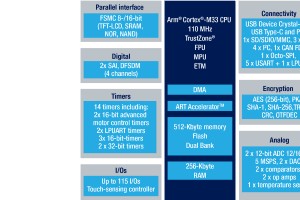
LONDON — In a rapidly connected world, security has become a top priority for IoT devices. STMicroelectronics and NXP Semiconductors are leading the charge with new Cortex‑M33‑based microcontrollers that embed Arm TrustZone for robust hardware‑level protection. STMicroelectronics unveiled the STM32L

Editors Note: As demand for IoT devices rises, cellular technologies tailored for the IoT are becoming essential. Developers now need in‑depth guidance on selecting the right solution. Excerpted from Cellular Internet of Things, this series explains key concepts and practical applications of cellul
Internet of Things Technology