Industrial manufacturing
fiber
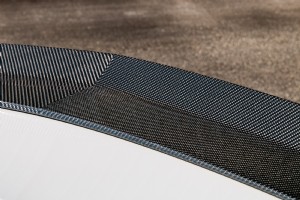
Choosing the right material is foundational to product success. Traditional metals like steel add weight and cost, while aluminum can compromise durability under stress. In contrast, carbon fiber offers a superior blend of strength, lightness, and versatility that benefits manufacturers and consume

Prosthetic technology has evolved from basic plastic designs to sophisticated, near‑robotic systems. Carbon fiber now stands at the forefront, delivering unmatched strength while remaining exceptionally lightweight. Extensive research over the past decade has shown that carbon fiber composites can

Carbon fiber has earned a reputation as one of the most powerful materials in modern engineering. Over the past 70 years, its exceptional combination of strength, lightness, and durability has made it a cornerstone in fields ranging from automotive design to aerospace engineering. What Is Carbon Fi

Over the past decade, carbon‑fiber‑reinforced polymers (CFRPs) have transitioned from aerospace and automotive industries into the medical field. Their unique combination of light weight, high strength, and biocompatibility makes them an attractive alternative to traditional metals for a wide range
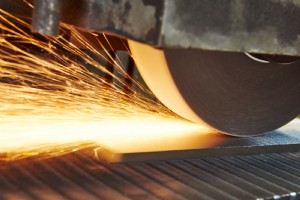
Manufacturing accounts for roughly 11.4% of the U.S. GDP, underscoring the sector’s critical role in the economy. To thrive, you must base every design decision on data‑driven material selection. Below is a clear, expert comparison of aluminum and carbon fiber that will help you decide which materi
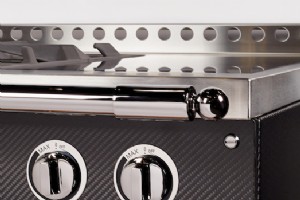
Thinking of refreshing your home with new appliances? Home renovations offer a productive way to spend time during the pandemic, and swapping outdated furniture for modern appliances can boost both aesthetics and well‑being. Yet, with remodeling budgets often running into the thousands, choosing ap

Looking to stay ahead of the curve? Carbon fiber is reshaping industries from aerospace to medicine—and cycling is no exception. The future of bikes is already here. What Is Carbon Fiber? Carbon fiber is a high‑performance, lightweight material derived from organic polymers. Through a meticulous ca

Carbon fiber, first fabricated in 1958 and recognized for its exceptional strength in 1963, has evolved from aerospace and automotive applications to high‑performance jewelry. Today, many men choose carbon fiber rings for their modern look and superior engineering properties. What Is Carbon Fiber?

Carbon fiber is neither animal, vegetable, nor mineral, yet it surpasses steel in strength and weight, and is exceptionally fire‑resistant. While it has earned acclaim in aerospace, this article examines its growing presence in everyday fashion—particularly in jewelry. Why the buzz around carbon fi

Fiberglass has long been the workhorse of the composite sector, prized for its strength-to-cost ratio. Yet when the demands of an application push beyond what glass can offer, manufacturers turn to carbon fiber. Its ultra‑light weight, exceptional stiffness, excellent electrical conductivity, and d

The violin, born in its current form in 1550, has accompanied humanity through battlefields, saloons, and concert halls. Today, a cutting‑edge material is elevating this timeless instrument to new heights: carbon fiber. Carbon‑fiber violins and bows have surged in popularity over the past decade, o

In 1958, researchers near Cleveland, Ohio, unveiled carbon fiber, a material that would soon become a cornerstone of high-performance design. Today, its unparalleled strength-to-weight ratio is revolutionizing sectors from automotive to leisure. Carbon fiber’s lightness, durability, and aesthetic ap

From high‑performance aircraft to everyday gadgets, carbon‑fiber has become the go‑to material for items that need to be both lightweight and tough. It’s no surprise that premium luggage brands now turn to this composite for travelers who demand durability without the bulk. In this guide we’ll expl

Carbon fiber has earned its reputation as the workhorse of modern manufacturing. Its presence spans sports equipment, consumer electronics, and automotive components, and industry experts predict it could eventually replace steel in many applications. While the production process is still complex a

Manufacturers across industries rely on compression and injection molding to produce high‑quality components. When it comes to carbon‑fiber parts, the choice between molding and casting can influence cost, precision, and performance. SMI leads the market in carbon‑fiber manufacturing for automotive

The aerospace sector is evolving at a rapid pace, pushing the boundaries of design, efficiency, and sustainability. From the exterior to the core systems, innovations are being introduced that promise to redefine how aircraft are built and operated. Below are the three developments that have captur

In 2019, the global marine composites market was valued at approximately $4 billion USD, and the trend toward these advanced materials is only accelerating. Marine environments are among the most demanding settings for structural materials, traditionally relying on wood, aluminum, or steel. Recent

Carbon fiber production is gaining momentum as global demand expands across diverse sectors. From aerospace to medical devices, the material’s unique properties are unlocking new possibilities. In this article, we examine three compelling reasons why carbon‑fiber manufacturers can anticipate height

For decades, composite materials—especially fiberglass and carbon fiber—have transformed aerospace design. As the industry pushes toward higher speeds and greater efficiency, the next generation of composites promises even more dramatic gains. Why Composites Still Matter in Modern Aircraft Weight h

For centuries, builders relied on stone, wood, and concrete. Today, the rise of advanced composite materials—especially fiber‑reinforced polymers (FRP)—is reshaping the industry. Why Construction Firms Are Turning to Composites FRP composites combine high‑strength fibers with a polymer resin, deliv
fiber