Industrial manufacturing
fiber
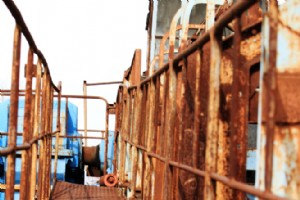
For decades, steel grating was the go‑to choice for industrial floors. Today, advances in material science show that it is no longer the safest or most economical option. Corrosion, high maintenance, and inherent electrical conductivity make steel grating a growing safety risk. DEFI’s reinforced fib

In hazardous work environments, the safety of personnel and the reliability of floor systems are paramount. Traditional metal grates, while robust, present challenges such as corrosion, weight, and maintenance demands.Recent advances in composite technology have introduced Fiberglass Reinforced Plas
DEFI’s fiberglass expertise spans a broad spectrum of sectors. Our FRP (fiber‑reinforced polymer) solutions are employed by hundreds of industries, each deriving unique advantages. While many clients identify the end‑product they need, few grasp the underlying technology, scientific principles, and
When choosing a cost‑effective material for industrial construction, fiberglass stands out. Compared with steel or aluminum, molded fiberglass is lighter, corrosion‑resistant, and offers comparable strength—all at a fraction of the cost. Why Fiberglass Wins in the Workplace Like steel and aluminum,
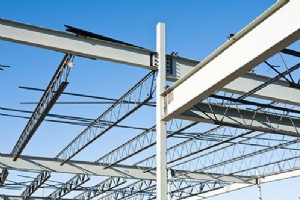
In terms of tensile strength, fiberglass matches steel pound for pound. However, because of its lighter density, a fiberglass member typically needs to be slightly thicker to achieve the same load‑bearing capacity as a steel beam.Industrial buyers frequently ask whether fiberglass can replace steel.
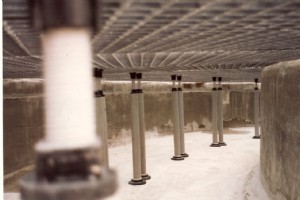
It varies by product and application: typical lead times range from a few days to a couple of weeks. In rare cases, custom orders may take up to a month. DEFI’s FRP grating is the go‑to solution for industries demanding reliability in harsh environments. Each panel is fabricated from high‑grade fibe
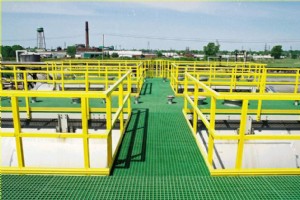
Fiber‑Reinforced Plastic (FRP) is engineered to withstand the toughest environments—chemical exposure, UV radiation, and electrical hazards—without the upkeep that metals and wood demand.Virtually, none. Since FRP is corrosion resistant and UV stable, you really don’t have to do any type of maintena
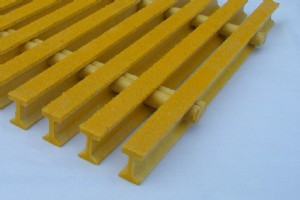
Choosing the right fiberglass grating can impact safety, durability, and cost for any industrial or commercial space. DEFI’s two flagship manufacturing methods—molded and pultruded—offer distinct advantages that suit different applications. Molded fiberglass grating is hand‑crafted in an inverted wa

Fiberglass, or FRP, is ideal for docking structures because it resists corrosion, withstands UV exposure, and its open‑cell design dissipates wave pressure. The result is a dock that stays pristine with virtually no long‑term maintenance. The High Cost of Traditional Dock and Deck Maintenance Woode
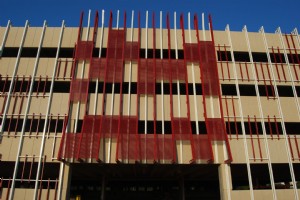
Custom Fiberglass Fabrication—Expert Solutions for Any Industry At DEFI Fiberglass, we turn your unique challenges into high‑performance fiberglass solutions. Our team crafts custom FRP products that meet precise specifications while delivering corrosion resistance, flame retardancy, non‑conductivi
Historically, fiberglass has cost 1 to 1.5 times more than steel, but the payoff is a product that lasts far longer, extending the entire life cycle of the structure. The Case for FRP’s Value When choosing materials for industrial and structural projects, the selection must align with the intended u
FRP is renowned for its exceptional durability—most installations can be expected to perform reliably for 20‑25 years or more, thanks to its superior corrosion resistance and UV stability. Why FRP Is a Strong Alternative to Steel Steel has long been the benchmark for structural materials: it’s rigi
Fiberglass is a broad term for glass fiber products, while FRP—fiber‑reinforced plastic—refers to composites where glass or other fibers strengthen a polymer matrix. Although the two terms are often used interchangeably, they represent distinct technical concepts. What Is Fiberglass? Fiberglass is
A: FRP is produced through several methods tailored to the product’s final use. At DEFI we specialize in the open‑mold process, hand‑layup, and pultrusion. FRP is not a recent invention. Over a century ago, American chemist Leo Baekeland, originally from Belgium, pioneered Bakelite—the first true f
What’s the Difference Between FRP and GRP?In North America the term FRP (Fiber‑Reinforced Plastic) is standard, while in Europe and Asia the same material is called GRP (Glass‑Reinforced Plastic). Both refer to a composite that marries a thermoset resin matrix with reinforcing fibers, typically glas
Absolutely, FRP can be painted. Successful application hinges on proper surface preparation, the right paint choice, and controlled environmental conditions.Why Paint FRP?Unfinished or inadequately coated FRP is vulnerable to UV degradation and water ingress—particularly in outdoor applications. Epo
Answer: On a per‑weight basis, structural FRP matches steel’s strength. However, to achieve the same load capacity, a fiberglass beam often must be slightly thicker or deeper than a steel beam of the same nominal size.If you’ve seen this question before, you’re not alone. It’s been asked countless t

Fiber‑reinforced plastic (FRP) is a composite that marries glass fibers with a high‑performance resin, delivering the strength of steel while weighing only a fraction of it. It’s the material of choice for modern infrastructure where durability and cost‑efficiency matter.Typical FRP assemblies have
FRP Is Absolutely Waterproof FRP, composed of a resin matrix reinforced with glass fibers, has an absorption rate that is virtually negligible. Compared with traditional materials like wood or steel, it does not soak up water, making it effectively waterproof. Why Moisture Matters in Industrial Set
Absolutely – structural fiberglass (FRP) is the optimal building material for meat processing plants. Its superior corrosion resistance means that the harsh bleach and other caustic cleaners required at the end of each shift no longer degrade the infrastructure. FRP’s resilience is evident in every
fiber