



Titanium‑Clad Copper: Composition, Benefits, and Advanced Manufacturing Techniques
Titanium‑Clad Copper & Its Production Methods
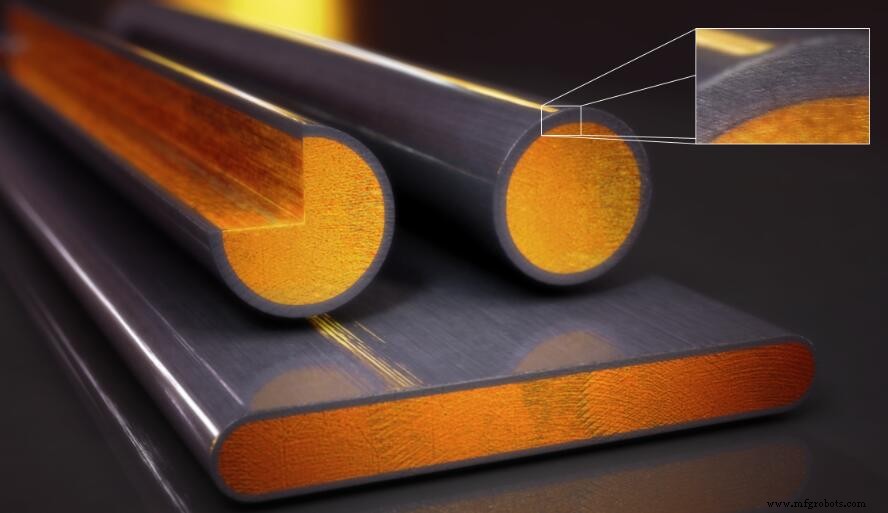
Titanium‑clad copper is a copper core coated with a 1.0–1.2 mm titanium layer. The composite combines copper’s high electrical conductivity with titanium’s superior corrosion resistance, making it ideal for use as a metal anode conductor in electrolyzers and other demanding electrochemical systems.
Titanium‑Clad Copper
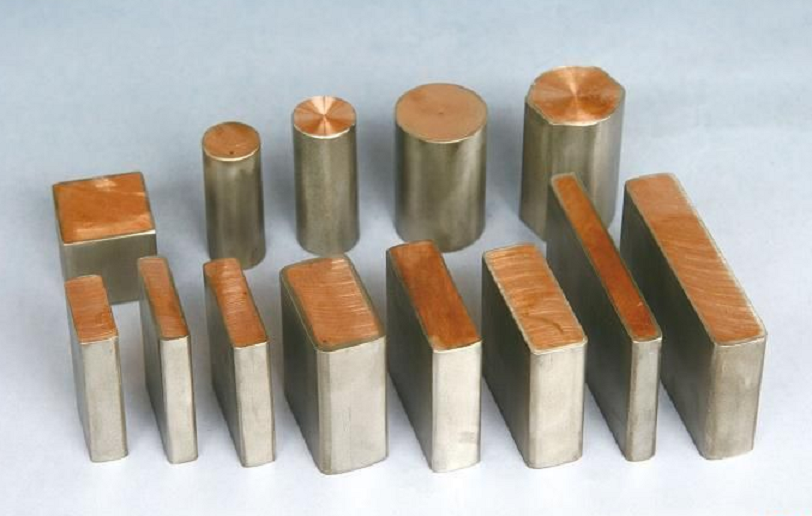
This material can be fabricated in round, flat, square, or rectangular cross‑sections, each suited to specific applications. Its dual‑metal structure ensures a uniform current density and prevents copper corrosion, thereby extending component life and maintaining electrolyte purity.
Since its introduction in the 1960s, titanium‑clad copper has become the standard anode material worldwide, with continuous improvements in manufacturing processes that enhance strength, durability, and dimensional accuracy.
The Production Methods of Titanium‑Clad Copper
Manufacturers typically employ one of four primary techniques:
- Hot extrusion – The copper rod is inserted into a titanium tube and forced through a die at elevated temperatures. This method yields high strength and excellent metallurgical bonding, though the surface can be rough.
- Hot extrusion with post‑stretching – After extrusion, the rod undergoes controlled cold drawing. The process refines the surface finish, improves bending resistance, and enhances dimensional tolerances, making it the most common commercial route.
- Explosive bonding – A copper core is wrapped in titanium and subjected to a detonation wave that fuses the two metals. Although effective, the low throughput and high cost have limited its industrial use.
- Explosive bonding followed by groove rolling – This hybrid approach starts with explosive bonding to form a billet, then uses groove rolling to produce flat or rectangular shapes. It offers higher efficiency than pure explosive methods but remains unsuitable for mass production.
Current market offerings are primarily produced by the hot extrusion‑with‑stretching method, balancing performance and cost‑effectiveness.
Conclusion
We hope this overview clarifies the composition, advantages, and manufacturing routes of titanium‑clad copper. For deeper insights into titanium and related refractory metals, visit Advanced Refractory Metals (ARM), headquartered in Lake Forest, California. ARM supplies high‑quality alloys such as tungsten, molybdenum, tantalum, rhenium, titanium, and zirconium at competitive prices.
Metal
- Spherical Tungsten Powder Production Techniques: Methods, Advantages, and Industry Applications
- Titanium’s Superior Corrosion Resistance and Key Industrial Applications
- Titanium‑Clad Steel Plates: Superior Corrosion Resistance Across Industry Applications
- Titanium and Alloy Anodizing: Process, Coloration, and Applications
- Porous Titanium Plate: Advanced Material for Efficient Filtration and Ozone Wastewater Treatment
- Titanium Sponge: Production Processes and Industry Applications
- Titanium Rods Manufacturing: Techniques, Benefits, and Industry Applications
- Java Methods: How to Define, Call, and Use Them Effectively
- C# Methods: Defining, Calling, and Using Functions
- Industry 4.0: How Digital Transformation Is Revolutionizing Manufacturing