


Industrial manufacturing
Metal

Steel 25 CrMo 4 is suitable for parts of high strength and ductility requirements and mean and higher heat-treatment sections in vehicle manufacturing, engine and machine engineering (e.g. crankshafts, steering knuckles, pinions). Lowest application temp. -40 °C.PropertiesGeneralPropertyTemperatureV
Tthe material G-X 3 CrNiMoN 17 13 5, material number 1.4439, can be used in a temperature range between -60 °C and 400 °C according to VdTÜV-Wbl 458 : 2001-12 for pressure vessels based on the TRB 100 and the AD-Merkblättern W 5 und W 10 including W 5 und A 4. Single certificats or complementary cer
G-X 20 Cr 14, for the manufacturing of turbines, e. g. buckets, blades, cocks, valve constructions,PropertiesGeneralPropertyTemperatureValueDensity20.0 °C7.7 g/cm³MechanicalPropertyTemperatureValueCommentElastic modulus23.0 °C220 GPaTypical for Martensitic Stainless SteelElongation20.0 °C12 %Hardnes
The fully killed machining steel 60 S 20 is used for mass parts of highest strength, especially for lower toughness demands cross-sectional. It has advantages regarding a higher cutting speed. Application in the automotive engineering, toolbuilding, apparatus engineering (screws, nuts, smal parts).P
CuZn31Si1 (CW708R) is an unhardenable copper alloy. High hardness and strength parameter are achievable by cold forming only. Silicon decreases stress corrosion sensitivity. CuZn31Si1 shows favorable friction qualities. Processing properties: warm forming: moderately cold forming: good machinabilit
CuZn31Si1 (CW708R) is an unhardenable copper alloy. High hardness and strength parameter are achievable by cold forming only. Silicon decreases stress corrosion sensitivity. CuZn31Si1 shows favorable friction qualities. Processing properties: warm forming: moderately cold forming: good machinabilit
CuZn28 (CW504L) is an unhardenable wrought alloy. High hardness and strength parameter are achievable by cold forming only. Thermal and electrical conductivity are lower than for CuZn20. Corrosion resistance is similar to pure copper. Processing properties: warm forming: good cold forming: very goo
CuZn28 (CW504L) is an unhardenable wrought alloy. High hardness and strength parameter are achievable by cold forming only. Thermal and electrical conductivity are lower than for CuZn20. Corrosion resistance is similar to pure copper. Processing properties: warm forming: good cold forming: very goo
CuZn36 (CW507L) is an unhardenable wrought alloy. High hardness and strength parameter are achievable by cold forming only. Thermal and electrical conductivity are lower than for CuZn33. Corrosion resistance is similar to pure copper. Processing properties: warm forming: good cold forming: very goo
Material CuZn35Pb2, mat. No. CW601N, is an unhardenable wrought alloy. To the comparable make CuZn36Pb1,5, mat. No. 2.0331 acc. to DIN 17660 : 1983-12 applies: High hardness and strength parameter are achievable by cold forming only. Thermal and electrical conductivity are lower than for the unleade
CuSn6, mat. No. CW425K, is comparable to the DIN-make CuSn6, mat. No. 2.1020, acc. to DIN 17662 : 1983-12. Properties of the CuSn-alloy are predominantly determined by the tin-content. Tensile strength, yield point and hardness increase according to the rising cold forming grade, elongation after fr
Material CuZn35Pb1, mat. No. CW600N, is an unhardenable wrought alloy.High hardness and strength parameter are achievable by cold forming only. Thermal and electrical conductivity are lower than for the unleaded brass grade of the same Zn-content. Machinability is improved by Pb-addition. Corrosion
Material CuZn35Pb1, mat. No. CW600N, is an unhardenable wrought alloy.High hardness and strength parameter are achievable by cold forming only. Thermal and electrical conductivity are lower than for the unleaded brass grade of the same Zn-content. Machinability is improved by Pb-addition. Corrosion
Wire fom copper alloy for general purposes.PropertiesGeneralPropertyTemperatureValueDensity20.0 °C8.67 - 8.7 g/cm³MechanicalPropertyTemperatureValueElastic modulus20.0 °C119 GPa100.0 °C116 GPa200.0 °C111 GPa300.0 °C106 GPa400.0 °C100 GPa500.0 °C91 GPa600.0 °C81 GPa700.0 °C71 GPaElongation A10020.0 °
CuNi2Si, mat. No CW111C, is counted among hardenable, low alloyed copper alloys. To the comparable make CuBNi2Si, mat. No 2.0855, acc. to DIN 17666 : 1983-12 applies: The material shows favorable electrical and thermal conductivity, corrosion resistance, high fatigue and creep resistance as well as
Steel P460NL2 is a particularly cryogenic weldable alloyed high-grade steel for pressure vessel and steel construction.PropertiesGeneralPropertyTemperatureValueDensity20.0 °C7.84 g/cm³MechanicalPropertyTemperatureValueCommentElastic modulus-100.0 °C217 GPa20.0 °C212 GPa100.0 °C207 GPa200.0 °C199 GPa
Steel P460NL1 is a cryogenic weldable fine-grained construction steel (alloyed high-grade steel) for pressure vessel construction.PropertiesGeneralPropertyTemperatureValueDensity20.0 °C7.84 g/cm³MechanicalPropertyTemperatureValueCommentElastic modulus-100.0 °C217 GPa20.0 °C212 GPa100.0 °C207 GPa200.
The material X4CrNiMo16-5-1 is a martensitic stainless steel for the mechanical engineering, for pumps, arbors, fittings, compressor as well as in shipbuilding. It shows favorable corrosion resistance and cryogenic ductility up to -200 °C. The material shows high corrosion resistance especially to w
CuSn8, mat. No. CW453K, is comparable to the DIN-make CuSn8, mat. No. 2.1030, acc. to DIN 17662 : 1983-12. Properties of the CuSn-alloy are predominantly determined by the tin-content. Tensile strength, yield point and hardness increase according to the rising cold forming grade, elongation after fr
The martensitic steel X3CrNiMo13-4 shows favorable ductility qualities and sufficient corrosion resistance at a temperature of -60 to 300 °C. X3CrNiMo13-4 shows due to its N-content better corrosion properties than the comparable 13% Cr-steels. Application: in tempered condition for turbine blade wh
Metal

Robotics in the 21st Century: Distributed Systems, Telepresence, and Space Exploration
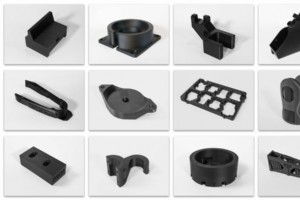
BCN3D Omega I60: Unlocking Industrial 3D Printing with Advanced Materials and Applications
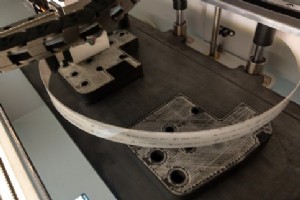
Lean Machine: 3D‑Printed Composite Vises Boost Fabrication Efficiency
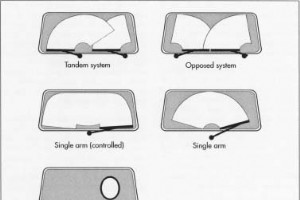
Windshield Wipers: Design, History, and Manufacturing Insights

