


Industrial manufacturing
Metal

PropertiesGeneralPropertyValueConditionRelated StandardsDensity2.68 g/cm³H32EN 573-3, EN 4852.69 g/cm³H32EN 573-3, EN 485MechanicalPropertyValueConditionRelated StandardsCommentBending angle 180°1.0 °/tH32EN 573-3, EN 4851.5 °/tH32EN 573-3, EN 485Bending angle 90°0.5 °/tH32EN 573-3, EN 4851.0 °/tH32
PropertiesGeneralPropertyValueConditionRelated StandardsDensity2.68 g/cm³H22EN 573-3, EN 4852.69 g/cm³H22EN 573-3, EN 485MechanicalPropertyValueConditionRelated StandardsCommentBending angle 180°1.0 °/tH22EN 573-3, EN 4851.5 °/tH22EN 573-3, EN 485Bending angle 90°0.5 °/tH22EN 573-3, EN 4851.0 °/tH22
PropertiesGeneralPropertyValueConditionRelated StandardsDensity2.69 g/cm³H34EN 573-3, EN 485MechanicalPropertyValueConditionRelated StandardsCommentBending angle 180°1.5 °/tH34EN 573-3, EN 4852.0 °/tH34EN 573-3, EN 485Bending angle 90°0.5 °/tH34EN 573-3, EN 4851.0 °/tH34EN 573-3, EN 4852.0 °/tH34EN
Highly creep resistant steel used for the production of pressure vessels and steam boilers and in the construction of nuclear power stations.PropertiesGeneralPropertyTemperatureValueDensity20.0 °C7.93 g/cm³MechanicalPropertyTemperatureValueCommentElastic modulus-100.0 °C206 GPa20.0 °C196 GPa100.0 °C
1000 h at 350 °C. the notch impact energy/strength may decrease to 50 % of the values of the standard. To the alloy acc. to DIN EN 10088-1 : 1995-08 applies: This material shows high resistance to stress corrosion. Good resistance to pitting and intercrystalline corrosion also in welded condition. T
Material X2CrMoTi18-2 is comparable to X 2 CrMoTi 18 2 acc. to SEW 400: 1991-02. This material is a ferritic steel with good resistance to pitting and stress corrosion. Resistance to intercrystalline corrosion also in welded condition. It is very good cold formable due to its low solidification tend
The heat resistant steel X6CrNiMo17-13-2 (1.4918) is used for pressurised seamless tubes.PropertiesGeneralPropertyTemperatureValueDensity20.0 °C7.98 g/cm³MechanicalPropertyTemperatureValueCommentElastic modulus-100.0 °C206 GPa20.0 °C196 GPa100.0 °C190 GPa200.0 °C182 GPa300.0 °C174 GPa400.0 °C166 GPa
The steel is used for rail vehicle engineering acc. to the selected standard DIN 5512-3 up to 12 mm thickness.The corresponding properties of EN 10088 shall be taken.Application examples: door and window profiles, fittings, holders, racks, radiator coversRemark: Only suitable for resistance welding.
The austenitic-ferritic material X2CrNiMoCuN25-6-3 is used in solution annealed condition in the form of cold rolled strip, warm rolled strip and warm rolled sheet as well as for rods, wire rod and profiles. It is resistant to intercrystalline corrosion also in sensitized condition.PropertiesGeneral
According to the VdTÜV-Werkstoffblatt editions VdTÜV-Wbl 432-1 : 1999-06 (sheet metal, strip metal), VdTÜV-Wbl 432-2 : 1999-03 (seamless tube) and VdTÜV-Wbl 432-3 : 1999-06 (bar steel, forging) as well as VdTÜV 541 : 2001-06 (seamless compound pipes, coating material), the material NiCr21Mo with the
Nitrogen alloy steel for use in power station technology, superheater ducts and sperheated steam ducts, collectors, heat exchangers and other highly stressed parts. Operating temperature at continuous operation: 800 degrees C. The steel is not prone to hot cracking after welding.PropertiesGeneralPro
The austenitic material X2CrNiMo18-12-4 is used in solution annealed condition in the form of cold rolled strip, warm rolled strip and warm rolled sheet. It is resistant to intercrystalline corrosion also in sensitized condition.PropertiesGeneralPropertyTemperatureValueDensity20.0 °C8 g/cm³Mechanica
Highly creep resistant, heat resistant steel as a variant of the heat resistant steel X 10 NiCrAlTi 32 20. Operation temperature: 500 to 700 degrees C.Additional services: To ensure our customers' processes and/or products attain – and even exceed – their performance expectations, we offer a wi
Properties: - corrosion behaviour is similar to 1.4401 - due to the higher Mo-content it possesses a something improved resistance to selective attack Application: - for acid-proof apparatuses of the chemical and pharmaceutical industry - in cellulose, pigment, fatty acid, textile and rayon industry
Material X2CrTiNb18 is comparable to X 6 CrTiNb 18 (here higher C-content). It shows resistance to intercrystalline corrosion both in delivery and welded condition. This material is a structure stabilized stainless steel. Application for welded parts in dairy and food industry as well as in brewerie
Fully austenitic high temperature special steel which is resistant to scaling up to 750 degrees C and has a good creep resistance up to 700 degrees C. Used in steam and gas turbine construction (shovels, flanges, valves, nozzles, casings and bolts), for parts in the reactor technology and in the pet
Properties are in DIN EN 10088-2 : 2005-09 / Material variant DIN EN 10088-1 :2005-09PropertiesGeneralPropertyTemperatureValueDensity20.0 °C7.7 - 7.73 g/cm³MechanicalPropertyTemperatureValueElastic modulus20.0 °C217 - 220 GPa100.0 °C215 GPa200.0 °C188 - 210 GPa300.0 °C164 - 205 GPa400.0 °C195 GPaElo
AMPCO® 22 is a duplex structure alloy of approx. 50 % of each phase - gamma 2 and beta. It is remarkable because of its hardness, its excellent compression and wear resistance and by its sliding properties. As the elongation of the material is very low, thin sections should be avoided and the materi
AMPCO® 22 is a duplex structure alloy of approx. 50 % of each phase - gamma 2 and beta. It is remarkable because of its hardness, its excellent compression and wear resistance and by its sliding properties. As the elongation of the material is very low, thin sections should be avoided and the materi
The exceptional wear and fatigue resistance of this alloy results from a controlled duplex alpha and beta phase. This alloy has high strength combined with good ductility and unusual toughness. The physical characteristics of this alloy can be varied by heat treatments (AMPCO® 18.22, 18.23 and 18.13
Metal

Choosing the Right Fiber Laser Marking Machine for Your Business: Expert Guidance

Compa Repairs Expands Composite Ship Repair Services with New Global Partnerships
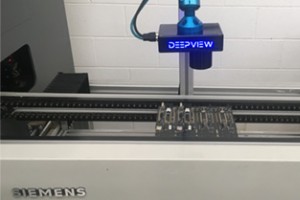
AI Revolutionizes Robotics: From Autonomous Vehicles to Smart Manufacturing
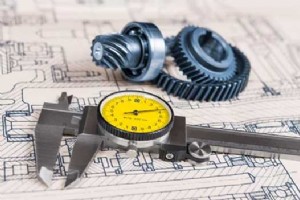
Accuracy vs. Precision in CNC Production Machining: Key Differences Explained

