


Industrial manufacturing
Metal

PropertiesGeneralPropertyValueConditionRelated StandardsDensity2.66 g/cm³H28AA Standards, ASTM B209MechanicalPropertyValueConditionRelated StandardsCommentElastic modulus70.0 GPaH28AA Standards, ASTM B209Plane-Strain Fracture Toughnes22.0 - 35.0 MPa·√mTypical for Wrought 5000 Series AluminiumPoisson
PropertiesGeneralPropertyValueConditionRelated StandardsDensity2.66 g/cm³H26AA Standards, ASTM B209MechanicalPropertyValueConditionRelated StandardsCommentElastic modulus70.0 GPaH26AA Standards, ASTM B209Plane-Strain Fracture Toughnes22.0 - 35.0 MPa·√mTypical for Wrought 5000 Series AluminiumPoisson
PropertiesGeneralPropertyValueCommentDensity2.65 - 2.7 g/cm³Typical for Wrought 5000 Series AluminiumMechanicalPropertyValueConditionRelated StandardsCommentElastic modulus69.0 - 70.0 GPaTypical for Wrought 5000 Series AluminiumPlane-Strain Fracture Toughnes22.0 - 35.0 MPa·√mTypical for Wrought 5000
Material X2CrNIMo17-12-2 is comparable to X 2 CrNiMo 17 13 2 acc. to DIN 17440 : 1985-07. It is a modification of steel 1.4401 with high resistance to non oxidizing acids and chloride containing media. This steel is suitable for mirror finishing and very good cold formable. Its corrosion properties
Material X2CrNi19-11a modifikation of 1.4301 is comparable to X 2CrNi 19 11 acc. to DIN 17440 : 1985-07 (invalid). The steel shows owing to the lowered C-content resistance to intercrystalline corrosion both in delivery and sensitized condition.Application in chemical apparatus engineering and in ph
15 % as well as after warm forming has to be carried out a heat treatment (solution annealing at 1100 to 1180, quenching in water).PropertiesGeneralPropertyTemperatureValueDensity20.0 °C7.76 - 8.1 g/cm³MechanicalPropertyTemperatureValueCommentElastic modulus-100.0 °C206 GPa20.0 °C195 - 196 GPa100.0
The highly corrosion resistant austenitic material X1NiCrMoCu31-27-4, mat. number 1.4563, is comparable to X 1 NiCrMoCu 31 27 4 acc. to SEW 400 : 1991-02 (invalid, replaced by edition SEW 400 : 1997-02 where this trademark is not contained anymore). The rolled and forged steel is applicable acc. to
Material X 1 NiCrMoCu 25 20 5 (X1NiCrMoCu25-20-5), material number 1.4539 is applicated for pressure vessels acc. to TRB 100 and AD-data sheet W 2 and W 10 from -60 to 400 deg., for steam boilers acc. to TRD 101, TRD 102 and TRD 107 up to 400 deg. as well as for pressure gas tanks as per TRG from -6
Material X 2 CrNiMoN 25 22, (now: X1CrNiMoN25-22-2 ), material number 1.4466 is applicated acc. to VdT_V-Wbl 415 : 2001-09 (sheets) for pressure vessels acc. to TRB 100 and AD-data sheet W 2 and W 10 from -195 to 400 deg. (heavy duty). Further application in nuclear power engineering as far as nucle
The steel is melted with restricted chemical analysis. It shows high corrosion resistance to oxidizing acids (esp. nitric acid). This material is resistant to intercrystalline corrosion also in sensitized condition. Application in urea synthesis, for components with nitric acid impact up to a concen
The austenitic steel X5NiCrAlTi31-20+RA (recrystallisation annealed) is a heat resistant material. The material is resistant to intercrystalline corrosion, not in the sensitized condition. Application: in pressure vessel and steam-boiler construction as well as in chemical and petrochemical industry
The austenitic steel X5NiCrAlTi31-20+RA (recrystallisation annealed) is a heat resistant material. The material is resistant to intercrystalline corrosion, not in the sensitized condition. Application: in pressure vessel and steam-boiler construction as well as in chemical and petrochemical industry
The austenitic steel X5CrNiN19-9 is resistant to intercrystalline corrosion in the delivery condition, in welded condition the dimension limits of resistance can vary according to chemical composition and welding conditions. Application: tank constructionPropertiesGeneralPropertyTemperatureValueDens
CuZn10 (CW501L) is an unhardenable wrought alloy. High hardness and strength parameter are achievable by cold forming only. Thermal conductivity is lower than for CuZn5. Favorable electrical conductivity. Corrosion resistance is similar to pure copper. Processing properties: warm forming: moderatel
The ferritic steel X3CrTi17 is comparable to 1.4016. It is widely resistant in water, steam low acids and bases as well as in oxidizing acids. Increased stress corrosion resistance in hot bases, low chloride-containing waters. No risk of intercrystalline corrosion after welding due to Ti-addition. T
Seamless tubes of the high-temperature 16Mo3 are used in steam boiler and pipeline construction, pressure vessel and apparatus engineering, especially in chemical industry and power station construction at temperatures from approx. 200 °C to maximum 400 °C and simultaneously high pressures. The tota
The ferritic stainless steel X2CrTi17 has a extremely low C-content for special applications in household, car and electrical industry.PropertiesGeneralPropertyTemperatureValueDensity20.0 °C7.7 - 7.73 g/cm³MechanicalPropertyTemperatureValueElastic modulus20.0 °C217 - 220 GPa100.0 °C215 GPa200.0 °C18
The austenitic-ferritic steel X2CrNiN23-4 is a stainless duplex steel of high strength and hardness, favorable resistance to general corrosion, pitting corrosion and especially to stress corrosion. Furthermore resistance to intercrystalline corrosion also in the sensitized resp. welded condition. Th
The austenitic-ferritic steel X2CrNiMoN25-7-4 will be delivered in the solution annealed condition as cold rolled strip, hot rolled sheet and strip, bars, wire rod and profiles. It shows resistance to intercrystalline corrosion even in sensitized condition.PropertiesGeneralPropertyTemperatureValueDe
The austenitic-ferritic steel X2CrNiMoCuWN25-7-4 will be delivered in the solution annealed condition as cold rolled strip, hot rolled sheet and strip, bars, wire rod and profiles. It shows resistance to intercrystalline corrosion even in sensitized condition.PropertiesGeneralPropertyTemperatureValu
Metal
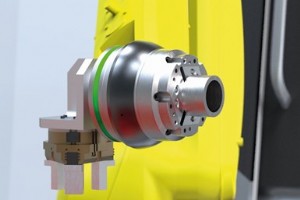
Advanced Workholding Devices: Real-Time Measurement & Monitoring for Precision Machining

Machine Learning 101: Understanding the Four Core Types for Beginners

Cast Iron vs. Wrought Iron: Key Differences Explained
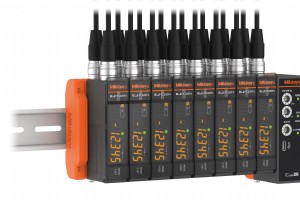
Mitutoyo Unveils Cutting‑Edge Linear Gauges, Setting New Standards in Precision Measurement

