


Industrial manufacturing
Metal

UGIMA®-X 4307 is an improved-machinability stainless steel manufactured only by Ugitech. Its properties are identical to those of other 1.4307s except for its machinability, which is even better than that of UGIMA® 4307, the 1.4307 grade from Ugitech with already improved machinability: UGIMA®-X 43
This heat-treated alloy is the ultimate in high-strength bronzes requiring good bearing characteristics and exceptional wear resistance. It has greater toughness than grade AMPCO® 18.22 and better physical properties than grades AMPCO® 18 or AMPCO® 18.136. Its exceptional proportional limit gives it
This heat-treated alloy is the ultimate in high-strength bronzes requiring good bearing characteristics and exceptional wear resistance. It has greater toughness than grade AMPCO® 18.22 and better physical properties than grades AMPCO® 18 or AMPCO® 18.136. Its exceptional proportional limit gives it
Compact grain structure and high physical properties result from proper phase distribution and hot working of AMPCO® 18 during the extrusion process. These qualities enable this alloy to perform successfully in an extremely wide range of difficult applications. It is an excellent bearing material ch
AMPCO® 8 is a single phase alloy (100 % alpha) which possesses high tensile and good yield strength and has good properties at high temperatures (260°C) and sub-zero temperatures. AMPCO® 8 is ductile, easily sheared, bent or deep drawn on standard equipment. It has a high impact and fatigue strength
Phosphor bronze is a ternary alloy produced by adding tin to copper and deoxidizing with phosphorus. It has good workability, fatigue-endurance and corrosion-resistance. While phosphur bronze with higher tin content shows high strength and excellent elasticity, phosphor bronze with lower tin content
Phosphor bronze is a ternary alloy produced by adding tin to copper and deoxidizing with phosphorus. It has good workability, fatigue-endurance and corrosion-resistance. While phosphur bronze with higher tin content shows high strength and excellent elasticity, phosphor bronze with lower tin content
UGI® PHYNOX® is an austenitic cobalt basis alloy with high yield strength which offer multiple properties: Age hardening by heat treatment after cold forming without any distortion, Excellent corrosion resistance in several medias, stress corrosion cracking and absence of hydrogen embrittle-ment, E
UGIALLOY® 686 filler wire contains high quantities of chromium, molybdenum and tungsten, enabling it to be used for welds or claddings that are more resistant to corrosion and/or oxidation than the majority of nickel-based grades in many highly corrosive environments (chemical, waste treatment, fert
High strength inside the foil app compared to 1xxx. Alloy 8014 can be welded, adhesive bonded, and formed easily.PropertiesGeneralPropertyTemperatureValueDensity23.0 °C2.73 g/cm³DimensionPropertyValueThickness0.5 - 1 mmMechanicalPropertyTemperatureValueElastic modulus23.0 °C69 GPaElongation A5023.0
Good formability.PropertiesGeneralPropertyTemperatureValueDensity23.0 °C2.71 g/cm³DimensionPropertyValueThickness0.08 - 0.2 mmMechanicalPropertyTemperatureValueCommentElastic modulus23.0 °C68.6 GPaElongation A5023.0 °C18 %according to EN 485-2Shear modulus23.0 °C25.73 GPaTensile strength23.0 °C90 -
Aluminum AA 2011 is a popular age-hardenable alloy known for its free-machining characteristics and mechanical properties. It can be machined to very close tolerances while still maintaining a smooth and bright finish. Unlike other aluminum alloys, AA 2011 does not offer good corrosion resistance or
Aluminum AA 2011 is a popular age-hardenable alloy known for its free-machining characteristics and mechanical properties. It can be machined to very close tolerances while still maintaining a smooth and bright finish. Unlike other aluminum alloys, AA 2011 does not offer good corrosion resistance or
Aluminum AA 2011 is a popular age-hardenable alloy known for its free-machining characteristics and mechanical properties. It can be machined to very close tolerances while still maintaining a smooth and bright finish. Unlike other aluminum alloys, AA 2011 does not offer good corrosion resistance or
AA 1100 is a soft, non-heat-treatable and low strength alloy that offers strong corrosion resistance. Composed of 99% aluminum and 0.12% copper, AA 1100 is purest grade of aluminum alloy available commercially.PropertiesGeneralPropertyValueConditionRelated StandardsDensity2.71 g/cm³H24AA Standards,
AA 1100 is a soft, non-heat-treatable and low strength alloy that offers strong corrosion resistance. Composed of 99% aluminum and 0.12% copper, AA 1100 is purest grade of aluminum alloy available commercially.PropertiesGeneralPropertyValueConditionRelated StandardsDensity2.71 g/cm³H22AA Standards,
AA 1100 is a soft, non-heat-treatable and low strength alloy that offers strong corrosion resistance. Composed of 99% aluminum and 0.12% copper, AA 1100 is purest grade of aluminum alloy available commercially.PropertiesGeneralPropertyValueConditionRelated StandardsDensity2.71 g/cm³H112AA Standards,
Aluminum DIN 3.0517 is a popular alloy that offers customers very good atmospheric corrosion resistance and moderate strength. Aluminum 3003 offers good machinability for aluminum alloys, though it is not heat treatable. Unlike other aluminum alloys, DIN 3.0517 is weldable by conventional welding me
Sanicro® 35 (UNS N08935) is an alloy combining the best features of a super austenitic stainless steel and a nickel alloy. The grade has excellent corrosion resistance, for service in sea-water applications and other highly corrosive environments. Sanicro® 35 is characterized by: Excellent resistan
Sandvik 5R75 is an austenitic, titanium-stabilized stainless chromium–nickel–molybdenum steel. More technical information and charts that are relevant to the materials corrosion, mechanical and physical performance are displayed in the figures on the right side of the material page. Datasheet URL:
Metal
Leveraging Phase Diagrams to Accurately Predict Vapor Pressure Curves

Optimizing Machining Parameters for Ultra‑Miniature Tooling: A Precision Guide
How to Get Started with 3D Printing for Maximum Business Impact
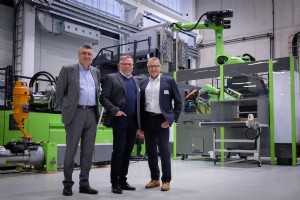
Fraunhofer Deploys Cutting‑Edge Engel Automation to Advance Thermoplastic Composite R&D

