



UV Degradation of Plastics: Understanding Damage and Choosing UV‑Resistant Additives
Sunlight May Degrade Plastics
Without light‑blocking agents, many polymers deteriorate when exposed to sunlight. The damage usually penetrates only about 0.05 mm into the surface, causing discoloration, cracking, or even total disintegration. Brittle plastics can fail after just a few microns of UV exposure.
Signs of UV Degradation
- Brittle outer layer (reduced tensile elongation)
- Lowered molecular weight
- Loss of mechanical properties
- Altered chemical characteristics
- Discoloration or yellowing
- Color fading
- Reduced clarity
- Crack formation
- Chalky appearance
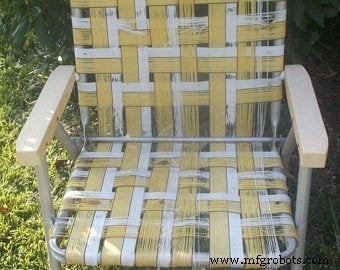
Folding Chair with UV Damage
Three Types of Ultraviolet Radiation
The electromagnetic spectrum is divided into seven bands, from highest to lowest energy: gamma rays, X‑rays, ultraviolet (UV), visible light, infrared, and radio waves. UV itself is split into UVA, UVB, and UVC. UVA tans the skin; UVB burns it; UVC, largely absorbed by the ozone layer, is germicidal. UVB has the greatest impact on polymer degradation.
How UV Light Degrades Plastics
Polymers consist of long chains of monomers. UV photons excite electrons, creating free radicals that react with oxygen to form hydroperoxides. This photo‑oxidation breaks the chains (chain scission), weakening the material. Humidity, contaminants, mechanical load, temperature, and pollutants can accelerate the process.
Plastics That Degrade in UV Light
Specialized additives mitigate photo‑oxidation. Common choices include carbon black, rutile TiO₂, benzophenones, hydroxyphenyl‑benzotriazole, HALS (hindered amine light stabilizers), oxanilides, hydroxybenzophenone, enzotriazoles, hydroxyphenyltriazines, nickel quenchers, and more. Each polymer may combine several of these to achieve the desired resistance.
Nylon 6/6
As an engineering thermoplastic, nylon 6/6 offers excellent strength, ductility, and heat resistance, making it a prime metal replacement. UV protection typically involves a three‑part blend: a phenolic antioxidant, a phosphite, and a HALS. Adding a UV absorber on top of the HALS further enhances stability.
Polyoxymethylene (POM) – ABS
Used in gears, chains, screws, and automotive components, ABS requires UV stabilizers when exposed outdoors or to harsh lighting. A combination of a benzotriazole UV absorber and HALS is commonly employed to preserve gloss and prevent cracking.
High‑Density Polyethylene (HDPE)
HDPE finds use in garbage bags, grocery bags, cable insulation, agricultural mulch, and food packaging. Carbon black at 1–3 wt.% effectively shields HDPE from UV damage.
Polycarbonate (PC)
When exposed to the sun, PC tends to yellow and lose impact strength. A hydroxyphenyl‑benzotriazole absorber is recommended; HALS are avoided because basic amines can accelerate hydrolysis.
Polypropylene (PP)
Extended sun exposure can significantly reduce PP’s mechanical strength. Mitigation strategies include high‑load carbon black or HALS, though the lifespan under intense UV remains limited.
Plastics Naturally UV‑Resistant
Some polymers resist UV damage intrinsically. Acrylic, Ultem, and fluoropolymers such as PTFE, FEP, PFA, and PVDF do not require additional additives, making them ideal for automotive and aerospace components exposed to prolonged sunlight.

Resin
- ICM-20608-G: Compact 6‑Axis Motion Sensor for High‑Performance Applications
- BH1750 Ambient Light Sensor: Specs, Features, and Practical Applications
- Colorants in Paints, Inks & Plastics: Their Functions and Modern Uses
- Top 4 Chemical-Resistant Plastics for Engineering Excellence
- Fluoropolymers: The Premier Choice for Chemical‑Resistant Plastics
- Plastic Manufacturing: Evolution, Current Trends, and Future Outlook
- Understanding Anti‑Static, Dissipative, and Conductive Plastics: Materials, Applications, and ESD Protection
- Biodegradable Plastics: Benefits, Challenges, and the Path Forward
- How Polymers Are Synthesized: From Raw Materials to Advanced Additives
- Albis Plastics Splits Distribution and Compounding Units Under Otto Krahn Group