



Passive Infrared Sensor Power‑Saver Circuit: Design, Operation, and Applications
An infrared (IR) sensor is a compact electronic device that detects thermal radiation and motion. Unlike active IR units that emit light, passive IR (PIR) sensors sense only the infrared energy reflected from objects, making them ideal for motion‑detected lighting and appliance control. Infrared sensors also serve in temperature measurement, flame detection, gas analysis, and thermal imaging.
PIR‑Based Power‑Saver Circuit
The circuit below automatically switches fans or lights on when a person enters a room and turns them off after a configurable delay once the room is empty. This simple automation reduces unnecessary energy consumption while keeping the space responsive.
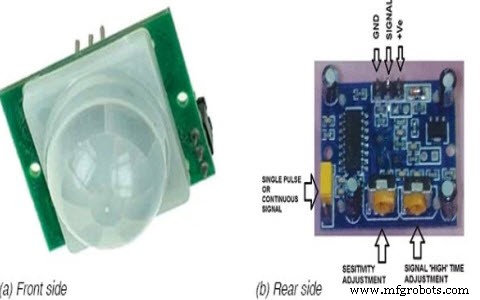
What is a PIR Sensor?
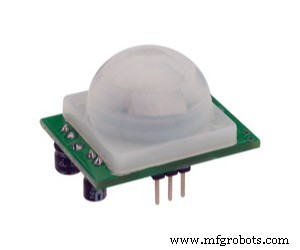
A PIR sensor detects motion by measuring changes in infrared radiation. It is widely used in security systems and occupancy‑based control. The sensor can be tuned for sensitivity and trigger duration, allowing it to ignore small pets while reliably detecting human presence.
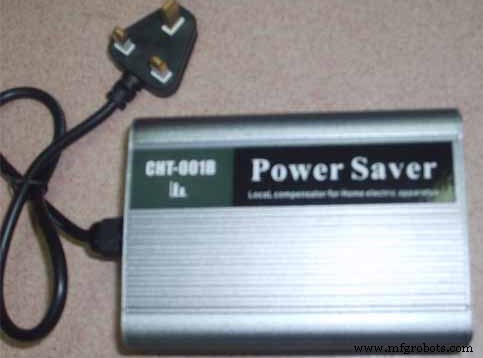
Power‑Saver Devices Explained
Electrical loads are either inductive—such as refrigerators and fans—or resistive—like heaters and lamps. Inductive devices create a magnetic field that consumes reactive power (kVAh) in addition to the useful power (kWh). A power‑saver device improves the power factor, reducing the overall current drawn from the utility and lowering energy bills.
Circuit Diagram and Operation
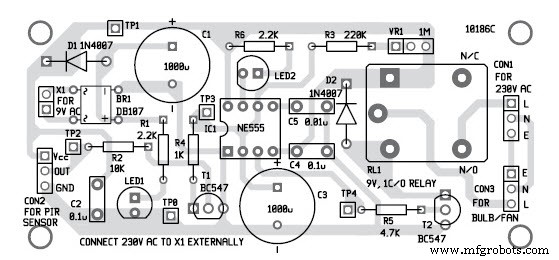
Below is a detailed schematic. The design uses common components such as a bridge rectifier, NE555 timer, transistors, diodes, and a relay to control the load.
Key Components
Semiconductors: NE555 timer (IC1), BC547 NPN transistors (T1,T2), IN4007 rectifier diodes (D1,D2), DB107 bridge rectifier (BR1), 5 mm LEDs (LED1,LED2).
Resistors: R1,R6 (2.2 kΩ), R2 (10 kΩ), R3 (220 kΩ), R4 (1 kΩ), R5 (4.7 kΩ), VR1 (1 MΩ potentiometer).
Capacitors: C1,C3 (1000 µF, 25 V electrolytic), C2,C4 (0.1 µF ceramic), C5 (0.01 µF ceramic).
Miscellaneous: 3‑pin connectors (CON1‑CON3), 230 V AC to 9 V, 300 mA transformer (X1), 9 V relay (RL1).
Test Points: TP0‑GND, TP1‑9 V, TP2‑3.3 V, TP3‑0‑9 V, TP4‑9 V
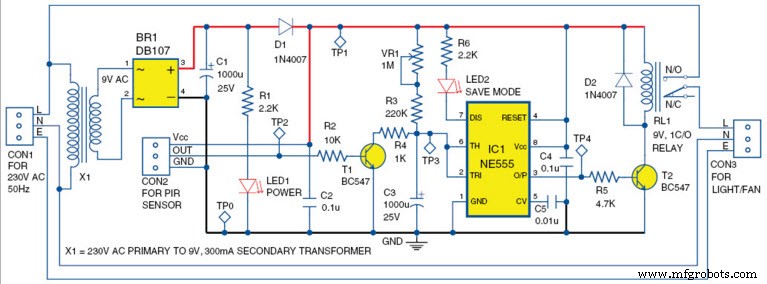
The 230 V AC input is stepped down to 9 V, rectified, and filtered by C1 to supply the 9 V DC power rail. The NE555 timer is configured as a one‑shot that remains high for a user‑adjustable delay set by R3, C3, and VR1. When the PIR senses motion, its high output triggers transistor T1, which discharges C3, allowing the NE555 to pulse low and energize the relay via transistor T2. The relay turns the connected appliance on. After the delay, the relay is de‑energized, and the appliance shuts off, signaled by LED2.
Construction and Testing
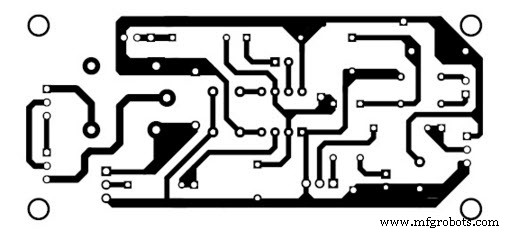
Mount the 230 V input on CON1, attach the load to CON3, and connect the PIR module to CON2. Install the sensor in a corner where it can view the entrance. Before connecting mains power, test the sensor with a 9 V battery by waving a hand in front of it and observing the voltage change on the output pin. Clean the sensor dome for optimal sensitivity.
Common IR Sensor Applications
Beyond power savings, IR sensors are integral to: Flame monitors that detect fire via emitted light; Radiation thermometers that measure temperature from emitted IR; Gas analyzers that rely on IR absorption spectra; and IR imaging devices for night‑vision and thermal cameras.
This guide provides a comprehensive view of the PIR‑based power‑saver circuit, from theory to practical build. For questions or implementation help, feel free to comment below.
Sensor
- Blood Pressure Sensor: How It Works & Key Applications
- Voltage Sensors: How They Work & Key Applications in Modern Power Systems
- RVG Sensor: How It Works and Why It’s Transforming Dental Imaging
- Fingerprint Sensor Technology: Working Principles, Applications, and Arduino Integration
- Vibration Sensors: Principles, Types, and Industrial Applications
- How Oxygen Sensors Work and Their Key Applications in Automotive and Industrial Systems
- MQ135 Alcohol Sensor Circuit, Working Principle & Applications
- PIR Sensor–Driven Automatic Door Opening System: Circuit, Working & Applications
- Inductive Proximity Sensor: Circuit Design, Functionality, and Practical Applications
- How PIR Sensor Circuits Work: Design, Operation, and Real‑World Applications