



Zinc‑Copper‑Titanium Alloy: Advanced Applications and Superior Performance
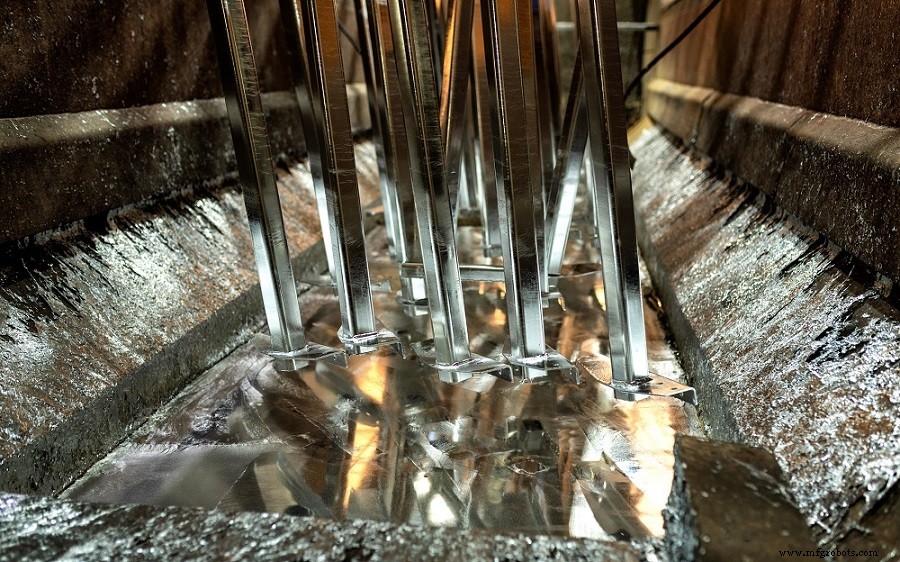
High‑Performance Zinc‑Copper‑Titanium Alloy
Developed in the 1940s, the zinc‑copper‑titanium alloy delivers high strength, creep resistance, and excellent corrosion tolerance. Its mechanical behavior rivals that of premium copper and aluminum alloys. Across the globe, the alloy’s composition varies slightly, typically containing 0.5–1.5% copper and 0.1–0.5% titanium.

Zinc‑Copper‑Titanium Alloy Applications
The copper addition boosts hardness, tensile strength, and wear resistance while mitigating intergranular corrosion. Titanium refines the grain structure, elevates creep resistance, and raises the recrystallization temperature, preventing grain coarsening at elevated temperatures.
These synergistic effects produce a material with outstanding properties:
1. Creep resistance nearly 500× that of pure zinc. 2. Tensile strength 98 MPa higher than pure zinc, matching soft‑state alpha brass. 3. Coefficient of thermal expansion roughly one‑third lower than pure zinc. 4. Excellent flowability for extrusion and forging, enabling versatile processing.
Key Industries Leveraging the Alloy
Construction
Thin sheets of zinc‑copper‑titanium are ideal for modern roofing systems. The alloy forms a dense, self‑forming protective film when exposed to atmospheric CO₂, O₂, and H₂O, granting long‑lasting corrosion resistance without paint. Its lightweight, heat‑ and fire‑resistant properties make it especially suitable for coastal and island structures. Notably, 85% of Parisian roofs use this material, and iconic buildings such as the German Vitra Architecture Museum, the European Energy Forum, China’s National Grand Theater, and the Beijing Olympic Stadium feature its panels.
Automotive Manufacturing
The alloy is employed in cooling tanks, instrument panel covers, structural components, and accessories, providing a durable yet lightweight alternative to traditional materials.
Instrumentation and Electronics
Its high extrusion formability allows the production of heat‑dissipation components, gears, cable jackets, and glass‑welding parts, often replacing brass. Extruded tubes made from the alloy also serve as copper‑pipe substitutes.
Other Applications
Zinc‑copper‑titanium alloys find use in clothing hardware, medical devices, and other sectors where strength, corrosion resistance, and recyclability are valued.
Further Exploration
For more insights into titanium and its alloys, explore Advanced Refractory Metals (ARM), a leading global supplier headquartered in Lake Forest, California. ARM offers a broad portfolio of refractory metals—including titanium, tungsten, molybdenum, tantalum, rhenium, and zirconium—at competitive prices.
Metal
- Titanium in Watches: Innovation, Allergy‑Free Design, and Lightweight Performance
- Titanium Alloys: Evolution, Applications, and Industry Impact
- Tungsten‑Copper vs. Molybdenum‑Copper Alloys: Key Differences & Applications
- Titanium Alloy Heat Treatment: Optimizing Strength, Stability, and Process Control
- Tungsten Alloy in Modern Weaponry: Applications, Properties, and Global Resources
- Titanium‑Alloy Carabiners: Superior Strength and Lightweight for Serious Climbers
- Titanium Alloys in Maritime Applications: Enhancing Ship Performance and Durability
- Titanium Alloy Superplastic Forming: Process, Applications, and Benefits
- How Titanium Alloys Transform Golf Club Performance
- Titanium‑Aluminum Alloys: Advanced Preparation Techniques and Key Industrial Applications