


Industrial manufacturing
Metal

CuZn40 (CW509L) is an unhardenable wrought alloy. High hardness and strength parameter are achievable by cold forming only. Thermal and electrical conductivity are lower than for CuZn37. Corrosion resistance is similar to pure copper. Processing properties: warm forming: very good cold forming: goo
Application: general purpose wire, springs, fastenersPropertiesGeneralPropertyTemperatureValueDensity20.0 °C8.3 - 8.8 g/cm³MechanicalPropertyTemperatureValueCommentElastic modulus23.0 °C110 - 130 GPaTypical for Wrought Copper High Copper AlloyElongation20.0 °C10 %Elongation A10020.0 °C3 - 6 %Elongat
The austenitc steel X2CrNi18-9 is available in solution annealed condition in the form of cold rolled strip, warm rolled strip and warm rolled sheet. The material is resistant to intercrystalline corrosion also in welded condition. Further application for mounting elements at increased and lower tem
The austenitc steel X2CrNi18-9 is available in solution annealed condition in the form of cold rolled strip, warm rolled strip and warm rolled sheet. The material is resistant to intercrystalline corrosion also in welded condition. Further application for mounting elements at increased and lower tem
Material CuZn39Pb2, mat. No. CW612N, is an unhardenable wrought alloy. to the comparable make CuZn39Pb2, mat. No. 2.0380 acc. to DIN 17660 : 1983-12 applies: High hardness and strength parameter are achievable by cold forming only. Thermal and electrical conductivity are lower than for the unleaded
High-temperature steel with thermal resistance up to 580 °C for temperature loaded components, for screws and nuts. Further application for mounting elements at increased temperatures.PropertiesGeneralPropertyTemperatureValueDensity20.0 °C7.7 - 7.76 g/cm³MechanicalPropertyTemperatureValueElastic mod
Material CuZn39Pb2, mat. No. CW612N, is an unhardenable wrought alloy. to the comparable make CuZn39Pb2, mat. No. 2.0380 acc. to DIN 17660 : 1983-12 applies: High hardness and strength parameter are achievable by cold forming only. Thermal and electrical conductivity are lower than for the unleaded
Application for mounting elements at increased temperatures.PropertiesGeneralPropertyTemperatureValueDensity20.0 °C7.95 g/cm³MechanicalPropertyTemperatureValueCommentElastic modulus20.0 °C207 GPa100.0 °C201 GPa200.0 °C193 GPa300.0 °C184 GPa400.0 °C175 GPa500.0 °C165 GPa600.0 °C158 GPa700.0 °C150 GPa
NiCr20TiAl as a aviation material, material number 2.4631, is contained in `Werkstoff-Leistungsblättern der Deutschen Luftfahrt WL` (material data sheets) 2.4631, part 1 and 2 as well as part 100, issues 08.93. This material shows high creep strength up to 850 °C and very good scaling resistance. T
Material NiCr15Fe7TiAl, similar to NiCr15Fe (2.4816), but hardenable by addition of aluminium and titanium. Good resistance to corrosion and oxidation as well as high tensile and creep strength at temperatures up to approx. 700 °C This trademark is due to its very good relaxation behavior suitable f
Application: general purpose wire, springs, fastenersPropertiesGeneralPropertyTemperatureValueDensity20.0 °C8.25 - 8.36 g/cm³MechanicalPropertyTemperatureValueElastic modulus20.0 °C125 - 131 GPaHardness, Brinell20.0 °C350 - 430 [-]Hardness, Vickers20.0 °C350 - 420 [-]Poisson's ratio20.0 °C0.29
Steel 42CrMo4 is suitable for high-stress components (also large forged parts) in vehicle, engine and machine engineering with high wear resistance and very favorable core properties ( e.g. crankshafts, pinions, balance shafts). The steel shows a high resistivity to static and dynamic loading. Lowes
Seamless, round tubes from copper alloy for general purposes.PropertiesGeneralPropertyTemperatureValueDensity20.0 °C8.4 - 8.44 g/cm³MechanicalPropertyTemperatureValueCommentElastic modulus20.0 °C102 GPaHardness, Brinell20.0 °C100 - 135 [-]Hardness, Vickers20.0 °C105 - 140 [-]Poisson's ratio20.0
Steel 20NiCrMoS-2 is suitable for parts in vehicle and machine engineering, that are wear loaded at mean core strength, high ductility and fatigue resistance (e.g. gear wheels, shafts, axles). The show an enhanced workability. Lowest application temperature -60°C, most favorable application area up
Steel 20NiCrMoS-2 is suitable for parts in vehicle and machine engineering, that are wear loaded at mean core strength, high ductility and fatigue resistance (e.g. gear wheels, shafts, axles). The show an enhanced workability. Lowest application temperature -60°C, most favorable application area up
The steel 60CrMo3-3 is used for hot formed springs (torsion springs, coil springs, tension and compression springs) for high stress in the vehicle engineering.PropertiesGeneralPropertyTemperatureValueCommentDensity23.0 °C7.8 - 7.9 g/cm³Typical for Chromium Molybdenum Steel MechanicalPropertyTemperat
The steel 60CrMo3-2 is used for hot formed springs (torsion springs, coil springs, tension and compression springs) for high stress in the vehicle engineering.PropertiesGeneralPropertyTemperatureValueCommentDensity23.0 °C7.8 - 7.9 g/cm³Typical for Chromium Molybdenum Steel MechanicalPropertyTemperat
The steel 60CrMo3-1 is used for hot formed springs (torsion springs, coil springs, tension and compression springs) for high stress in the vehicle engineering.PropertiesGeneralPropertyTemperatureValueCommentDensity23.0 °C7.8 - 7.9 g/cm³Typical for Chromium Molybdenum Steel MechanicalPropertyTemperat
Material EN-GJMW-450-7 (former GTW-45-07 acc. to DIN 1692-82) is a white malleable cast iron which is used for clutch parts (coupling jaw) and differential cases.PropertiesGeneralPropertyTemperatureValueDensity20.0 °C7.3 - 7.8 g/cm³MechanicalPropertyTemperatureValueCommentElastic modulus20.0 °C175 -
The steel 60Cr3 is used for hot formed leaf springs, torsion springs, coil springs for the vehicle construction as well as larger tension and compression springs for the mechanical engineering.PropertiesGeneralPropertyTemperatureValueCommentDensity23.0 °C7.8 - 7.9 g/cm³Typical for Chromium SteelMech
Metal
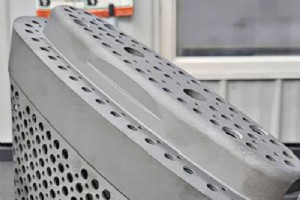
Conformal Cooling: Boosting Part Quality and Reducing Injection Molding Cycle Times

Build a High‑Quality DIY Digital‑Analog Converter: Complete Step‑by‑Step Guide
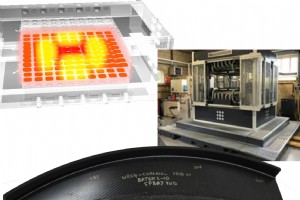
Advancing RAPM with PtFS: Accelerating Composite Manufacturing
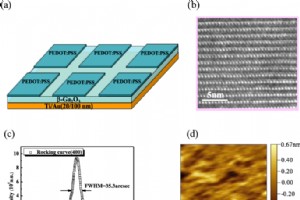
Hybrid PEDOT:PSS/β‑Ga2O3 Deep‑Ultraviolet Schottky Photodetectors: Temperature‑Dependent Performance Analysis

