


Industrial manufacturing
Metal

CuNi2Be, mat. No CW110C, is counted among hardenable, low alloyed copper alloys. To the comparable make CuNi2Be, mat. No 2.0850, acc. to DIN 17666 : 1983-12 applies: The alloy shows high tensile strength and high temperature resistance and mean electrical and favorable thermal conductivity. Process
Make X20Cr13 is comparable to X 20 Cr 13 acc. to DIN 17440 : 1985-07. The material is applicated for construction parts of higher strength and higher mechanical load, such as axles, shafts, pump components, piston rods, valve cones, nozzle needles, ship`s propeller, but also beater bars, surgical in
CuNi1Si, mat. No CW109C, is counted among hardenable, low alloyed copper alloys. To the comparable DIN-make CuNi1,5Si, mat. No 2.0853, acc. to DIN 17666 : 1983-12 applies: The material shows favorable electrical and thermal conductivity, corrosion resistance, high fatigue and creep resistance as wel
The make X17CrNi16-2 is comparable to X 20 CrNi 17-2 acc. to DIN 17440 :1985-07. The material is a heat-treatable 17%-chromium-steel of favorable resistance to water, low acids and bases as well as to stronger oxidizing acids (e.g. nitrous acid). Application for high loaded machine parts such as pum
The make X12Cr13 is comparable to X 10 Cr 13 acc. to DIN 17440 : 1985-07. The material is applicated for construction parts in water and steam and mild acting media of food industry, predominantly in tempered condition (fitting parts, valve spindles, shafts, pump components, bolts, screws) with hone
The free-cutting steel 46SPb20, suitable for quenching and tempering, is used for bulk parts of higher strength, especially for lower requirements to ductility in transversal direction opposite to comparable C-steels (e.g. C45). Machinability enhancement is achievable by Pb-content. Application in a
The free-cutting steel 38SMnPb28, suitable for quenching and tempering, shows enhanced machinability compared to 38SMn28. Application for turned parts of higher strength requirements.PropertiesGeneralPropertyTemperatureValueCommentDensity23.0 °C7.8 - 7.9 g/cm³Typical for Medium Carbon SteelMechanica
The free-cutting steel 38SMn28, suitable for quenching and tempering, is applicated for production of turned parts of high strength requirements.PropertiesGeneralPropertyTemperatureValueCommentDensity23.0 °C7.8 - 7.9 g/cm³Typical for Medium Carbon SteelMechanicalPropertyTemperatureValueCommentElasti
Material CuZn40Pb2, mat. No. CW617N, is an unhardenable wrought alloy. to the comparable make CuZn40Pb2, mat. No. 2.0402 acc. to DIN 17660 : 1983-12 applies: High hardness and strength parameter are achievable by cold forming only. Thermal and electrical conductivity are lower than for CuZn40. Machi
The free-cutting steel 35SPb20, suitable for quenching and tempering, is used for bulk parts of mean strength, especially for lower requirements to ductility in transversal direction opposite to comparable C-steels (e.g. C35). Machinability enhancement is achievable by Pb-content. Application in aut
The material CuCo1Ni1Be , mat. No CW103C is incomparable to a DIN-make. It is used in the form of plates, sheets, stripes, circular blanks, bars, prematerial for forged parts, wires, profiles and forged parts.PropertiesGeneralPropertyTemperatureValueDensity20.0 °C8.3 - 8.8 g/cm³MechanicalPropertyTem
Material CuZn40Mn1Pb1AlFeSn (CW721R) is used in the form of rods, hollow rods, profiles, forging prematerial and forged parts.PropertiesGeneralPropertyTemperatureValueDensity20.0 °C8.3 g/cm³MechanicalPropertyTemperatureValueCommentElastic modulus20.0 °C96 GPaElongation20.0 °C16 %Shear modulus23.0 °C
Material CuZn39Pb3, mat. No. CW614N, is an unhardenable wrought alloy. to the comparable make CuZn39Pb3, mat. No. 2.0401 acc. to DIN 17660 : 1983-12 applies: High hardness and strength parameter are achievable by cold forming only. Thermal and electrical conductivity are lower than for unleaded bras
The steel P460NH is a high temperature steel suitable for welding. Application: use in pressure vessel engineering.PropertiesGeneralPropertyTemperatureValueDensity20.0 °C7.84 - 7.85 g/cm³MechanicalPropertyTemperatureValueCommentElastic modulus-100.0 °C217 GPa20.0 °C212 GPa100.0 °C207 GPa200.0 °C199
CuAl5As (CW300G) is a wrought alloy of high strength, also at increased temperatures. The strength properties of cold formable wrought alloys are primarily dependent on the deformation grade. Tensile strength, yield strength and hardness rise according to the increasing cold forming grade. Elongatio
The material according this standard is used for seamless, round tubes for heat exchangers, condensers, evaporators and desalination equipment.PropertiesGeneralPropertyTemperatureValueDensity20.0 °C8.9 - 8.94 g/cm³MechanicalPropertyTemperatureValueCommentElastic modulus-253.0 °C138 GPa-195.0 °C136 G
The material according this standard is used for seamless, round tubes for heat exchangers, condensers, evaporators and desalination equipment.PropertiesGeneralPropertyTemperatureValueDensity20.0 °C8.9 - 8.94 g/cm³MechanicalPropertyTemperatureValueCommentElastic modulus-253.0 °C138 GPa-195.0 °C136 G
Application: general purpose wire, springs, fastenersPropertiesGeneralPropertyTemperatureValueDensity20.0 °C8.8 - 8.9 g/cm³MechanicalPropertyTemperatureValueCommentElastic modulus23.0 °C110 - 130 GPaTypical for Wrought Copper High Copper AlloyElongation20.0 °C10 - 12 %Elongation A10020.0 °C3 - 8 %El
The steel 13CrMo4-5 is a high temperature steel.Application: boiler construction for superheater and hot steam ducts, for collectors, flanges and welding-neck laps, and in apparatus construction in petrochemistry.PropertiesGeneralPropertyTemperatureValueDensity20.0 °C7.85 g/cm³50.0 °C7.84 g/cm³100.0
The martensitic steel grade X12Cr13 acc. to DIN EN 10272 : 2001-01 is used for hot and cold formed rods for pressure vessels.PropertiesGeneralPropertyTemperatureValueDensity20.0 °C7.73 g/cm³MechanicalPropertyTemperatureValueElastic modulus20.0 °C217 - 217.99 GPa100.0 °C213.2 - 215 GPa200.0 °C188 - 2
Metal

Swagelok & HOERBIGER Partner to Cut NOx Emissions on Legacy Engines by 80%
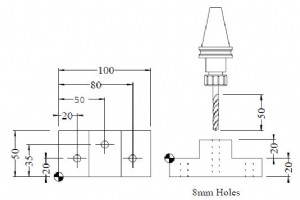
Mastering Heidenhain Drilling Cycle Programming: A Practical Exercise

Foundry Safety Precautions in Casting Workshops: Protecting Workers from Hazards

Carbon Fiber Prosthetics: How High‑Performance Materials Transform Limb Replacement

