


Industrial manufacturing
Metal

Material GX4CrNiMo16-5-1 is equivalent to trademark G-X 5 CrNiMo 16 5 acc. to SEW410-88. It is applicated at room temperature and increased temperatures. The DIN-make is used for castings with increased strength, ductility and corrosion properties for water turbines, pumps and fittings, compressors
Material GX4CrNi13-4 is used at room temperature and incrased temperaturesPropertiesGeneralPropertyTemperatureValueDensity20.0 °C7.7 g/cm³MechanicalPropertyTemperatureValueCommentElastic modulus23.0 °C220 GPaTypical for Martensitic Stainless SteelElongation20.0 °C15 %Poisson's ratio23.0 °C0.3 [
CuSn6, mat. No. CW425K, is comparable to the DIN-make CuSn6, mat. No. 2.1020, acc. to DIN 17662 : 1983-12. Properties of the CuSn-alloy are predominantly determined by the tin-content. Tensile strength, yield point and hardness increase according to the rising cold forming grade, elongation after fr
Material G20Mo5 is equivalent to trademark GS-22 Mo 4 acc. to DIN 17245-87. It is used at room temperature and increased temperatures. The DIN-make is used for turbine parts at temperatures from 300 to 450 °C and mean pressure, e.g. for casings and fittings.PropertiesGeneralPropertyTemperatureValueD
Material G17CrMo5-5 is equivalent to trademark GS-17 CrMo 5 5 acc. to DIN17245-87. It is used at room temperature and increased temperatures for thick-walled castings, for turbines, pressure vessels and steam boilers, e.g. for casings, fittings and valve boxes.PropertiesGeneralPropertyTemperatureVal
Cold rolled low carbon steel for flat products for vitreous enamelling (direct enamelling, as well as for special applications of conventional two coat enamelling for better sag resistance).Application: domestic appliances (cooking, laundry), sanitary ware (bathtubs, shower trays, sinks), architectu
The material CuCo1Ni1Be , mat. No CW103C is incomparable to a DIN-make. It is used in the form of plates, sheets, stripes, circular blanks, bars, prematerial for forged parts, wires, profiles and forged parts.PropertiesGeneralPropertyTemperatureValueDensity20.0 °C8.3 - 8.8 g/cm³MechanicalPropertyTem
The material CuCo1Ni1Be , mat. No CW103C is incomparable to a DIN-make. It is used in the form of plates, sheets, stripes, circular blanks, bars, prematerial for forged parts, wires, profiles and forged parts.PropertiesGeneralPropertyTemperatureValueDensity20.0 °C8.3 - 8.8 g/cm³MechanicalPropertyTem
CuSn4, mat. No. CW450K, is comparable to the DIN-make CuSn4, mat. No. 2.1016, acc. to DIN 17662 : 1983-12. The material is specified by a favorable combination of very good cold formability with strength and hardness. It is corrosion resistant, good soft and hard solderable and shows still good elec
CuAl11Fe6Ni6 (CW308G) is a wrought alloy of high strength, also at increased temperatures. The strength properties of cold formable wrought alloys are primarily dependent on the deformation grade. Tensile strength, yield strength and hardness rise according to the increasing cold forming grade. Elon
CuAl10Fe3Mn2 (CW306G) is a wrought alloy of high strength, also at increased temperatures. The strength properties of cold formable wrought alloys are primarily dependent on the deformation grade. Tensile strength, yield strength and hardness rise according to the increasing cold forming grade. Elon
CuAl10Fe3Mn2 (CW306G) is a wrought alloy of high strength, also at increased temperatures. The strength properties of cold formable wrought alloys are primarily dependent on the deformation grade. Tensile strength, yield strength and hardness rise according to the increasing cold forming grade. Elon
The non-alloy steel DC04 acc. to DIN EN 10130 is as a deep-draw quality suitable for cold forming of complexest profile forms and components, especially at high deformation speeds (e.g. transfer presses). To freedom of stretcher strains applies a period of 6 months after provision of the products fo
Material CuZn35Pb2, mat. No. CW601N, is an unhardenable wrought alloy. To the comparable make CuZn36Pb1,5, mat. No. 2.0331 acc. to DIN 17660 : 1983-12 applies: High hardness and strength parameter are achievable by cold forming only. Thermal and electrical conductivity are lower than for the unleade
Material CuZn35Pb2, mat. No. CW601N, is an unhardenable wrought alloy. To the comparable make CuZn36Pb1,5, mat. No. 2.0331 acc. to DIN 17660 : 1983-12 applies: High hardness and strength parameter are achievable by cold forming only. Thermal and electrical conductivity are lower than for the unleade
Material CuZn35Pb2, mat. No. CW601N, is an unhardenable wrought alloy. To the comparable make CuZn36Pb1,5, mat. No. 2.0331 acc. to DIN 17660 : 1983-12 applies: High hardness and strength parameter are achievable by cold forming only. Thermal and electrical conductivity are lower than for the unleade
CuSn6, mat. No. CW425K, is comparable to the DIN-make CuSn6, mat. No. 2.1020, acc. to DIN 17662 : 1983-12. Properties of the CuSn-alloy are predominantly determined by the tin-content. Tensile strength, yield point and hardness increase according to the rising cold forming grade, elongation after fr
CuSn6, mat. No. CW425K, is comparable to the DIN-make CuSn6, mat. No. 2.1020, acc. to DIN 17662 : 1983-12. Properties of the CuSn-alloy are predominantly determined by the tin-content. Tensile strength, yield point and hardness increase according to the rising cold forming grade, elongation after fr
CuSn6, mat. No. CW425K, is comparable to the DIN-make CuSn6, mat. No. 2.1020, acc. to DIN 17662 : 1983-12. Properties of the CuSn-alloy are predominantly determined by the tin-content. Tensile strength, yield point and hardness increase according to the rising cold forming grade, elongation after fr
Material CuSn5, mat. No. CW451K is used in the form of tubes for manometer springs or hose tubes as well as for contact springs and connectors. Basically the same application area as CuSn6 (CW452K). CuSn5 shows slightly higher electrical conductivity at slightly lower strength due to the lower tin-c
Metal
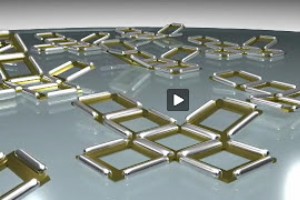
Self‑Assembling Silver Nanocubes: A Breakthrough in Nanostructure Synthesis and Applications
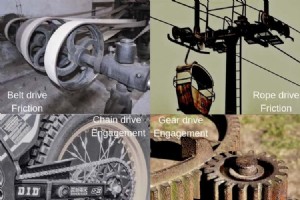
Friction Drive vs Engagement Drive: Key Differences Explained
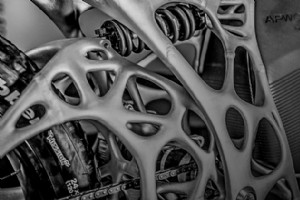
Carbon Performance: Revannth Murugesan on Racing Innovation, 3D Printing, and AI‑Driven Components

Blue Elephant CNC Delivers Expert After‑Sales Support in Saudi Arabia

