


Industrial manufacturing
Metal

PropertiesGeneralPropertyTemperatureValueCommentDensity23.0 °C7.8 - 7.9 g/cm³Typical for Low Carbon SteelMechanicalPropertyTemperatureValueCommentElastic modulus23.0 °C200 - 215 GPaTypical for Low Carbon SteelElongation A5023.0 °C12 %Poisson's ratio23.0 °C0.29 [-]Typical for Low Carbon SteelShe
PropertiesGeneralPropertyTemperatureValueCommentDensity23.0 °C7.8 - 7.9 g/cm³Typical for Low Carbon SteelMechanicalPropertyTemperatureValueCommentElastic modulus23.0 °C200 - 215 GPaTypical for Low Carbon SteelElongation A5023.0 °C16 %Poisson's ratio23.0 °C0.29 [-]Typical for Low Carbon SteelShe
PropertiesGeneralPropertyTemperatureValueCommentDensity23.0 °C7.8 - 7.9 g/cm³Typical for Low Carbon SteelMechanicalPropertyTemperatureValueCommentElastic modulus23.0 °C200 - 215 GPaTypical for Low Carbon SteelElongation A5023.0 °C10 %Poisson's ratio23.0 °C0.29 [-]Typical for Low Carbon SteelShe
PropertiesGeneralPropertyValueCommentDensity2.75 - 2.84 g/cm³Typical for Wrought 2000 Series AluminiumMechanicalPropertyValueConditionRelated StandardsShapeCommentElastic modulus70.0 - 73.0 GPaTypical for Wrought 2000 Series AluminiumPlane-Strain Fracture Toughnes22.0 - 35.0 MPa·√mTypical for Wrough
PropertiesGeneralPropertyValueCommentDensity2.75 - 2.84 g/cm³Typical for Wrought 2000 Series AluminiumMechanicalPropertyValueConditionRelated StandardsShapeCommentElastic modulus70.0 - 73.0 GPaTypical for Wrought 2000 Series AluminiumPlane-Strain Fracture Toughnes22.0 - 35.0 MPa·√mTypical for Wrough
PropertiesGeneralPropertyTemperatureValueCommentDensity23.0 °C7.8 - 7.9 g/cm³Typical for Low Carbon SteelMechanicalPropertyTemperatureValueCommentElastic modulus23.0 °C200 - 215 GPaTypical for Low Carbon SteelElongation A5023.0 °C21 %Poisson's ratio23.0 °C0.29 [-]Typical for Low Carbon SteelShe
PropertiesGeneralPropertyTemperatureValueCommentDensity23.0 °C7.8 - 7.9 g/cm³Typical for Low Carbon SteelMechanicalPropertyTemperatureValueCommentElastic modulus23.0 °C200 - 215 GPaTypical for Low Carbon SteelElongation A5023.0 °C21 %Poisson's ratio23.0 °C0.29 [-]Typical for Low Carbon SteelShe
PropertiesGeneralPropertyTemperatureValueCommentDensity23.0 °C7.8 - 7.9 g/cm³Typical for Low Carbon SteelMechanicalPropertyTemperatureValueCommentElastic modulus23.0 °C200 - 215 GPaTypical for Low Carbon SteelElongation A5023.0 °C20 %Poisson's ratio23.0 °C0.29 [-]Typical for Low Carbon SteelShe
PropertiesGeneralPropertyTemperatureValueCommentDensity23.0 °C7.8 - 7.9 g/cm³Typical for Low Carbon SteelMechanicalPropertyTemperatureValueCommentElastic modulus23.0 °C200 - 215 GPaTypical for Low Carbon SteelElongation A5023.0 °C40 %Poisson's ratio23.0 °C0.29 [-]Typical for Low Carbon SteelShe
PropertiesGeneralPropertyTemperatureValueCommentDensity23.0 °C7.8 - 7.9 g/cm³Typical for Low Carbon SteelMechanicalPropertyTemperatureValueCommentElastic modulus23.0 °C200 - 215 GPaTypical for Low Carbon SteelElongation A5023.0 °C32 %Poisson's ratio23.0 °C0.29 [-]Typical for Low Carbon SteelShe
PropertiesGeneralPropertyTemperatureValueCommentDensity23.0 °C7.8 - 7.9 g/cm³Typical for Low Carbon SteelMechanicalPropertyTemperatureValueCommentElastic modulus23.0 °C200 - 215 GPaTypical for Low Carbon SteelElongation A5023.0 °C20 %Poisson's ratio23.0 °C0.29 [-]Typical for Low Carbon SteelShe
PropertiesGeneralPropertyTemperatureValueCommentDensity23.0 °C7.8 - 7.9 g/cm³Typical for Low Carbon SteelMechanicalPropertyTemperatureValueCommentElastic modulus23.0 °C200 - 215 GPaTypical for Low Carbon SteelElongation A5023.0 °C18 %Poisson's ratio23.0 °C0.29 [-]Typical for Low Carbon SteelShe
PropertiesGeneralPropertyTemperatureValueCommentDensity23.0 °C7.8 - 7.9 g/cm³Typical for Low Carbon SteelMechanicalPropertyTemperatureValueCommentElastic modulus23.0 °C200 - 215 GPaTypical for Low Carbon SteelElongation A5023.0 °C19 %Poisson's ratio23.0 °C0.29 [-]Typical for Low Carbon SteelShe
Because of its higher Ni content compared standard type to X 5CrNi 18 10, steel X 5 CrNi 18 12 possesses a higher austenitic stability. This decreaes the cold strain hardening. The forming properties for cold heading and extrusion pressing are good even at high forming rates. However, one must be aw
X 3 CrNiCu 18 9 is an austenitic stainless steel with a low carbon content for special application (possible use for screws, nuts and molded parts) also in low temperatures. The steel is resistant to intercrystalline corrosion and can be cold-formed well.PropertiesGeneralPropertyTemperatureValueDens
X 3 CrNiCu 18 9 is an austenitic stainless steel with a low carbon content for special application (possible use for screws, nuts and molded parts) also in low temperatures. The steel is resistant to intercrystalline corrosion and can be cold-formed well.PropertiesGeneralPropertyTemperatureValueDens
X 2 CrNi 18 10 is an austenitic CrNi steel which, due to the added nitrogen alloy, possesses an increased yield strength which also persist in higher temperatures. It is suitable for the chemical equipment construction because of its resistance to nitric acid. The steel is well suited for cold-formi
The cold-upsettable steel 34 CrMo 4 can be cold-formed with a medium to high rate of forming according to the usual forming methods on single-stage and multi-stage presses. It is used for hexagon screws and hexagon socket head cap screw of strength class 8.8 in the thick dimension range, of strength
The cold-upsettable steel 34 CrMo 4 can be cold-formed with a medium to high rate of forming according to the usual forming methods on single-stage and multi-stage presses. It is used for hexagon screws and hexagon socket head cap screw of strength class 8.8 in the thick dimension range, of strength
The cold-upsettable steel 34 CrMo 4 can be cold-formed with a medium to high rate of forming according to the usual forming methods on single-stage and multi-stage presses. It is used for hexagon screws and hexagon socket head cap screw of strength class 8.8 in the thick dimension range, of strength
Metal

RML Announces Near-Completion of High-Performance Short Wheelbase Supercar
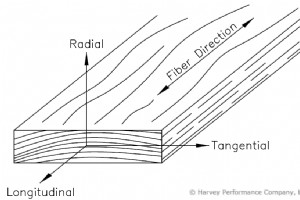
Master CNC Woodworking: Expert Strategies for Cutting Direction and Grain Alignment

Discover the Advantages of CNC Machining for Modern Manufacturing
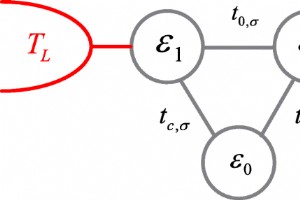
Spin‑Dependent Couplings in Triple Quantum Dots Enable 100 % Spin‑Polarized Transport and Pure Spin Seebeck Effect

