


Industrial manufacturing
Metal

The steel 16Mo3 is a high temperature steel. Application: pressure vessel and steam boiler construction for vaporizor ducts, ducts, and collector ducts, heat exchangers, welding-neck laps and flanges. Maximum temperature for continuous use: 530 °C.PropertiesGeneralPropertyTemperatureValueDensity20.0
The steel 13CrMo4-5 is a high temperature steel.Application: boiler construction for superheater and hot steam ducts, for collectors, flanges and welding-neck laps, and in apparatus construction in petrochemistry.PropertiesGeneralPropertyTemperatureValueDensity20.0 °C7.85 g/cm³50.0 °C7.84 g/cm³100.0
The steel 10CrMo9-10 is a high temperature steel. Application: boiler construction for superheater and hot steam ducts, for collectors, and in apparatus construction in petrochemistry. Maximum temperature of use: 530 °C.PropertiesGeneralPropertyTemperatureValueDensity20.0 °C7.84 - 7.85 g/cm³Mechanic
CuZr, mat. No CW120C, is counted among hardenable, low alloyed copper alloys. To the comparable make CuZr, mat. No 2.1580, acc. to DIN 17666 : 1983-12 applies: The strength properties of CuZr are not as favorable as for CuCrZr but it very well meets high requirements to tempering strength and creep
Low-temperature Ni-alloyed steel for pressure vessel construction, for refrigerators, gearbox parts and components in machine and apparatus engineering which are exposed temperatures up to -200 °C Further application for mounting elements at lower temperatures.PropertiesGeneralPropertyTemperatureVal
Material CuZn39Pb3, mat. No. CW614N, is an unhardenable wrought alloy. to the comparable make CuZn39Pb3, mat. No. 2.0401 acc. to DIN 17660 : 1983-12 applies: High hardness and strength parameter are achievable by cold forming only. Thermal and electrical conductivity are lower than for unleaded bras
Heat-treatable high-temperature steel with good thermal resistance up to 580 °C and scaling resistance up to 600 °C Application in reactor engineering, chemical industry as well as in turbine, steam boiler and pipeline construction and for screws and nuts. Further application for mounting elements a
Heat-treatable high-temperature steel with good thermal resistance up to 580 °C and scaling resistance up to 600 °C Application in reactor engineering, chemical industry as well as in turbine, steam boiler and pipeline construction and for screws and nuts. Further application for mounting elements a
High-temperature steel with thermal resistance up to 580 °C for temperature loaded components, for screws and nuts. Further application for mounting elements at increased temperatures.PropertiesGeneralPropertyTemperatureValueDensity20.0 °C7.7 - 7.76 g/cm³MechanicalPropertyTemperatureValueElastic mod
Low-temperature Ni-alloyed steel for pressure vessel construction, refrigerators and components in machine and apparatus engineering which have to carry temperatures up to -150 °C Further application for mounting elements at lower temperatures.PropertiesGeneralPropertyTemperatureValueDensity20.0 °C7
Steel C45E is suitable for mean loaded components in vehicle and machine engineering which have larger dimensions (large forged parts) and more complex forms (e.g. ship shafts, gearbox parts, wheel hubs). Lowest working temperature -25 °C, good creep behavior up to 480 °C The steel as a bright stee
Steel C45R is suitable for mean loaded parts in vehicle, engine and machine engineering with enhanced workability at constant mechanical qualities (e.g. transmission shafts, gear wheels, clutch parts, bolts). Lowest application temperature -25°C. As a bright steel product it is used in the form of
Steel C45R is suitable for mean loaded parts in vehicle, engine and machine engineering with enhanced workability at constant mechanical qualities (e.g. transmission shafts, gear wheels, clutch parts, bolts). Lowest application temperature -25°C. As a bright steel product it is used in the form of
Steel C45R is suitable for mean loaded parts in vehicle, engine and machine engineering with enhanced workability at constant mechanical qualities (e.g. transmission shafts, gear wheels, clutch parts, bolts). Lowest application temperature -25°C. As a bright steel product it is used in the form of
Steel C45E is suitable for parts of mean load and higher dimension (heavy forged parts) and complexer form in vehicle and machine engineering (shipshafts, transmission parts, wheel hubs). Lowest application temperature -25°C, favorable creep behaviuor up to 480°C.. As a bright steel product it is u
Steel C45E is suitable for parts of mean load and higher dimension (heavy forged parts) and complexer form in vehicle and machine engineering (shipshafts, transmission parts, wheel hubs). Lowest application temperature -25°C, favorable creep behaviuor up to 480°C.. As a bright steel product it is u
Steel C45E is suitable for parts of mean load and higher dimension (heavy forged parts) and complexer form in vehicle and machine engineering (shipshafts, transmission parts, wheel hubs). Lowest application temperature -25°C, favorable creep behaviuor up to 480°C.. As a bright steel product it is u
Steel C40R is suitable for slightly higher loaded parts in vehicle, engine and machine engineering with enhanced workability at constant mechanical qualities (e.g. transmission parts, crank shafts, cylinder). Lowest application temperature -25°C. As a bright steel product it is used in the form of
Steel C40R is suitable for slightly higher loaded parts in vehicle, engine and machine engineering with enhanced workability at constant mechanical qualities (e.g. transmission parts, crank shafts, cylinder). Lowest application temperature -25°C. As a bright steel product it is used in the form of
Steel C40R is suitable for slightly higher loaded parts in vehicle, engine and machine engineering with enhanced workability at constant mechanical qualities (e.g. transmission parts, crank shafts, cylinder). Lowest application temperature -25°C. As a bright steel product it is used in the form of
Metal

November Customer Engagement: Survey, Interview, and Industry Insights
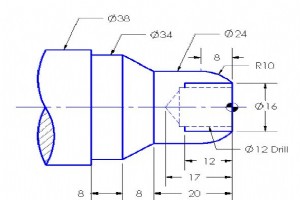
Comprehensive CNC Lathe Program for OD Turning, Drilling, and ID Boring Using G71, G74, G01
Popsicles: From Ancient Treats to Modern Manufacturing
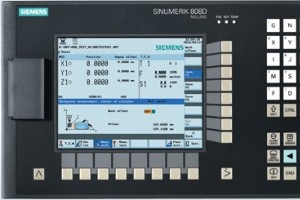
Complete Guide to Siemens Sinumerik 808D G‑Codes in ISO Dialect for CNC Programmers

