


Industrial manufacturing
Metal

Steel C40E is suitable for heat-resistant screws and larger forged parts as well as for parts of complexer form (e.g. gear wheels, camshafts) in vehicle and machine engineering. Lowest application temperature -25°C. As a bright steel product it is used in the form of bars, bright, straight, in vario
Steel C40E is suitable for heat-resistant screws and larger forged parts as well as for parts of complexer form (e.g. gear wheels, camshafts) in vehicle and machine engineering. Lowest application temperature -25°C. As a bright steel product it is used in the form of bars, bright, straight, in vario
Steel C40E is suitable for heat-resistant screws and larger forged parts as well as for parts of complexer form (e.g. gear wheels, camshafts) in vehicle and machine engineering. Lowest application temperature -25°C. As a bright steel product it is used in the form of bars, bright, straight, in vario
Steel C35R is suitable for slightly higher loaded parts in vehicle, engine and machine engineering with enhanced workability at constant mechanical properties (e.g. transmission parts, crank shafts, cylinder). Lowest application temperature -25°C. As a bright steel product it is used in the form of
Steel C35R is suitable for slightly higher loaded parts in vehicle, engine and machine engineering with enhanced workability at constant mechanical properties (e.g. transmission parts, crank shafts, cylinder). Lowest application temperature -25°C. As a bright steel product it is used in the form of
Steel C35R is suitable for slightly higher loaded parts in vehicle, engine and machine engineering with enhanced workability at constant mechanical properties (e.g. transmission parts, crank shafts, cylinder). Lowest application temperature -25°C. As a bright steel product it is used in the form of
Steel C35E is suitable for slightly higher loaded parts in vehicle and machine engineering that have higher dimension (large forged parts) and complexer forms as well as higher demands to constancy of qualities and surface appearance (e.g. transmission parts, crankshafts). Lowest application tempera
Steel C35E is suitable for slightly higher loaded parts in vehicle and machine engineering that have higher dimension (large forged parts) and complexer forms as well as higher demands to constancy of qualities and surface appearance (e.g. transmission parts, crankshafts). Lowest application tempera
Steel C35E is suitable for slightly higher loaded parts in vehicle and machine engineering that have higher dimension (large forged parts) and complexer forms as well as higher demands to constancy of qualities and surface appearance (e.g. transmission parts, crankshafts). Lowest application tempera
The mark Cu-OF, mat. No CW008A, is a copper free of oxygen and deoxidation agents. To the comparable DIN-mark OFCu, mat. No 2.0040 acc. to DIN 1787 : 1973-01 applies: The material is hydrogen resistant and shows very high thermal and electrical conductivity. Tensile strength and Brinell hardness are
The mark Cu-OF, mat. No CW008A, is a copper free of oxygen and deoxidation agents. To the comparable DIN-mark OFCu, mat. No 2.0040 acc. to DIN 1787 : 1973-01 applies: The material is hydrogen resistant and shows very high thermal and electrical conductivity. Tensile strength and Brinell hardness are
CuZn20 (CW503L) is an unhardenable wrought alloy. High hardness and strength parameter are achievable by cold forming only. Thermal and electrical conductivity are worse than for CuZn15. Corrosion resistance is similar to pure copper. Processing properties: warm forming: moderately cold forming: go
CuZn20 (CW503L) is an unhardenable wrought alloy. High hardness and strength parameter are achievable by cold forming only. Thermal and electrical conductivity are worse than for CuZn15. Corrosion resistance is similar to pure copper. Processing properties: warm forming: moderately cold forming: go
CuZn10 (CW501L) is an unhardenable wrought alloy. High hardness and strength parameter are achievable by cold forming only. Thermal conductivity is lower than for CuZn5. Favorable electrical conductivity. Corrosion resistance is similar to pure copper. Processing properties: warm forming: moderatel
CuZn10 (CW501L) is an unhardenable wrought alloy. High hardness and strength parameter are achievable by cold forming only. Thermal conductivity is lower than for CuZn5. Favorable electrical conductivity. Corrosion resistance is similar to pure copper. Processing properties: warm forming: moderatel
The high heat-resistant steel X6NiCrCeNb 32-27 (acc. to VdTÜV-Wbl 497 : 2001-06 also referred to as 5 NiCrCeNb 32 27), mat. No 1.4877, is applicated acc. to VdTÜV-Wbl 497 : 2001-06 for pressure vessels acc. to TRB 100 as well as AD-data sheets W 2 from -10 to 1000°C for pressure boilers acc. to TRD
Steel X3CrAlTi18-2 shows a highest application temperature of up to 1000 °C in air.PropertiesGeneralPropertyTemperatureValueDensity20.0 °C7.7 g/cm³MechanicalPropertyTemperatureValueCommentElastic modulus23.0 °C220 GPaTypical for Ferritic Stainless SteelElongation20.0 °C25 %Elongation A8020.0 °C25 %H
Steel X25CrMnNiN25-9-7 shows a highest application temperature of up to 1150 °C in air.PropertiesGeneralPropertyTemperatureValueDensity20.0 °C7.8 g/cm³MechanicalPropertyTemperatureValueCommentElastic modulus23.0 °C195 GPaTypical for Austenitic Stainless SteelElongation20.0 °C25 %Hardness, Brinell20.
Ferritic chrome steel of high resistance to sulfureous gases. Heat-resistance in air up to 1100°C (highest application temp.). Application for recuperators in corrosive flue gas of carbon and heavy oil. Very high resistance to oil ash corrosion as well as to fused lead and tin.PropertiesGeneralPrope
For components in furnace and apparatus engineering for high working temperatures, no embrittlement risk in the critical temperature range from 600 to 850 °C. (highest application temperature in air 1100 °C).PropertiesGeneralPropertyTemperatureValueDensity20.0 °C7.98 - 8 g/cm³MechanicalPropertyTempe
Metal
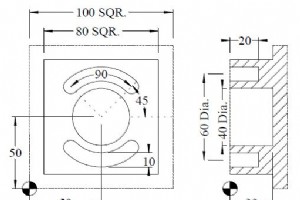
Mastering Heidenhain Conversational Programming: External Stud, Circular Pocket & Slot Exercises

Boost Automation Success: A Proven 7‑Pillar Framework for Scaling RPA Programs
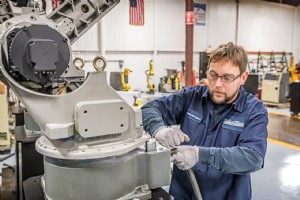
Mechanical Engineering: Crafting Robots for Precision Tasks
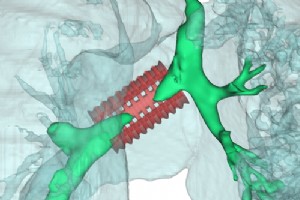
How 3D Modeling Transforms Airway Splints and Stents: Enhancing Precision and Patient Outcomes

