


Industrial manufacturing
Metal

Steel 34Cr4 is suitable for mean loaded parts and mean heat-treatment sections in vehicle manufacturing, engine and machine engineering (e.g. transmission parts, shafts, axles). Lowest working temperature -25 °C.PropertiesGeneralPropertyTemperatureValueDensity20.0 °C7.83 - 7.85 g/cm³MechanicalProper
Steel 30CrNiMo8 is suitable for high loaded parts (also large forged parts) with high heat-treatment sections and favorable toughness properties in aircraft and heavy-vehicle construction, machine engineering (e.g. propeller shafts, connecting rods, transmission shafts). Furthermore for large forged
Steel 28 Mn 6 is suitable for lower strained parts in vehicle manufacturing, engine and machine engineering, weldable (e.g. cardan shafts, camshafts, gear wheels). Lowest application temp. -25 °C.PropertiesGeneralPropertyTemperatureValueDensity20.0 °C7.82 - 7.85 g/cm³MechanicalPropertyTemperatureVal
CuZn36 (CW507L) is an unhardenable wrought alloy. High hardness and strength parameter are achievable by cold forming only. Thermal and electrical conductivity are lower than for CuZn33. Corrosion resistance is similar to pure copper. Processing properties: warm forming: good cold forming: very goo
Steel 25CrMo4 is suitable for parts of high strength and ductility requirements and mean and higher heat-treatment sections in vehicle manufacturing, engine and machine engineering (e.g. crankshafts, steering knuckles, pinions). Lowest working temperature -20 °C.PropertiesGeneralPropertyTemperatureV
Material CuZn35Pb2, mat. No. CW601N, is an unhardenable wrought alloy. To the comparable make CuZn36Pb1,5, mat. No. 2.0331 acc. to DIN 17660 : 1983-12 applies: High hardness and strength parameter are achievable by cold forming only. Thermal and electrical conductivity are lower than for the unleade
Material CuZn35Pb2, mat. No. CW601N, is an unhardenable wrought alloy. To the comparable make CuZn36Pb1,5, mat. No. 2.0331 acc. to DIN 17660 : 1983-12 applies: High hardness and strength parameter are achievable by cold forming only. Thermal and electrical conductivity are lower than for the unleade
Material CuZn35Pb2, mat. No. CW601N, is an unhardenable wrought alloy. To the comparable make CuZn36Pb1,5, mat. No. 2.0331 acc. to DIN 17660 : 1983-12 applies: High hardness and strength parameter are achievable by cold forming only. Thermal and electrical conductivity are lower than for the unleade
The heat resistant steel X6CrNiMo17-13-2 (1.4918) is used for pressurised seamless tubes.PropertiesGeneralPropertyTemperatureValueDensity20.0 °C8 g/cm³MechanicalPropertyTemperatureValueCommentElastic modulus20.0 °C200 GPa100.0 °C194 GPa200.0 °C186 GPa300.0 °C179 GPa400.0 °C172 GPa500.0 °C165 GPa600.
CuSn6, mat. No. CW425K, is comparable to the DIN-make CuSn6, mat. No. 2.1020, acc. to DIN 17662 : 1983-12. Properties of the CuSn-alloy are predominantly determined by the tin-content. Tensile strength, yield point and hardness increase according to the rising cold forming grade, elongation after fr
CuZn30 (CW505L) is an unhardenable wrought alloy. High hardness and strength parameter are achievable by cold forming only. Thermal and electrical conductivity are lower than for CuZn28. Corrosion resistance is similar to pure copper. Processing properties: warm forming: good cold forming: very goo
The high heat resistant steel X10CrNiMoMnNbVB15-10-1 (1.4982) is used for fasteners and for pressurised seamless tubes.PropertiesGeneralPropertyTemperatureValueDensity20.0 °C8 g/cm³MechanicalPropertyTemperatureValueCommentElastic modulus20.0 °C207 GPa100.0 °C201 GPa200.0 °C193 GPa300.0 °C184 GPa400.
The austenitic CrNi_steel X2CrNiN18-10 shows by N-alloying an increased yield stress which also persists at higher temperatures. This is used in pressure vessel construction and for leightweight constructions. Improved corrosion resistance due to the N-content. The material is also in sensitized con
CW602N is suited for cold forming, easy to machine and resistant to dezincification.Application: water supplyPropertiesGeneralPropertyTemperatureValueDensity20.0 °C8.4 - 8.46 g/cm³MechanicalPropertyTemperatureValueCommentElastic modulus20.0 °C105 GPaElongation20.0 °C20 - 30 %Elongation A1020.0 °C25
Trademark X2CrNiMoN17-13-3 is a fully austenitic mirror finishable steel which shows by N-alloying higher strength, due to stronger Mo-addition higher corrosion resistance especially to non-oxidizing acids and halogenated media than steel 1.4406. To the comparable DIN-make X 2 CrNiMoN 17 13 3 acc. t
Material CuZn35Pb2, mat. No. CW601N, is an unhardenable wrought alloy. To the comparable make CuZn36Pb1,5, mat. No. 2.0331 acc. to DIN 17660 : 1983-12 applies: High hardness and strength parameter are achievable by cold forming only. Thermal and electrical conductivity are lower than for the unleade
Material CuZn35Pb2, mat. No. CW601N, is an unhardenable wrought alloy. To the comparable make CuZn36Pb1,5, mat. No. 2.0331 acc. to DIN 17660 : 1983-12 applies: High hardness and strength parameter are achievable by cold forming only. Thermal and electrical conductivity are lower than for the unleade
Trademark X2CrNiMo17-12-2 is a modification of steel 1.4401. To the comparable DIN-make X 2 CrNiMo 17 13 2 acc. to DIN 17440 : 1985-07 applies: The material shows high resistance to non-oxidizing acids and chloride-containing media. It is suitable for mirror finishing and very well cold formable. It
Steel 28 CrS 4 is suitable for smaller parts of a little higher load and enhanced workability in vehicle manufacturing, engine and machine engineering ( e.g. transmission gears, drive shafts). Lowest application temp. -25 °C.PropertiesGeneralPropertyTemperatureValueDensity20.0 °C7.83 - 7.85 g/cm³Mec
The heat treatable high temperature material X20CrMoV11-1, material number 1.4922 shows good high-temperature strength up to approx. 580 °C. and scaling resistance up to 700 °C. Application for components of high-temperature strength in pipeline, steam boiler and turbine construction at the upper te
Metal

Proactive Maintenance: Essential Strategies for Reliability and Cost Savings
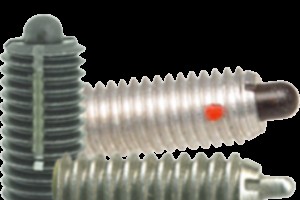
Choosing the Ideal Spring Plunger: A Practical Guide to Ball vs. Nose Types
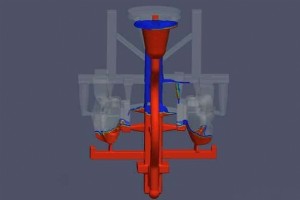
Optimizing Internal Sprue Placement: Key Principles & Common Pitfalls in Precision Casting

Java vs. Scala: Key Differences, Pros, and Cons for Modern Developers

