


Industrial manufacturing
Metal

The iron alloy with special thermal expansion Ni46, material number 1.3920, is used for compounds of metal and glass and for compounds of metal and ceramics, for expansion governors as well as for bimetals (according to DIN 1715). The break point temperature (temperature at which a break point in th
Material X5CrNiCuNb16-4 is comparable to X 5 CrNiCuNb 17 4 acc. to Key to steel 1995 resp. Register of European steels.The precipitation hardenable steel is applicated when high strength and simultaneous good corrosion resistance are required, e.g. for screws, spindles and rotor discs.PropertiesGene
Material CuZn39Pb2, mat. No. CW612N, is an unhardenable wrought alloy. to the comparable make CuZn39Pb2, mat. No. 2.0380 acc. to DIN 17660 : 1983-12 applies: High hardness and strength parameter are achievable by cold forming only. Thermal and electrical conductivity are lower than for the unleaded
The material NiMn1with the material number 2.4106 is applied in the form of strips, sheets, bars and wires for electro-acoustical construction components and in the chemical apparatus construction. As a result of the manganese content, NiMn1 possesses a higher strength than an unalloyed nickel mater
The iron alloy with special thermal expansion Ni42, material number 1.3917, is used as chore material for copper-sheathed wire, expansion governors, IC flat casings, etched castings, alumina/ceramics compounds, transistor valves, as well as for bimetals (according to DIN 1715). The break point tempe
Material X70CrMo15 is comparable to X 65 CrMo 14 acc. to Key to steel 1995 and Register of European steels 1994. Hardenable steel for cutting tools, such as industrial butchers and centrifugal knives as well as for piston rings.PropertiesGeneralPropertyTemperatureValueDensity20.0 °C7.7 g/cm³Mechanic
CuZn33 (CW506L) is an unhardenable wrought alloy. High hardness and strength parameter are achievable by cold forming only. Thermal and electrical conductivity are lower than for CuZn30. Corrosion resistance is similar to pure copper. Processing properties: warm forming: good cold forming: very goo
The steel 22 CrMoS 3 5 is used for wear loaded parts in the vehicle and mechanical engineering with medium core strength, better machinability, high toughness and high fatigue strength (e.g. gears, shafts, axles). The lowest application amounts to -60 °C, the best application up to 60 mm nominal siz
The alloy is used for pieces with very small expansion, for lens masks, antennas, parts for general measurement technology, as well as for bimetals (according to DIN 1715). The break point temperature (temperature at which a break point in the expansion-temperature-curve occurs) is 230 degrees C. Th
The general corrosion properties of NiCr21Mo6Cu with the material number 2.4641 are comparable with those of NiCr21Mo (material number 2.4858). It possesses a good resistance to reducing and oxidizing mediums and, due to the high Mo-content, it also is resistant to pitting in strongly chlorine-pollu
G-X 40 CrNiSi 27 4, normally for heat resitant cast pieces, for example moveable oven and burning parts, gates, tracks, rolls, burning jets, shapes for glass. Especially for parts of oven, when high demand still against sulfureous gases to be steady are, like attachments for super heater, gripper ar
PropertiesGeneralPropertyValueRelated StandardsDensity2.68 g/cm³DIN 1732-1MechanicalPropertyValueCommentElastic modulus69.0 - 71.0 GPaTypical for Wrought 4000 Series AluminiumPlane-Strain Fracture Toughnes22.0 - 35.0 MPa·√mTypical for Wrought 4000 Series AluminiumPoisson's ratio0.33 [-]Typical
PropertiesGeneralPropertyValueRelated StandardsDensity2.73 g/cm³DIN 1732-1MechanicalPropertyValueCommentElastic modulus69.5 - 70.0 GPaTypical for Wrought 3000 Series AluminiumPlane-Strain Fracture Toughnes22.0 - 35.0 MPa·√mTypical for Wrought 3000 Series AluminiumPoisson's ratio0.33 [-]Typical
PropertiesGeneralPropertyValueRelated StandardsDensity2.85 g/cm³AA StandardsMechanicalPropertyValueCommentElastic modulus69.0 - 72.0 GPaTypical for Wrought 7000 Series AluminiumPlane-Strain Fracture Toughnes22.0 - 35.0 MPa·√mTypical for Wrought 7000 Series AluminiumPoisson's ratio0.33 [-]Typica
PropertiesGeneralPropertyValueRelated StandardsDensity2.85 g/cm³AA StandardsMechanicalPropertyValueCommentElastic modulus69.0 - 72.0 GPaTypical for Wrought 7000 Series AluminiumPlane-Strain Fracture Toughnes22.0 - 35.0 MPa·√mTypical for Wrought 7000 Series AluminiumPoisson's ratio0.33 [-]Typica
PropertiesGeneralPropertyValueCommentDensity2.7 - 2.85 g/cm³Typical for Wrought 7000 Series AluminiumMechanicalPropertyValueCommentElastic modulus69.0 - 72.0 GPaTypical for Wrought 7000 Series AluminiumPlane-Strain Fracture Toughnes22.0 - 35.0 MPa·√mTypical for Wrought 7000 Series AluminiumPoisson&#
PropertiesGeneralPropertyValueRelated StandardsDensity2.82 g/cm³AA StandardsMechanicalPropertyValueCommentElastic modulus69.0 - 72.0 GPaTypical for Wrought 7000 Series AluminiumPlane-Strain Fracture Toughnes22.0 - 35.0 MPa·√mTypical for Wrought 7000 Series AluminiumPoisson's ratio0.33 [-]Typica
Alloy 15CDV6 (1.7734) can be easily welded without further localised heat treatment. It exhibits high yield strength as well as good toughness.PropertiesGeneralPropertyTemperatureValueCommentDensity23.0 °C7.8 g/cm³typical valueMechanicalPropertyTemperatureValueCommentElastic modulus23.0 °C190 - 210
Alloy 15CDV6 (1.7734) can be easily welded without further localised heat treatment. It exhibits high yield strength as well as good toughness.PropertiesGeneralPropertyTemperatureValueCommentDensity23.0 °C7.8 g/cm³typical valueMechanicalPropertyTemperatureValueCommentElastic modulus23.0 °C190 - 210
Alloy 15CDV6 (1.7734) can be easily welded without further localised heat treatment. It exhibits high yield strength as well as good toughness.PropertiesGeneralPropertyTemperatureValueCommentDensity23.0 °C7.8 g/cm³typical valueMechanicalPropertyTemperatureValueCommentElastic modulus23.0 °C190 - 210
Metal

Celebrating Women in STEM: Made in America Week
Modern Bar Feeders: Enhancing Interconnectivity for Cost Savings and Quality

Boost Productivity: Cloud-Based CAD for Faster, Smarter Design Collaboration
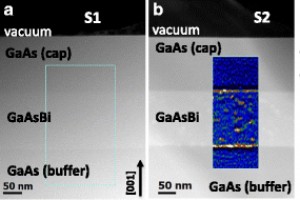
Mapping Bismuth Distribution in GaAsBi/GaAs Heterostructures Using Aberration-Corrected HAADF‑STEM

