


Industrial manufacturing
Metal

= 99,9% and a high residual copper-content. Tensile strength and Brinell hardness are increasable by cold forming. SF-Cu (Cu-DHP) is hydrogen resistant and shows the lowest thermal and electrical conductivity of the pure copper materials. Processing properties: hot forming: very good cold forming:
CuZn37Mn3Al2PbSi (CW713R former CuZn40Al2) is an unhardenable copper alloy. High hardness and strength parameter are achievable by cold forming only. Strength properties, corrosion resistance and oxidation resistance are increasable by Al-addition. CuZn37Mn3Al2PbSi shows a high wear resistance and i
Steel 25CrMo4 is suitable for components with high strength and toughness requirements at mean and higher heat-treatment cross-sections in vehicle, engine and machine engineering (e.g. crankshafts, steering knuckles, pinions). Lowest working temperature -40 °C Further application for mounting elemen
Steel 25CrMo4 is suitable for components with high strength and toughness requirements at mean and higher heat-treatment cross-sections in vehicle, engine and machine engineering (e.g. crankshafts, steering knuckles, pinions). Lowest working temperature -40 °C Further application for mounting elemen
CuZn37 (CW508L) is an unhardenable wrought alloy. High hardness and strength parameter are achievable by cold forming only. Thermal and electrical conductivity are lower than for CuZn36. CuZn37 is the main alloy for cold forming. It shows favorable corrosion resistance to fresh water. Processing pr
High-temperature steel for screws and nuts. Max. application temperature: 540 °C Further application for mounting elements at increased temperatures.PropertiesGeneralPropertyTemperatureValueDensity20.0 °C7.84 - 7.85 g/cm³MechanicalPropertyTemperatureValueCommentElastic modulus-100.0 °C217 GPa20.0 °C
High-temperature steel for screws and nuts. Max. application temperature: 540 °C Further application for mounting elements at increased temperatures.PropertiesGeneralPropertyTemperatureValueDensity20.0 °C7.84 - 7.85 g/cm³MechanicalPropertyTemperatureValueCommentElastic modulus-100.0 °C217 GPa20.0 °C
CuZn36 (CW507L) is an unhardenable wrought alloy. High hardness and strength parameter are achievable by cold forming only. Thermal and electrical conductivity are lower than for CuZn33. Corrosion resistance is similar to pure copper. Processing properties: warm forming: good cold forming: very goo
Material CuZn35Pb2, mat. No. CW601N, is an unhardenable wrought alloy. To the comparable make CuZn36Pb1,5, mat. No. 2.0331 acc. to DIN 17660 : 1983-12 applies: High hardness and strength parameter are achievable by cold forming only. Thermal and electrical conductivity are lower than for the unleade
CuZn35Ni3MnAlPb (CW710R former identification: CuZn35Ni2) is an unhardenable copper alloy. High hardness and strength parameter are achievable by cold forming only. Nickel improves strength properties, corrosion resistance and high-temperature resistance. CuZn35Ni3MnAlPb shows favorable weathering a
The material X6CrMoS17, mat. no. 1.4105, is used acc. DIN 17440 : 1996-09 for rods (for pressure vessels), forgings and drawn wire. For the application acc. DIN 17440 : 1985-07 (X 4 CrMoS 18) resp. acc. DIN EN 10088-1,-2,-3 : 1995-08 (X6CrMoS17) applies: stainless free-cutting steel used in the quen
CuZn35Ni3MnAlPb (CW710R former identification: CuZn35Ni2) is an unhardenable copper alloy. High hardness and strength parameter are achievable by cold forming only. Nickel improves strength properties, corrosion resistance and high-temperature resistance. CuZn35Ni3MnAlPb shows favorable weathering a
The material X6Cr17, mat. no. 1.4016, is resistant to intercrystalline corrosion in the delivery condition but not in the welded condition. The material is used for wire acc. DIN 17440 : 1996-09. For the application acc. DIN 17440 : 1985-07 (X 6 Cr 17) resp. acc. DIN EN 10088-1,-2,-3 : 1995-08 (X6Cr
Material CuNi18Zn19Pb1, mat. No. CW408J is an alloy of high strength and hardness.Strength is further increasable due to the high strain hardening capability. The material does not embrittle at low temperatures. Low electrical and thermal conductivity. The alloy is non-magnetic, corrosion resistance
Material CuNi12Zn30Pb1, mat. No. CW406J is an alloy of high strength and hardness. To the comparabel mark CuNi12Zn30Pb1, mat. No. 2.0780, acc. to DIN 17663 : 1983-12 applies: Strength is further increasable due to the high strain hardening capability. The material does not embrittle at low temperat
Material CuNi12Zn30Pb1, mat. No. CW406J is an alloy of high strength and hardness. To the comparabel mark CuNi12Zn30Pb1, mat. No. 2.0780, acc. to DIN 17663 : 1983-12 applies: Strength is further increasable due to the high strain hardening capability. The material does not embrittle at low temperat
Cuco2Be, mat. No CW104C, is counted among hardenable, low alloyed copper alloys. To the comparable make Cuco2Be, mat. No 2.1285, acc. to DIN 17666 : 1983-12 applies: CuCo2Be achieves compared to CuBe2 at slightly lower hardness and strength values higher electrical and thermal conductivity. The temp
Material CuZn43Pb2, mat. No. CW623N, is an unhardenable wrought alloy. to the comparable make CuZn44Pb2, mat. No. 2.0410 acc. to DIN 17660 : 1983-12 applies: High hardness and strength parameter are achievable by cold forming only. Thermal and electrical conductivity are lower than for the unleaded
Material CuZn43Pb2, mat. No. CW623N, is an unhardenable wrought alloy. to the comparable make CuZn44Pb2, mat. No. 2.0410 acc. to DIN 17660 : 1983-12 applies: High hardness and strength parameter are achievable by cold forming only. Thermal and electrical conductivity are lower than for the unleaded
According DIN 17440 : 1996-09 the steel X4CrNi18-12, mat. no. 1.4303, is used for wire and is resistant to intercrystalline corrosion in the delivery condition (for thicknesses up to 6 mm and diameter up to 40 mm) and in the welded condition (possible limited by the chemical composition and the weld
Metal

Weir Minerals Enhances Customer Satisfaction with eMaint Maintenance Software
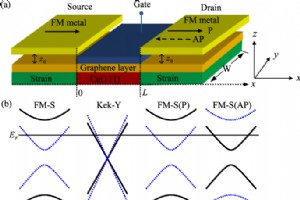
Electric Control of Valley Pseudomagnetoresistance in Graphene via Y‑Shaped Kekulé Distortion

Can Plant‑Based Packaging Replace Plastic Bottles? Coca‑Cola’s PlantBottle Leads the Way

Why a 6‑Axis Robot Arm Beats Custom Multi‑Axis Systems: Cost, Time, and Space Advantages

