Industrial manufacturing
Equipment Maintenance and Repair


Industry: Metal FabricationLocation: Illinois Since 1994, Northstar Metal Products has stood at the forefront of precision sheet metal fabrication, proudly holding ISO 9001:2015 and EcoVadis Silver certifications. Headquartered just outside Chicago, the company delivers world‑class products to a glo

Oskaloosa Food Products Turns to eMaint for Efficient Maintenance Management Industry: Food ProcessingLocation: Iowa Founded on a commitment to quality and sustainability, Oskaloosa Food Products has earned international recognition as a leading supplier of egg‑based ingredients to the global food

Home » U.S. Naval Research Laboratory Unlocks New Potential with eMaint U.S. Naval Research Laboratory Unlocks New Potential with eMaint Industry: GovernmentLocation: Mississippi The U.S. Naval Research Laboratory (NRL) is a premier research facility that drives multidisciplinary scientific a

Home » Cosmax NBT Promotes Healthy Life With eMaint Industry: Food ProcessingLocation: Texas Founded in 2002, Cosmax NBT is a leading marketing consultancy for health‑functional foods. With a clear mission to “promote healthy lives and customer happiness,” the company combines strategic insight wit

Home > eMaint Support Team Ensures Seamless Service Through Any Challenge Since long before the COVID‑19 pandemic, the eMaint support team has consistently delivered world‑class service, even when faced with extraordinary circumstances. During hurricanes, Florida‑based team members relocate to s

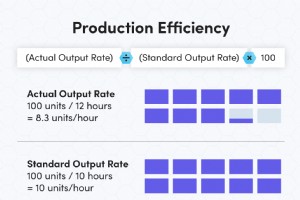
What Is Overall Equipment Effectiveness (OEE)? Overall Equipment Effectiveness (OEE) is a leading KPI that quantifies how well an asset turns planned production time into valuable, defect‑free output. By dissecting productivity into availability, performance, and quality, OEE provides actionable ins
Industry forecasts show predictive‑maintenance spend will surge sevenfold by 2033, climbing from about $14 billion to nearly $98 billion—driven by AI, IoT sensors, and advanced analytics. While the buzz often centers on AI’s detection capabilities—identifying abnormal vibration, early bearing wear,

Predictive maintenance has become a cornerstone of modern asset management. Unlike traditional preventive maintenance, which relies on scheduled inspections, predictive maintenance monitors equipment in real time—using vibration analysis, thermal imaging, and other sensor data—to spot early warning

What Is Reactive Maintenance? Reactive maintenance—also known as emergency or breakdown maintenance—is unplanned work performed after equipment fails. It typically involves replacing or repairing faulty parts to restore operation. Because failures occur unpredictably, this approach incurs high cost
3 Key Strategies to Restore Control Over Your Preventive Maintenance Program Preventive maintenance schedules proactive actions to stop breakdowns before they happen. Repeated evidence shows that ad‑hoc repairs accelerate asset wear, shrink useful life, and raise long‑term capital costs. A robust PM

Implementing TPM Step 1: Select a Pilot Area Rather than launching TPM across the entire facility, start with a single pilot area or machine. This focused approach lets you observe what works, what needs refinement, and who becomes early champions of the program. Choosing the right pilot equipment

As highlighted on the Fiix blog, a successful TPM program follows the 5S foundation and the eight pillars. But which tools, techniques, and software will help you execute the plan you’ve drafted? LeanProduction.com lists several proven methods and solutions that can accelerate your TPM journey. I
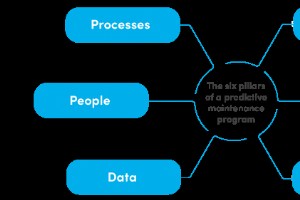
While technology often gets the spotlight in predictive maintenance, it’s only one component of a comprehensive program. A sustainable solution requires the right culture, refined processes, and expertly managed data. In short, the journey to predictive maintenance is slow but highly rewarding when
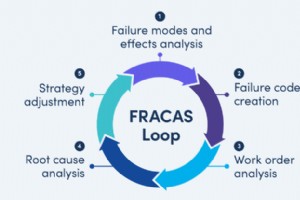
In maintenance, failure is typically viewed as a negative outcome, and teams often feel the pressure of downtime metrics. Yet, this mindset can be counterproductive and unfair. Many factors—such as asset age, design limitations, or user error—are beyond immediate control. When viewed strategically,
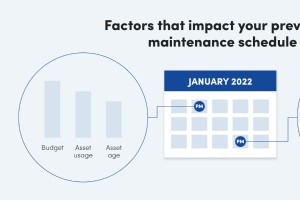
Ryan Robinson set out to transform his equipment maintenance program. As the shop manager of a wholesale tree‑grower in Oregon, he wanted to shrink breakdowns and trim labor costs by tightening his preventive maintenance (PM) schedule. The obstacle? A mountain of binders – hundreds of them, chronicl
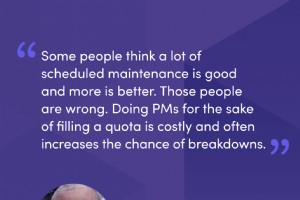
Professional racing showcases unparalleled efficiency—waste is not just disliked, it’s eradicated. Every millisecond of a pit stop serves a purpose, and every component of a race car is scrutinized to operate at peak performance. Translating this precision to the shop floor yields a lean maintenance
Every day, meat‑processing plants rely on accurate metal‑detector checks to guarantee product safety and regulatory compliance. Traditionally, this involves running test balls through the equipment—a 45‑minute routine comprising 25 minutes of manual inspection and 20 minutes of documentation. Replac
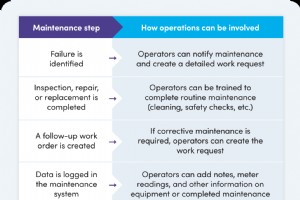
When operations and maintenance operate in silos, the cost is high and the process becomes chaotic. Consider this real‑world example from a food manufacturer.The plant relies on a sheeter that rolls massive dough balls. To keep it clean, the production team washes the machine daily with water. Unfor
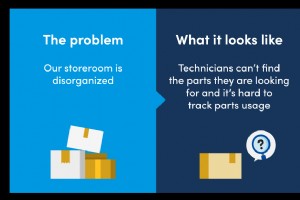
Securing budget for maintenance initiatives in a competitive environment can feel like a high‑stakes game. Everyone—from executives to line supervisors—sees the same fresh slice of funding. Your maintenance team is no exception. With limited resources, you must demonstrate that the money you ask for

Run‑to‑failure maintenance is a proactive strategy that schedules repairs only after equipment fails. Unlike unplanned, reactive interventions, a well‑designed run‑to‑failure program is intentional and cost‑efficient. Whether it is the right choice depends on the equipment and operational context. I
Equipment Maintenance and Repair