Industrial manufacturing
Equipment Maintenance and Repair


Why do we need formal scheduling? It’s a legitimate question. Even when maintenance planning is in place, job delays often persist. Planning a single job—ensuring the right skills, instructions, materials, and tools—reduces in‑job downtime, but it does not eliminate the gaps that occur between jobs.
In today’s tightening labor market, many maintenance departments are reevaluating who should handle day‑to‑day lubrication. With a growing retirement wave and shrinking workforces, the choice of lubrication staffing model can directly impact equipment uptime, maintenance costs, and overall plant per
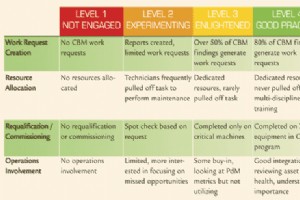
In the previous issue of Reliable Plant magazine, I introduced the five stages of a condition‑based maintenance (CBM) program’s evolution. Here we examine how each stage differs across four critical performance dimensions. CBM and Formal Work Requests Stage 1: Very few or no CBM‑generated work ord
Many professionals in maintenance and reliability already know that staying current is critical. Yet, beyond formal training, the most powerful catalyst for growth is simply reading. In 1966, former teacher Margaret McNamara brought a bag of used books to four boys in Washington, D.C., who she tutor

In most production environments, work is reactive: teams respond to unexpected events without preparation, causing lost time, increased downtime, and hidden costs. Many companies now perform root‑cause analysis (RCA) only after a trigger—such as a vibration spike, extended downtime, or financial los
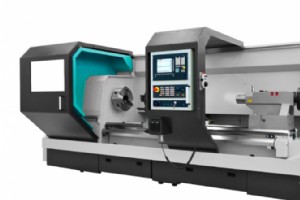
Computer numerically controlled (CNC) milling machines and machining centers have transformed the milling industry, driving a need for cutters that combine versatility with uncompromised performance. Where earlier a dedicated or specialty tool was often the only efficient solution—especially for lar
Effective lubrication maintenance is a cornerstone of reliable industrial operations. By targeting unscheduled downtime and reducing costs, a well‑structured program drives uptime, minimizes mistakes, and leverages modern technology and condition‑monitoring tools. It also promotes energy efficiency,
EPA Honors USPS Vehicle Maintenance Facilities in Albany and Syracuse for Environmental Excellence The U.S. Environmental Protection Agency (EPA) has welcomed the USPS vehicle maintenance facilities in Albany and Syracuse, NY, into the National Environmental Performance Track program. These faciliti
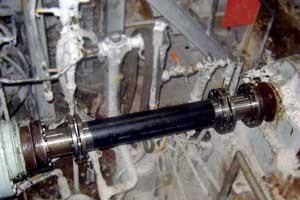
Looking to extend coupling life? Advanced‑design disc couplings are engineered for maximum durability and performance. These couplings feature discs with precision‑engineered profiles and thicknesses that deliver a higher torque‑to‑outside‑diameter ratio, improved service factors, and up to 50 % gre
The preventive maintenance team at American Axle and Manufacturing (AAM) uncovered a critical hydraulic fault during a routine filter change on Station 17b. Their swift diagnosis and repair prevented a costly shutdown, saving the company an estimated $50,000. The work order called for a hydraulic fi
What role does the human resources department play in the reliability of your plant? In today’s industrial environment, HR has traditionally focused on recruiting, training, and succession planning for skilled craftsmen. Over the past decade, many companies have trimmed these functions to cut costs,
In the previous three issues of Reliable Plant, I outlined how leadership can set a clear reliability agenda. In this series, I’ll pull specific best‑practice items from IDCON’s “Current Best Practices” document—nearly 300 elements—and invite you to audit your own plant against them. At the heart of
Choosing the right person for maintenance planning is critical. The right planner can lift workforce efficiency by 57%. Planners are trusted professionals who make independent, data‑driven decisions based on a blend of craft, people, and analytical skills. A well‑selected planner can transform how a
Today’s maintenance managers and reliability engineers are flooded with data on condition‑based maintenance, yet many ask, “Where do I begin?” Contrary to popular belief, the foundation of a high‑performance program starts with a single, precise asset catalog—a comprehensive equipment list. This lis
Maintenance & Reliability: Why ‘Good Enough Never Is’ Drives Business Success About fifteen years ago I attended a conference whose keynote was centered on quality. The speaker, Debbi Fields, the visionary behind Mrs. Fields Cookies, demonstrated how relentless pursuit of excellence built a U.S.‑wid

Global lean enterprise director Steve Hockridge (left) and lean coordinator Dana Billings demonstrate the tangible gains of unifying lean and reliability. Manufacturing firms typically fall into one of three lean adoption categories: Those that use the term purely for marketing, with lean reference
Link It Software Corporation announced on July 18 a new feature for its Web‑based maintenance platform, EZ Maintenance Web. EZM Web lets users schedule preventive maintenance and manage inventory for any quantity of equipment or vehicles from any location with an Internet connection. The latest enha
Every day, the media presents a new existential threat: melting ice caps, Iran’s nuclear ambitions, Iraq’s civil war, rising oil prices, and a mounting shortage of maintenance professionals. Joel Leonard, a former industrial technician turned “maintenance evangelist,” warns that delayed upkeep of pu

A coal-fired power plant in the western United States was grappling with unexpectedly short gearbox life in its pulverizer units. After a routine annual inspection, oil analysis revealed that the AGMA 6EP (ISO 320) gear oil specified by the OEM was failing to provide adequate lubrication. The report
When we talk about reliability, we’re really talking about uptime. Maximizing uptime demands a comprehensive strategy that leaves no possibility unaddressed. Power quality is a cornerstone, so many organizations build a dedicated plan to identify and resolve issues before they affect operations. In
Equipment Maintenance and Repair