Industrial manufacturing
Embedded

ST Microelectronics unveiled at IEDM 2018 the architecture and performance of a 28 nm FD‑SOI MCU featuring embedded Phase‑Change Memory (ePCM). These first‑in‑class MCUs are now sampling with alpha customers, passing field trials that meet automotive specifications, and are slated for full qualifica
Altreonic Kurt.mobi and Tomen Energy have inked an exclusive joint‑venture agreement to accelerate the commercial rollout of a groundbreaking battery platform. The patented carbon‑based super‑capacitor delivers fast charging and delivers performance comparable to internal‑combustion engines, operati
In the era of machine‑to‑machine (M2M) communication, seamless data collection and transmission are essential. Infineon Technologies addresses this need with an industrial‑grade embedded SIM (eSIM) housed in a miniature wafer‑level chip‑scale package (WLCSP), enabling manufacturers—from vending mach
ROHM Semiconductor returns to Embedded World 2019, presenting its latest breakthroughs in power management and sensor technologies tailored for automotive and industrial markets. Key highlights feature ultra‑low‑power management ICs for battery‑driven devices, precision timing controller ICs for aut
Future Electronics has unveiled an Arduino‑compatible development board that delivers far‑field thermal imaging at 32×24 pixels and contactless temperature measurement, enabling rapid prototyping of smart systems and IoT solutions.The platform centers on a compact thermal imaging shield that houses
Editor’s Note: Embedded Linux consistently ranks among the most popular operating systems for embedded system design. With the explosive growth of the Internet of Things, its versatility across all layers of IoT applications is indispensable. Mastery of embedded Linux enables engineers to develop so
Embedded Linux remains the industry standard for embedded system platforms, powering everything from consumer appliances to industrial control systems. With the explosive growth of the Internet of Things, its flexibility and scalability enable developers to implement complex, multi‑layered IoT solut
Editor’s Note: Embedded Linux consistently ranks among the top operating systems for embedded system design. As the Internet of Things (IoT) expands, its versatility becomes essential for supporting diverse application layers. Mastering embedded Linux is therefore critical for rapid, reliable develo
Editors Note: Embedded Linux remains the leading operating system for embedded system design. As the Internet of Things (IoT) expands, embedded Linux’s versatility across all layers of the IoT stack is essential for meeting diverse application requirements. Mastering Embedded Linux Programming – Sec
View the RTOS Revealed series Queues were introduced in an earlier article. They provide a more flexible means of passing simple messages between tasks than mailboxes. Using Queues In Nucleus SE, queues are configured at build time. A maximum of 16 queues may be defined for an application. If no q
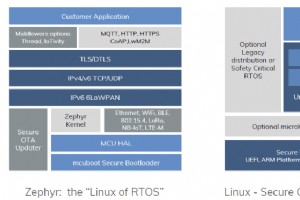
San Jose, Calif. – Foundries.io, a startup founded by former Linaro engineers, positions itself as the Red Hat of the Internet of Things. By offering processor‑agnostic configurations of Linux and the Zephyr RTOS, the company seeks to simplify firmware updates for end nodes, gateways, and connected
Embedded Linux remains the operating system of choice for a vast majority of modern embedded solutions. Its modular architecture, extensive community support, and proven scalability make it indispensable for the rapidly evolving Internet of Things (IoT) landscape. In Mastering Embedded Linux Progra
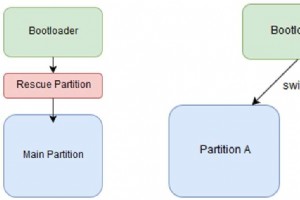
The Need for Updates Once an Embedded Linux product leaves the laboratory and enters the field, determining how it will receive updates becomes a critical design decision. While a flawless application may seem immune to change, the reality is that software inevitably accrues bugs and, for devices th
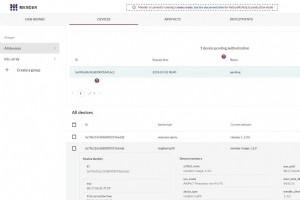
In the first article we covered the fundamentals and implementation of OTA update systems for Embedded Linux. This installment evaluates popular, ready‑made open‑source platforms that can be integrated into your project today. Mender Mender delivers a polished, out‑of‑the‑box experience. It employs
View the RTOS Revealed series Memory partitions were first introduced in our earlier article, where we compared them to the conventional C malloc() function. A partition is a fixed‑size memory block that comes from a partition pool, offering deterministic allocation and deallocation that tasks can
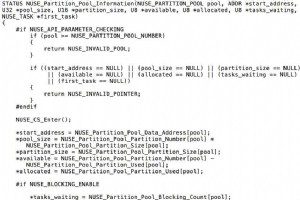
View the RTOS Revealed series Building on our previous exploration of RTOS partition memory, this article delves into the practical utilities and underlying data structures that enable efficient memory management in Nucleus RTOS and its streamlined edition, Nucleus SE. Partition Pool Utility Servi
In this RTOS Revealed series, we explore signals – the simplest, low‑cost method for inter‑task communication in Nucleus SE. Signals enable lightweight, reliable message passing between tasks. Using Signals Unlike other kernel objects, signals are not autonomous; they are intrinsically linked to a t
View the RTOS Revealed series Event flag groups provide a lightweight, flexible mechanism for inter-task communication in Nucleus SE, akin to signals but with richer functionality. Using Event Flags In Nucleus SE, event flags are configured at build time. A maximum of 16 groups can be defined. If
View the RTOS Revealed series This article continues the look at event flag groups. Event Flag Group Utility Services Nucleus RTOS provides three dedicated API calls that streamline interaction with event flag groups: retrieving detailed group information, obtaining the total count of groups, an
View the RTOS Revealed series Semaphores are a foundational mechanism for synchronizing access to shared resources in embedded systems. They allow tasks to safely obtain and release control over a resource without conflicts. Using Semaphores In Nucleus SE, semaphore support is enabled during the
Embedded