Industrial manufacturing
Embedded
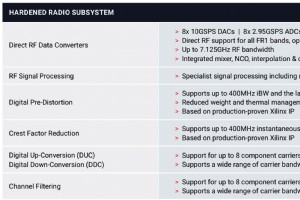
Xilinx has unveiled the Zynq RFSoC Digital Front End (DFE), a dedicated hard‑IP solution engineered for 5G New Radio (NR) deployments. Building on the robust Zynq UltraScale+ architecture, the new DFE extends the RFSoC family with high‑performance, low‑power compute blocks that handle the most deman
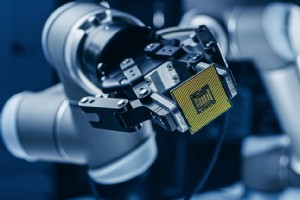
(Source: Hyperstone) Flash memory is ubiquitous in today’s electronics, but industrial environments demand far more than the commodity price tags of consumer devices. In production systems, reliability, temperature tolerance, and long‑term support can make the difference between a resilient machine
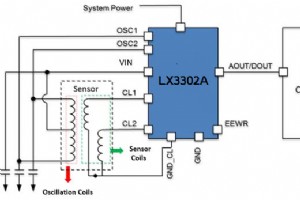
As vehicles evolve from legacy systems to cutting‑edge technology, inductive position sensors are set to replace Hall effect sensors. This transition hinges on superior management of automotive sensor degradation. Microchip Technology has launched inductive position sensors tailored for key automoti
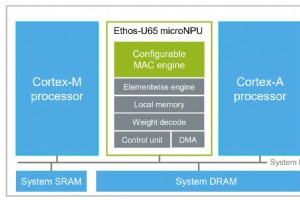
Arm has released the Ethos-U65, a next‑generation microNPU IP designed to integrate seamlessly with Cortex‑A CPU cores in application processors. The IP, licensed by NXP, will power a new line of i.MX processors that support advanced AI workloads such as pose estimation, multi‑face recognition, vide
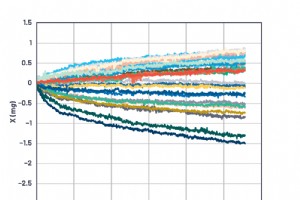
In the first two parts of our series we dissected the internal architecture of a 3‑axis high‑precision MEMS accelerometer and showed how to collect a robust baseline dataset that captures the sensor’s intrinsic noise floor. In this final installment we examine the subtle environmental and mechanical
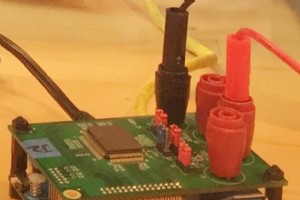
California‑based EDA firm Micro Magic, after announcing the world’s fastest RISC‑V core, has now set a new performance benchmark: 8,000 CoreMarks at 3 GHz. Co‑founder Mark Santoro said, “After hitting 13,000 CoreMarks at 5 GHz, we surpassed expectations with 8,000 CoreMarks at 3 GHz while consuming
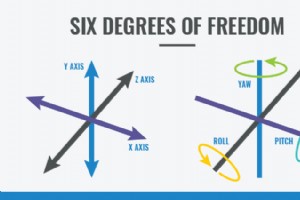
Portable, connected gadgets—smartphones, smartwatches, fitness trackers, and hearables—have reshaped everyday life. Beyond connectivity and processing power, the hidden hero behind many intuitive interactions is motion sensing. From auto‑rotating phone screens and step counters to XR headset head‑tr
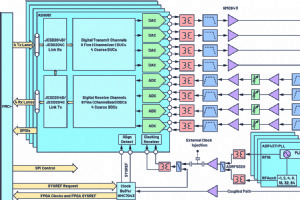
The integration of multiple digital signal processing blocks, wideband DACs and ADCs into a single monolithic chip now enables the off‑load of power‑hungry FPGA resources. This results in smaller, lower‑power platforms that support higher channel counts and sampling rates than ever before. Crucially
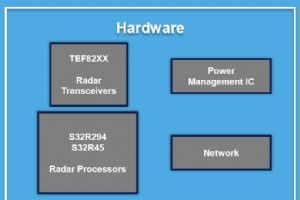
Radar is getting hot, especially with advancements that promise object identification/classification and higher latitude resolution — something traditional radars couldn’t do. With these new innovations, radars are emerging as the most sought-after sensor among carmakers and Tier Ones devel
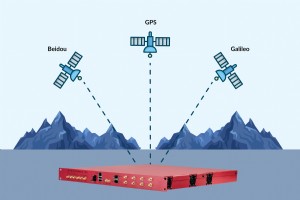
Global Navigation Satellite Systems (GNSS) use orbiting satellites to provide precise positioning for devices on Earth. Receivers apply multilateration algorithms, interpreting timing and orbital data to deduce their location. Though originally a defense technology, GNSS now powers a wide spectrum o
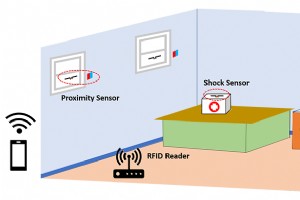
To meet contemporary homeowner expectations, modern security solutions prioritize wireless monitoring of the entire residence—covering perimeter protection, intrusion alerts, and safeguarding sensitive zones like medication cabinets, safes, and hidden valuables. Video surveillance can detect unautho
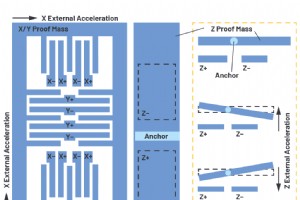
Accelerometers are the backbone of modern positioning and monitoring systems, detecting both static orientations relative to gravity and subtle dynamic motions such as early bridge failure. From the low‑cost sensors that tilt your phone’s display to export‑controlled tactical units that guide milita
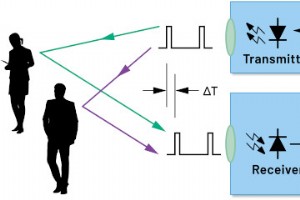
Analog Devices (ADI) and Microsoft have forged a strategic alliance to push the limits of time‑of‑flight (ToF) 3D imaging. Leveraging Microsoft’s Azure Kinect ToF platform and ADI’s world‑class IC and system integration expertise, the partnership aims to deliver solutions that are not only highly ac

Implementing sensing technology for assisted‑driving and fully autonomous vehicles is a complex, evolving challenge. Instead of a single “best” approach, experts identified six core considerations that will shape how manufacturers integrate sensors in tomorrow’s cars. The panelists—Patrick Denny, se
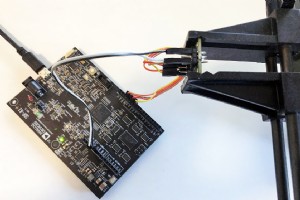
In the first part of this series we explored the internal architecture of the 3‑axis ADXL355 MEMS accelerometer. This article explains how to collect a reliable starting dataset that will confirm the device’s noise floor and validate expectations for subsequent signal‑processing experiments. Althou

Embedded systems are evolving at breakneck speed—delivering higher performance, smaller form factors, and lower costs. A handheld supercomputer with a GPU now sells for under US$100, enabling on‑device AI development and machine learning. Autonomous‑vehicle control units that once seemed impossible
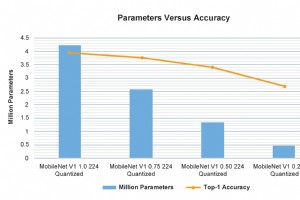
Until recently, machine learning—and even deep learning—was considered the preserve of powerful servers, with training and inference handled by gateways, edge servers, or data centers. That view held because the shift toward distributing computation between cloud and edge was still nascent. Today, b
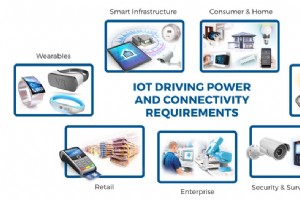
Wired data links such as USB and Ethernet not only deliver data but also provide reliable power to todays most demanding IoT endpoints. While many IoT devices are engineered as low‑power, compact units that run on coin cells or batteries, the spectrum now includes smart sensors, data loggers, buildi
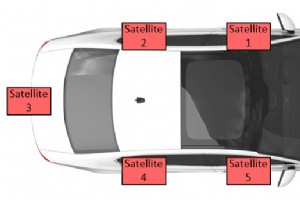
Bluetooth Low Energy (BLE) car‑access systems typically feature a central module and multiple satellite nodes that communicate over a Controller Area Network (CAN) or Local Interconnect Network (LIN) bus. The satellites are strategically placed around the vehicle to extend the BLE range. Designers a
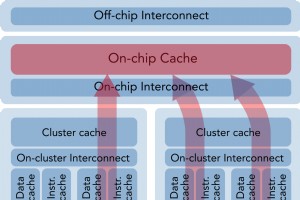
Modern vehicles and aircraft no longer rely solely on mechanical components. Their safety and performance hinge on embedded software that runs on complex heterogeneous multicore processors, managing everything from flight control to power steering with microsecond‑level deadlines. In a multicore en
Embedded