Industrial manufacturing
Embedded

If you develop applications with Qt and employ state machines, you’re likely using Qt’s state‑machine framework. You can define the machine in plain C++ or SCXML, or generate C++ code from state‑chart diagrams. This article evaluates these options in terms of functionality, applicability, and perfor

For decades, embedded engineers have debated whether to use C or C++. While most vendor firmware remains in C—56% of embedded code was written in C in the 2019 Embedded Market Survey—C++ is steadily gaining traction, with roughly 23% of new projects opting for it. With C’s 50th anniversary looming,
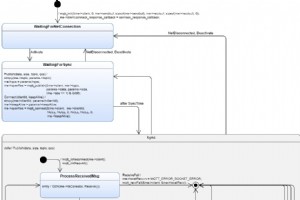
MQTT‑Reactive is a lightweight, non‑blocking MQTT v3.1.1 client built on LiamBindle’s MQTT‑C library. Designed for reactive embedded systems, it delivers a portable, event‑driven communication stack that can be integrated into any C‑based application. In this article we first define what constitutes
A dedicated industry around verification and validation—driven by standards such as IEC 61508, ISO 26262, IEC 62304, MISRA C, and CWE—has emerged to ensure software is reliable, secure, and of high quality. Even if your product does not fall under the strict regulatory requirements of these standard
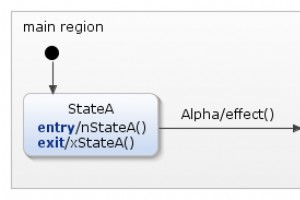
State machines are foundational to many embedded systems, yet their development can be complex. This article outlines proven strategies for building state‑machine (SM) software using Test‑Driven Development (TDD), with a focus on C implementations suitable for resource‑constrained environments. At i
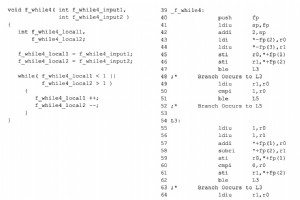
Across industries, functional safety imposes stringent requirements on developers: code must be defensively engineered to guard against unexpected events such as memory corruption or cosmic ray interference. High‑level languages like C and C++ contain features whose behavior is not fully defined by
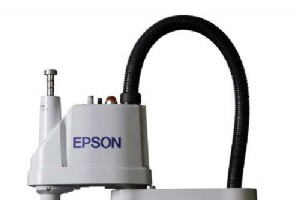
The world of technology is full of surprises, and each new discovery reveals gaps in our understanding.Consider a quick word‑association exercise: saying “Seiko” instantly brings to mind “watches,” and “Epson” evokes “printers.” This shift reflects my growing awareness of Epson’s broader capabilitie
With wearable IoT devices shrinking in size, industry standards for printed circuit boards remain sparse. In the meantime, designers must rely on proven PCB development and manufacturing practices while tailoring them to the distinct demands of wearables. Key focus areas include substrate materials,

Over the past few weeks I’ve been in discussion with the team at Makerarm.com about a groundbreaking robot arm that’s now live on Kickstarter. The Makerarm is not just a gadget; it’s a fully integrated personal fabrication platform that sits on a compact desktop and can be equipped with interchange
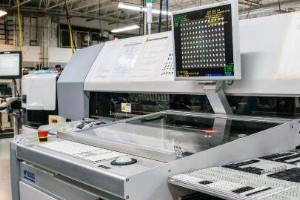
The line between commercial hardware design and hobby electronics has blurred in recent years. With open‑source hardware, affordable CAD tools, and an expansive online knowledge base, the work once reserved for corporate labs can now be tackled from a home workshop. This shift has sparked a renaissa
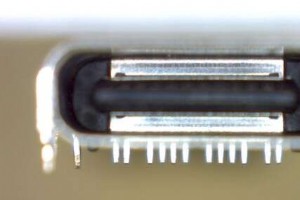
The latest USB 3.1 specification introduces the USB Type‑C connector, finally eliminating the orientation issue that plagued earlier USB standards. While not the sole drawback of legacy USB, the inability to insert cables in either direction has been a persistent nuisance for designers and users ali
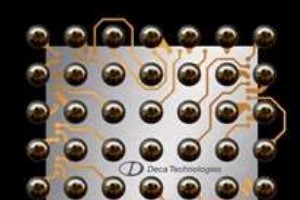
During a recent discussion on wearable technology, Ralph Osterhout, CEO of The Osterhout Design Group, noted, “What won’t work is a bulky device that distances people from their environment. If you’re talking about something that makes you look like a hammer‑head shark with wires? Then, no. It’s not
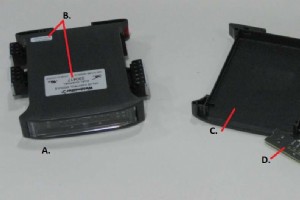
When I worked at Control Data’s subsidiary, every schematic, mechanical drawing and PCB was assigned a unique, sequential identifier. Although I was in the documentation department, I still don’t recall the exact process that brought the minicomputer together. Back then all drawings were hand‑sketch

Growing up, I watched Star Trek’s original series, where Spock’s tricorder could instantly scan and analyze any material. Decades later, that vision has become a reality thanks to Si‑Ware Systems’ NeoSpectra line of handheld spectral sensors. Si‑Ware’s NeoSpectra modules combine advanced semiconduct

The Internet of Things (IoT) has long dominated tech headlines, promising more efficient processes, added product capabilities, and entirely new business models. Yet, a recent conversation with a marketer from a leading technology firm revealed a growing concern: perhaps the hype around IoT is outpa
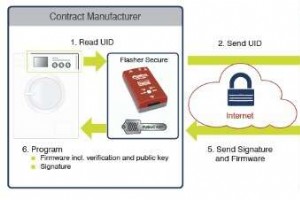
When your embedded system remains a niche product, you can manage every step in-house. But once demand surges, high‑volume manufacturing typically shifts to a contract manufacturer (CM). One critical CM responsibility is programming the microcontroller firmware into each device. In such scenarios, p
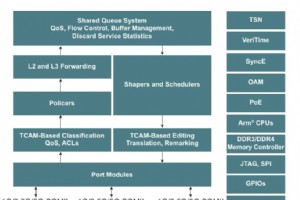
The growing digitalization of production demands unprecedented openness, resilience, determinism, and flexibility in industrial communication. Time‑Sensitive Networking (TSN) is erasing the long‑standing boundary between IT and OT networks, delivering precise timing and synchronization for today’s a
Adopting vapor‑chamber cooling can deliver significant benefits, especially for embedded systems that demand stringent thermal control. Designers of embedded devices constantly seek effective heat‑dissipation solutions. As electronics shrink and power densities rise, the risk of overheating grows un
Epoxy resin is a versatile material that IoT manufacturers integrate throughout the PCB design and fabrication process to meet diverse functional demands. With the IoT market expanding rapidly, engineers are constantly seeking practical solutions to enhance the performance and reliability of the PCB
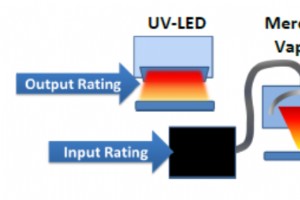
Eco‑friendly LED‑curable conformal PCB coatings are rapidly becoming the preferred choice in industries that demand fast turnaround and robust protection—automotive, white goods, and industrial control. With their rapid curing times and exceptional resistance to harsh environments, LED‑curable coati
Embedded