Industrial manufacturing
Embedded
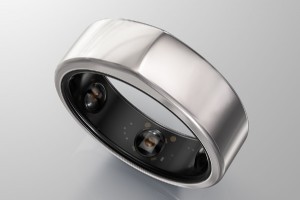
COVID‑19 remains a headline‑grabbing concern, and the professional sports sector is one of its most visible casualties. When the NBA and WNBA resumed play under isolation protocols in July, teams offered athletes the option of wearing the Oura Ring to continuously monitor their health. According to
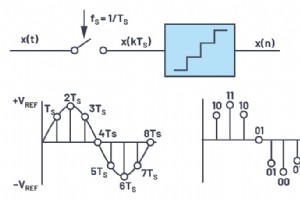
Sampling phenomena in analog-to-digital converters (ADCs) induce the problems of aliasing and capacitive kickback, and to solve these problems, designers use filters and driving amplifiers that introduce their own sets of challenges. This makes achieving precision dc and ac performance in m

Today’s drivers are looking for vehicles that combine a silent cabin with flawless communication inside and out. While electric cars naturally quiet the engine, passengers can still be exposed to road‑and‑wind noise at higher speeds, making advanced noise‑control essential. To push cabin silence fur

As consumers, homeowners, employees and everyday users, we rely on a multitude of devices and technologies that shape our daily lives. These tools are no longer optional—they are essential for efficiency and task completion across the globe.While smartphones often take the spotlight, sensor fusion l
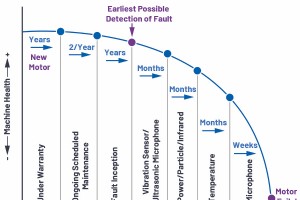
Condition‑based monitoring (CbM) tracks equipment health with sensors, while predictive maintenance (PdM) combines CbM, machine learning, and analytics to forecast failures. Choosing the right sensors is critical to detect, diagnose, and predict faults before downtime. Industrial motors are engineer
Battery‑powered, wireless‑connected devices are now ubiquitous across consumer, medical, and industrial sectors. Advances in battery chemistry, miniaturized low‑power electronics, and cloud‑based analytics have turned these gadgets into everyday essentials.Whether it’s a wearable continuous glucose
Presence‑detection systems are highly specialized. The sensors and architectures needed to support different retail scenarios vary widely, and each deployment must account for space layout, power, node communication, and data security. Why Social Distancing Is Critical for Retail The 2020 pandemic f
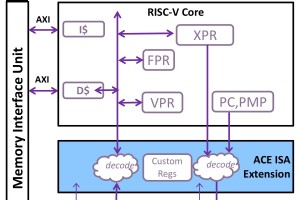
When the RISC‑V ecosystem first emerged, the primary focus was to slash costs in deeply embedded systems that had previously relied on proprietary CPU instruction set architectures (ISAs). As SoCs migrated to FinFET processes, the high mask costs pushed many designers to replace finite state machine
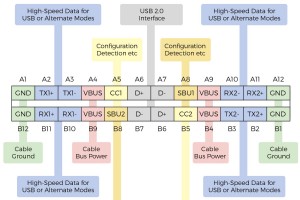
USB Evolution: From 1.1 to 3.2 and BeyondFirst launched in 1996, the universal serial bus (USB) unified the roles of multiple connection types and is ubiquitous in computing and consumer tech. Its introduction made connecting peripherals—keyboards, mice, printers, cameras, external drives, and more—
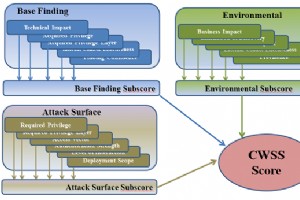
Modern computer systems are more advanced—and more complex—than ever, and the sophistication of cyberattacks is escalating at a staggering pace. While the industry has long focused on hardening software, attackers are increasingly targeting the hardware layer, exploiting vulnerabilities that arise d
Many touchscreens and handheld devices offer only basic or no haptic feedback. To meet growing user expectations, engineers are turning to piezoelectric transducers, which deliver superior physical and electrical performance compared to conventional vibration motors. This article reviews piezo trans
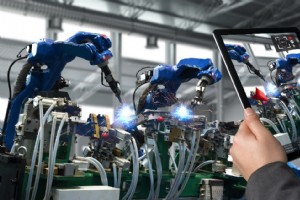
Industry 4.0 is generating unprecedented volumes of complex sensor data—commonly referred to as big data. With thousands of sensors and ever‑expanding data streams, the digital representation of machines, systems, and processes is becoming increasingly granular. This granularity unlocks new value ac
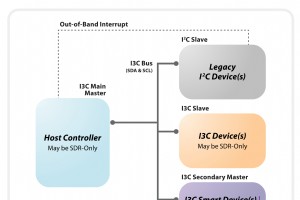
Modern mobile devices—from smartphones and wearables to IoT gadgets—are becoming increasingly sophisticated. Designers now face a dense array of sensors and peripherals, all demanding faster, more reliable data pathways to central application processors. Enter the MIPI I3C v1.1 interface, unveiled o
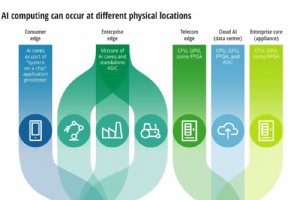
In 2020, Deloitte projected that more than 750 million edge AI chips—complete or partial processors that execute or accelerate machine learning directly on devices—would be sold, generating US$2.6 billion in revenue. The edge‑AI chip segment is set to outpace the broader semiconductor market; by 202
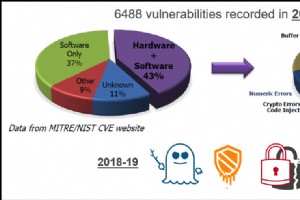
Modern integrated circuits (ICs) provide the computational and system control capabilities to process enormous amounts of data, make safety-critical decisions in real time, and protect sensitive data. Designing an application-specific integrated circuit (ASIC) or field-programmable gate arr
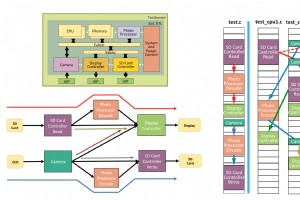
SoC designs are becoming increasingly complex, yet many system‑level verification test suites still consist of thousands of hand‑written lines of C code—an antiquated approach that contradicts the principle of automation. In particular, C tests executed on embedded processors to validate the entire
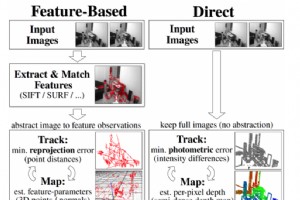
Simultaneous Localization and Mapping (SLAM) enables a device—whether a robot, drone, or autonomous vehicle—to build a real‑time map of its surroundings while simultaneously determining its position within that map. SLAM can be implemented with a variety of algorithms and sensors, from cameras and
The first two eras of 32/64‑bit embedded processors were defined by proprietary architectures. The third era is moving away from that model. First Era (1980s‑1990s)Semiconductor companies built and maintained their own CPU designs, creating a fragmented landscape. The cost of keeping these architect
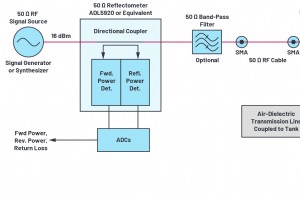
Measuring fluid levels without drilling holes is possible by clamping an air‑dielectric transmission line to a tank’s exterior and detecting the change in RF impedance with a reflectometer chip. This guide walks through an empirical design example that demonstrates how a single‑chip reflectometer, s
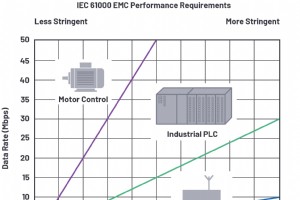
Industry leaders such as PROCENTEC report a steady rise in RS‑485‑based fieldbus deployments, notably PROFIBUS® and the rapidly expanding PROFINET Industrial Ethernet. In 2018, 61 million PROFIBUS nodes were installed worldwide, with process‑automation (PA) nodes growing 7 % year over year. The PROF
Embedded