


Industrial manufacturing
Metal

CuZn10 (CW501L) is an unhardenable wrought alloy. High hardness and strength parameter are achievable by cold forming only. Thermal conductivity is lower than for CuZn5. Favorable electrical conductivity. Corrosion resistance is similar to pure copper. Processing properties: warm forming: moderatel
CuZn0,5, mat. No CW119C, is counted among unhardenable, low alloyed copper alloys. To the comparable make CuZn0,5, mat. No 2.0205, acc. to DIN 17666 : 1983-12 applies: A strength increase is achievable only by cold forming. According to the deformation level the tensile strength is between 220 and 3
CuSn8, mat. No. CW453K, is comparable to the DIN-make CuSn8, mat. No. 2.1030, acc. to DIN 17662 : 1983-12. Properties of the CuSn-alloy are predominantly determined by the tin-content. Tensile strength, yield point and hardness increase according to the rising cold forming grade, elongation after fr
CuSn8, mat. No. CW453K, is comparable to the DIN-make CuSn8, mat. No. 2.1030, acc. to DIN 17662 : 1983-12. Properties of the CuSn-alloy are predominantly determined by the tin-content. Tensile strength, yield point and hardness increase according to the rising cold forming grade, elongation after fr
CuSn8, mat. No. CW453K, is comparable to the DIN-make CuSn8, mat. No. 2.1030, acc. to DIN 17662 : 1983-12. Properties of the CuSn-alloy are predominantly determined by the tin-content. Tensile strength, yield point and hardness increase according to the rising cold forming grade, elongation after fr
CuSn6, mat. No. CW425K, is comparable to the DIN-make CuSn6, mat. No. 2.1020, acc. to DIN 17662 : 1983-12. Properties of the CuSn-alloy are predominantly determined by the tin-content. Tensile strength, yield point and hardness increase according to the rising cold forming grade, elongation after fr
CuSn6, mat. No. CW425K, is comparable to the DIN-make CuSn6, mat. No. 2.1020, acc. to DIN 17662 : 1983-12. Properties of the CuSn-alloy are predominantly determined by the tin-content. Tensile strength, yield point and hardness increase according to the rising cold forming grade, elongation after fr
PropertiesGeneralPropertyTemperatureValueCommentDensity23.0 °C7.8 - 7.9 g/cm³Typical for Low Carbon SteelMechanicalPropertyTemperatureValueCommentElastic modulus23.0 °C200 - 215 GPaTypical for Low Carbon SteelElongation A80, transverse20.0 °C23 - 30 %Poisson's ratio23.0 °C0.29 [-]Typical for Lo
Material CuSn5, mat. No. CW451K is used in the form of tubes for manometer springs or hose tubes as well as for contact springs and connectors. Basically the same application area as CuSn6 (CW452K). CuSn5 shows slightly higher electrical conductivity at slightly lower strength due to the lower tin-c
CuSn4, mat. No. CW450K, is comparable to the DIN-make CuSn4, mat. No. 2.1016, acc. to DIN 17662 : 1983-12. The material is specified by a favorable combination of very good cold formability with strength and hardness. It is corrosion resistant, good soft and hard solderable and shows still good elec
CuSn4, mat. No. CW450K, is comparable to the DIN-make CuSn4, mat. No. 2.1016, acc. to DIN 17662 : 1983-12. The material is specified by a favorable combination of very good cold formability with strength and hardness. It is corrosion resistant, good soft and hard solderable and shows still good elec
CuSn4, mat. No. CW450K, is comparable to the DIN-make CuSn4, mat. No. 2.1016, acc. to DIN 17662 : 1983-12. The material is specified by a favorable combination of very good cold formability with strength and hardness. It is corrosion resistant, good soft and hard solderable and shows still good elec
Material CuSn3Zn9, mat. No. CW454K, is predominantly used in electrical engineering. The multicomponent alloy is characterized by a considerably lower stress corrosion sensitivity compared to the copper-zinc-alloys. The spring properties come up to alloy CuSn4 (CW450K). For the electrolytically tinn
Material CuSn3Zn9, mat. No. CW454K, is predominantly used in electrical engineering. The multicomponent alloy is characterized by a considerably lower stress corrosion sensitivity compared to the copper-zinc-alloys. The spring properties come up to alloy CuSn4 (CW450K). For the electrolytically tinn
Material CuSn3Zn9, mat. No. CW454K, is predominantly used in electrical engineering. The multicomponent alloy is characterized by a considerably lower stress corrosion sensitivity compared to the copper-zinc-alloys. The spring properties come up to alloy CuSn4 (CW450K). For the electrolytically tinn
CuNi9Sn2 (CW351H) is comparable to CuNi9Sn2, mat. no. 2.0875, acc. to DIN 17664 : 1983-12. To the comparable DIN-mark applies: The material shows high strength specific values as well as favorable tarnish-proofness and a very good stress relaxation behaviour in spring-hard condition. CuNi9Sn2 has s
CuNi9Sn2 (CW351H) is comparable to CuNi9Sn2, mat. no. 2.0875, acc. to DIN 17664 : 1983-12. To the comparable DIN-mark applies: The material shows high strength specific values as well as favorable tarnish-proofness and a very good stress relaxation behaviour in spring-hard condition. CuNi9Sn2 has s
Cold-rolled narrow strip made of the mild steel C60E will be delivered in thicknesses up to 6 mm for quenching and tempering and for quenched and tempered cold strip in thicknesses between 0.3 mm and 3.0 mm in following conditions: - soft annealed or soft annealed and little rerolled (+A or +LC), -
Cold-rolled narrow strip made of the mild steel C60E will be delivered in thicknesses up to 6 mm for quenching and tempering and for quenched and tempered cold strip in thicknesses between 0.3 mm and 3.0 mm in following conditions: - soft annealed or soft annealed and little rerolled (+A or +LC), -
Cold-rolled narrow strip made of the mild steel C55E will be delivered in thicknesses up to 6 mm for quenching and tempering and for quenched and tempered cold strip in thicknesses between 0.3 mm and 3.0 mm in following conditions: - soft annealed or soft annealed and little rerolled (+A or +LC), -
Metal

Revolutionary 3D‑Printed FRP Footbridge Sets New Standard for Circular Composite Construction
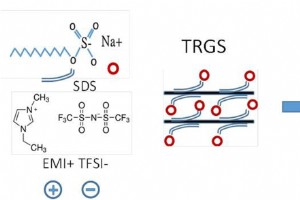
Enhancing Supercapacitor Energy Density with Anionic Surfactant‑Intercalated Thermally Reduced Graphene Oxide in Ionic Liquid Electrolytes

Understanding the TIP120 Transistor: Basics, Features, and Applications

New York B2B Industrial Buying Trends: Insights & Opportunities

