Industrial manufacturing
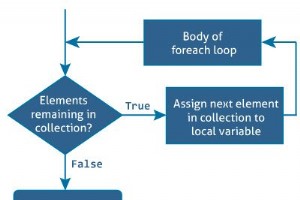
C# foreach Loops Discover how the foreach loop simplifies iteration over arrays and collections in C#, boosting readability and performance. In C#, the foreach loop offers a cleaner, more expressive alternative to the traditional for loop when working with arrays, lists, and other collections. It au

C# Jagged Array In this tutorial, we will learn about the C# jagged array. We will learn to declare, initialize, and access the jagged array with the help of examples.
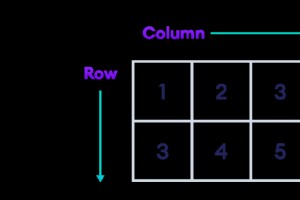
C# Multidimensional Arrays In this tutorial, we’ll explore C#’s multidimensional arrays, focusing on two‑dimensional examples with clear code snippets. Before diving into multidimensional arrays, review C#’s single‑dimensional arrays. In a multidimensional array, each element is itself an array. For
Mastering C# Arrays Discover how to declare, initialize, and work with arrays in C#. Practical code examples, looping techniques, and LINQ operations are covered. An array stores a fixed-size sequence of elements of the same type. For example, instead of five separate variables for student ages, a s
Mastering the C# Continue Statement: How to Skip Loop Iterations Effectively This guide explains how the continue statement works in C#, with practical examples for for, while, foreach, and nested loops. In C#, the continue keyword allows a loop to immediately skip the remainder of the current itera
C# break Statement In this tutorial, you will learn about the working C# break statement with the help of examples.
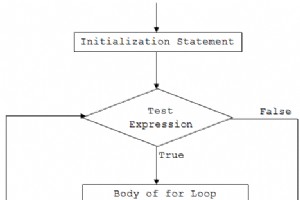
Mastering C# For Loops Learn how to use the for loop in C#, understand its execution flow, and see practical examples that cover common use cases and edge scenarios. What Is a For Loop? A for loop repeats a block of code a specified number of times. It’s the most common way to iterate when the num
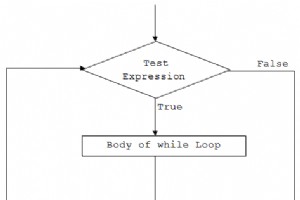
Mastering C# While and Do‑While Loops Explore how to implement C# while and do…while loops, understand their differences, and learn best practices for writing clean, efficient code. In software development, repetitive execution of a code block is common, whether for iterating over collections, handl
C# Ternary Operator Master the C# ternary operator for compact, readable conditional logic. The ternary operator is a succinct replacement for simple if…else statements. Before diving in, review C#’s if…else syntax if you’re new to it. Syntax: Condition ? Expression1 : Expression2; How it works: If
C# switch Statement Discover how to replace complex if‑else chains with a clean, readable switch statement in C#—complete with practical examples. Switch statements simplify decision‑making by evaluating a single expression and executing the matching case block. Compared to a long if‑else ladder, th
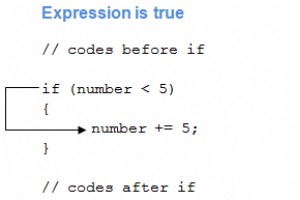
Mastering Conditional Logic in C#: If, If‑Else, If‑ElseIf, and Nested If Statements In this article, we will learn how to use if, if...else, if...else if statements in C# to control the flow of program execution. Testing conditions is a core part of any programming language. In C#, conditional state
C# Comments In this article, we will learn about C# comments, different styles of comments, and why and how to use them effectively in a program. Comments are the lifeblood of readable code. They are human‑readable annotations that explain intent, clarify complex logic, and document design decisions
C# Expressions, Statements & Blocks: A Comprehensive Guide with Practical Examples This article provides an in-depth look at C# expressions, statements, and blocks—explaining their roles, differences, and how they form the backbone of any C# program. C# Expressions An expression in C# is a combinat
C# Fundamentals: Input and Output Essentials This guide walks you through C#’s core input and output techniques, showing how to read user data and display results reliably. C# Output To write data to the console, C# offers two primary methods: System.Console.WriteLine() System.Console.Write() Here,
C# Bitwise and Bit Shift Operators In this tutorial, we will learn in detail about bitwise and bit shift operators in C#. C# provides 4 bitwise and 2 bit shift operators.
Mastering C# Operator Precedence & Associativity This in‑depth tutorial explains how the C# compiler evaluates expressions by applying operator precedence and associativity rules. Learn with clear examples and reference tables. Operator Precedence in C# Operator precedence defines the order in which
C# Operators Explore every category of operators in C# and learn how to apply them effectively in your code. Operators are symbols that perform actions on one or more operands—variables, constants, or expressions. In C#, operators are grouped by the type of operation they execute, such as arithmetic
C# Variables and (Primitive) Data Types In this tutorial, we will learn about variables, how to create variables in C# and different data types that C# programming language supports.
C# Keywords and Identifiers Master the fundamentals of C# keywords and identifiers, the building blocks that define your code’s structure and behavior. C# Keywords Keywords are predefined words that the C# compiler reserves for its own use. Their meaning is fixed; they cannot be altered, nor can the
C# Hello World – Building Your First C# Application In this tutorial, we’ll walk through writing a simple “Hello World!” program in C#, covering the essential syntax and structure that every beginner needs to master. The “Hello World!” program is the classic first step when learning a new language.
C Language