


Industrial manufacturing
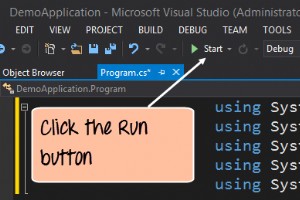
C# is a powerful, object‑oriented language built on Microsoft’s .NET framework, enabling developers to create a wide range of applications from desktop to web services. This tutorial walks you through building your very first console program – a classic “Hello World” – using Visual Studio. By the en
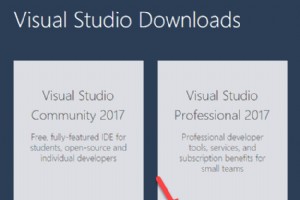
Microsoft Visual Studio is the industry‑standard IDE for building Windows applications on the .NET platform. It supports desktop, web, mobile and cloud development, and includes integrated debugging, profiling and version‑control tools. Whether you are creating Windows Forms, ASP.NET, or cross‑platf

Explore the evolution of Microsoft’s flagship development platform and its flagship language, C#. This guide highlights key milestones, release dates, and the features that shaped modern .NET development. Overview of .NET Framework version history Timeline of C# language releases and their major en
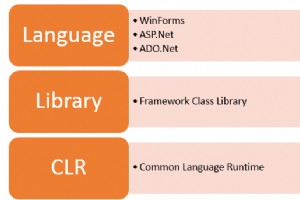
What is .NET Framework? .NET Framework is Microsoft’s flagship development platform that brings together a rich set of languages, libraries, and tooling to build dependable Windows desktop, web, and cloud‑native applications. From its first release in 2002 (v1.0) to the current 4.7.2, the framework
1) What is a class in C++? A class is a user‑defined data type that groups data members and member functions into a single unit. It serves as a blueprint for creating objects (instances) with the same structure. 2) How do you declare a class in C++? class ClassName { // data members // membe

C++ remains one of the most powerful, versatile, and in‑demand programming languages. Whether you’re a beginner eager to grasp the fundamentals or an experienced developer aiming to sharpen advanced skills, the right online course can accelerate your learning and open doors to high‑value roles. Belo
C++ is a versatile, object‑oriented language developed by Bjarne Stroustrup. To streamline coding, debugging, and deployment, developers rely on Integrated Development Environments (IDEs) that provide code completion, syntax highlighting, and build automation. Below is a hand‑picked list of the 15 m
What is a Structure? A structure (or struct) is a user‑defined data type that groups related data members of different types—such as int, float, char, etc.—into a single composite type. All members are laid out contiguously in memory, which makes structures ideal for lightweight data containers. Wha
What Is a Function in C++? A function in C++ is a self‑contained block of code that accepts input, processes it, and returns a result. By encapsulating repeated tasks in a function, developers avoid duplicating code and can easily reuse logic across a program by supplying different parameters. Every
What is std::list? In C++, std::list is a sequence container that stores elements as a doubly‑linked list. This structure allows you to insert or remove items at any position in constant time, while iterating over the list in either direction. Although it does not provide fast random access like std
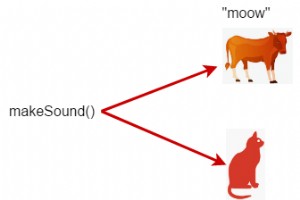
What is Polymorphism in C++? In C++, polymorphism causes a member function to behave differently based on the object that calls/invokes it. Polymorphism is a Greek word that means to have many forms. It occurs when you have a hierarchy of classes related through inheritance. Fo
What is a Class? A C++ class is a user‑defined data type that bundles data and the functions that operate on that data into a single entity. Think of it as a blueprint: it defines the shape and behaviour of objects that can be created from it. Just as a house blueprint specifies the placement of doo
What is std::map? In the C++ Standard Template Library (STL), std::map is an associative container that stores elements as key‑value pairs. Each key is unique and the container automatically keeps the elements sorted according to the key’s comparison function (by default, std::less). The values can
What is a C++ Vector? A C++ vector is a dynamic array that automatically resizes itself as elements are added or removed. Its elements are stored contiguously, enabling fast indexed access and traversal via iterators. Insertion occurs at the end in amortized constant time. Removing the last element
What is a Struct in C++? A STRUCT is a C++ data structure that can be used to store together elements of different data types. In C++, a structure is a user-defined data type. The structure creates a data type for grouping items of different data types under a single data type.
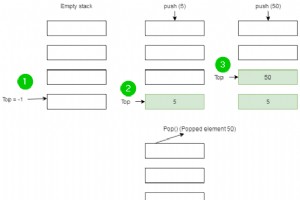
What Is std::stack? std::stack is a container adapter that implements the LIFO (Last In, First Out) principle. It allows insertion and removal of elements only from one end – the top. By default, it uses std::deque as the underlying container, but any sequence container (e.g., std::vector or std::li
What Are Streams in C++? C++ abstracts input and output through a family of stream classes that transfer data as byte sequences. These streams are the backbone of every I/O operation in the language. Streams fall into two categories: Types of Streams Input Streams – Receive data from devices such a
What is Operator Overloading? Using operator overloading in C++, you can assign multiple meanings to an operator within the same scope. The goal is to give a custom behavior to an operator for a user‑defined type. With operator overloading, you can redefine most C++ operators and perform different o
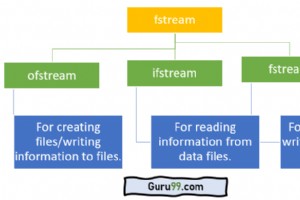
What is file handling in C++? File handling lets you persist program data on storage devices. By directing program output to a file, you can perform further manipulation, analysis, or archival on that data. A stream is an abstraction that represents a continuous source or destination of characters.
What is a Char? The char type in C++ is a fundamental integral data type that stores a single character. Internally, it is represented as an 8‑bit integer, occupying exactly one byte of memory. Because it is an integral type, it can participate in arithmetic operations and comparisons just like othe
C Language
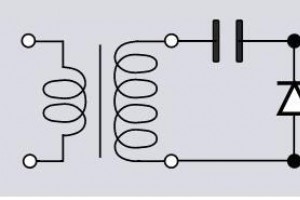
Voltage Doubler: A Lightweight, Cost‑Effective Alternative to Transformer‑Rectifier Circuits

Measuring Power Quality: Understanding Harmonics and Their Impact on AC Systems

VIBRA‑DRUM® Dross Reclamation System – Rapid, Flexible Metal Recovery

E3.formboard Level 1: Master Wiring Harness Documentation & Manufacturing

