Industrial manufacturing

The last chapter explained the standard input and output devices handled by C programming language. This chapter cover how C programmers can create, open, close text or binary files for their data storage. A file represents a sequence of bytes, regardless of it being a text file or a binary file
When we say Input, it means to feed some data into a program. An input can be given in the form of a file or from the command line. C programming provides a set of built-in functions to read the given input and feed it to the program as per requirement. When we say Output, it means to display so
The C programming language provides a keyword called typedef, which you can use to give a type a new name. Following is an example to define a term BYTE for one-byte numbers − typedef unsigned char BYTE; After this type definition, the identifier BYTE can be used as an abbreviation for t
Suppose your C program contains a number of TRUE/FALSE variables grouped in a structure called status, as follows − struct { unsigned int widthValidated; unsigned int heightValidated; } status; This structure requires 8 bytes of memory space but in actual, we are going to store eit
A union is a special data type available in C that allows to store different data types in the same memory location. You can define a union with many members, but only one member can contain a value at any given time. Unions provide an efficient way of using the same memory location for multiple
Arrays allow to define type of variables that can hold several data items of the same kind. Similarly structure is another user defined data type available in C that allows to combine data items of different kinds. Structures are used to represent a record. Suppose you want to keep track of your
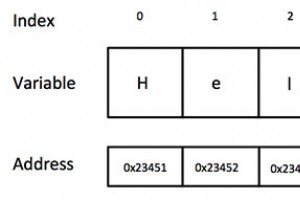
Strings are actually one-dimensional array of characters terminated by a null character \0. Thus a null-terminated string contains the characters that comprise the string followed by a null. The following declaration and initialization create a string consisting of the word Hello. To hold the nu
Pointers in C are easy and fun to learn. Some C programming tasks are performed more easily with pointers, and other tasks, such as dynamic memory allocation, cannot be performed without using pointers. So it becomes necessary to learn pointers to become a perfect C programmer. Lets start learni
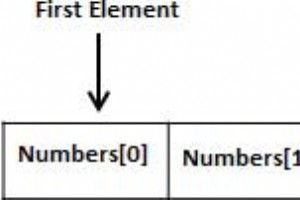
Arrays a kind of data structure that can store a fixed-size sequential collection of elements of the same type. An array is used to store a collection of data, but it is often more useful to think of an array as a collection of variables of the same type. Instead of declaring individual variable
A scope in any programming is a region of the program where a defined variable can have its existence and beyond that variable it cannot be accessed. There are three places where variables can be declared in C programming language − Inside a function or a block which is called local varia
A function is a group of statements that together perform a task. Every C program has at least one function, which is main(), and all the most trivial programs can define additional functions. You can divide up your code into separate functions. How you divide up your code among different functi
You may encounter situations, when a block of code needs to be executed several number of times. In general, statements are executed sequentially: The first statement in a function is executed first, followed by the second, and so on. Programming languages provide various control structures that
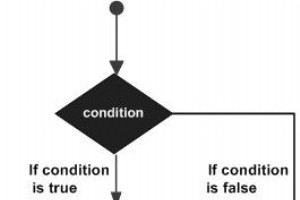
Decision making structures require that the programmer specifies one or more conditions to be evaluated or tested by the program, along with a statement or statements to be executed if the condition is determined to be true, and optionally, other statements to be executed if the condition is det
An operator is a symbol that tells the compiler to perform specific mathematical or logical functions. C language is rich in built-in operators and provides the following types of operators − Arithmetic Operators Relational Operators Logical Operators Bitwise Operators Assignment Operator
A storage class defines the scope (visibility) and life-time of variables and/or functions within a C Program. They precede the type that they modify. We have four different storage classes in a C program − auto register static extern The auto Storage Class The auto storage class is the
Constants refer to fixed values that the program may not alter during its execution. These fixed values are also called literals. Constants can be of any of the basic data types like an integer constant, a floating constant, a character constant, or a string literal. There are enumeration consta
A variable is nothing but a name given to a storage area that our programs can manipulate. Each variable in C has a specific type, which determines the size and layout of the variables memory; the range of values that can be stored within that memory; and the set of operations that can be applie
Data types in c refer to an extensive system used for declaring variables or functions of different types. The type of a variable determines how much space it occupies in storage and how the bit pattern stored is interpreted.The types in C can be classified as follows −Sr.No.Types & De
You have seen the basic structure of a C program, so it will be easy to understand other basic building blocks of the C programming language. Tokens in C A C program consists of various tokens and a token is either a keyword, an identifier, a constant, a string literal, or a symbol. For example,
Before we study the basic building blocks of the C programming language, let us look at a bare minimum C program structure so that we can take it as a reference in the upcoming chapters. Hello World Example A C program basically consists of the following parts − Preprocessor Commands Func
C Language