Industrial manufacturing
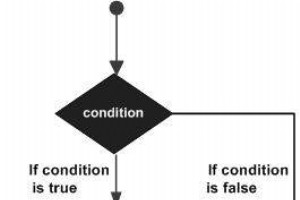
Decision making structures require that the programmer specify one or more conditions to be evaluated or tested by the program, along with a statement or statements to be executed if the condition is determined to be true, and optionally, other statements to be executed if the condition is dete
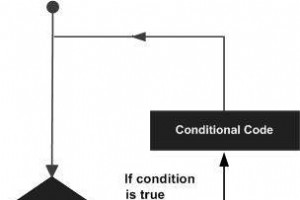
There may be a situation, when you need to execute a block of code several number of times. In general, statements are executed sequentially: The first statement in a function is executed first, followed by the second, and so on. Programming languages provide various control structures that all

An operator is a symbol that tells the compiler to perform specific mathematical or logical manipulations. C++ is rich in built-in operators and provide the following types of operators − Arithmetic Operators Relational Operators Logical Operators Bitwise Operators Assignment Operators M
A storage class defines the scope (visibility) and life-time of variables and/or functions within a C++ Program. These specifiers precede the type that they modify. There are following storage classes, which can be used in a C++ Program auto register static extern mutable The auto Storage Cla
C++ allows the char, int, and double data types to have modifiers preceding them. A modifier is used to alter the meaning of the base type so that it more precisely fits the needs of various situations. The data type modifiers are listed here − signed unsigned long short The modifiers
Constants refer to fixed values that the program may not alter and they are called literals. Constants can be of any of the basic data types and can be divided into Integer Numerals, Floating-Point Numerals, Characters, Strings and Boolean Values. Again, constants are treated just like regular
A scope is a region of the program and broadly speaking there are three places, where variables can be declared − Inside a function or a block which is called local variables, In the definition of function parameters which is called formal parameters. Outside of all functions which is ca
A variable provides us with named storage that our programs can manipulate. Each variable in C++ has a specific type, which determines the size and layout of the variables memory; the range of values that can be stored within that memory; and the set of operations that can be applied to the var
Program comments are explanatory statements that you can include in the C++ code. These comments help anyone reading the source code. All programming languages allow for some form of comments. C++ supports single-line and multi-line comments. All characters available inside any comment are igno
When we consider a C++ program, it can be defined as a collection of objects that communicate via invoking each others methods. Let us now briefly look into what a class, object, methods, and instant variables mean. Object − Objects have states and behaviors. Example: A dog has states -
Local Environment Setup If you are still willing to set up your environment for C++, you need to have the following two softwares on your computer. Text Editor This will be used to type your program. Examples of few editors include Windows Notepad, OS Edit command, Brief, Epsilon, EMACS, and vi
C++ is a statically typed, compiled, general-purpose, case-sensitive, free-form programming language that supports procedural, object-oriented, and generic programming. C++ is regarded as a middle-level language, as it comprises a combination of both high-level and low-level language features.
It is possible to pass some values from the command line to your C programs when they are executed. These values are called command line arguments and many times they are important for your program especially when you want to control your program from outside instead of hard coding those values
This chapter explains dynamic memory management in C. The C programming language provides several functions for memory allocation and management. These functions can be found in the <stdlib.h> header file.Sr.No.Function & Description1void *calloc(int num, int size);This function alloca
Sometimes, you may come across a situation, when you want to have a function, which can take variable number of arguments, i.e., parameters, instead of predefined number of parameters. The C programming language provides a solution for this situation and you are allowed to define a function whic
Recursion is the process of repeating items in a self-similar way. In programming languages, if a program allows you to call a function inside the same function, then it is called a recursive call of the function. void recursion() { recursion(); /* function calls itself */ } int main() {
As such, C programming does not provide direct support for error handling but being a system programming language, it provides you access at lower level in the form of return values. Most of the C or even Unix function calls return -1 or NULL in case of any error and set an error code errno. It
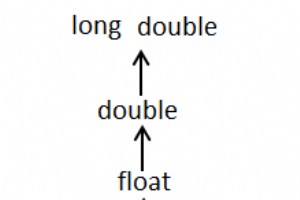
Converting one datatype into another is known as type casting or, type-conversion. For example, if you want to store a long value into a simple integer then you can type cast long to int. You can convert the values from one type to another explicitly using the cast operator as follows − (
A header file is a file with extension .h which contains C function declarations and macro definitions to be shared between several source files. There are two types of header files: the files that the programmer writes and the files that comes with your compiler. You request to use a header fil
The C Preprocessor is not a part of the compiler, but is a separate step in the compilation process. In simple terms, a C Preprocessor is just a text substitution tool and it instructs the compiler to do required pre-processing before the actual compilation. Well refer to the C Preprocessor as C
C Language