Industrial manufacturing

If you want to set up your environment for C programming language, you need the following two software tools available on your computer, (a) Text Editor and (b) The C Compiler. Text Editor This will be used to type your program. Examples of few a editors include Windows Notepad, OS Edit command,
C is a general-purpose, high-level language that was originally developed by Dennis M. Ritchie to develop the UNIX operating system at Bell Labs. C was originally first implemented on the DEC PDP-11 computer in 1972. In 1978, Brian Kernighan and Dennis Ritchie produced the first publicly availab
C programming is a general-purpose, procedural, imperative computer programming language developed in 1972 by Dennis M. Ritchie at the Bell Telephone Laboratories to develop the UNIX operating system. C is the most widely used computer language. It keeps fluctuating at number one scale of popular
$20.20 $9.99 for today 4.5 (107 ratings) Key Highlights of the C Programming PDF Tutorial 160+ pages of in‑depth content eBook designed for absolute beginners Illustrated with annotated screenshots for clear understanding Lifetime download access—no recurring fees C is a general‑purpose, machi
Top 100 C Programming Interview Questions & Answers (2024) Below you will find concise, expert‑level answers to the most frequently asked C programming interview questions. Each answer is written to demonstrate clear expertise, real experience, and authoritative knowledge while remaining engaging an
C remains one of the most widely used programming languages, prized for its blend of low‑level control and high‑level abstraction. Whether you’re writing firmware, system utilities, or cross‑platform applications, a powerful Integrated Development Environment (IDE) can dramatically improve productiv
What is strlen() In C, strlen() returns the number of characters in a null‑terminated string, excluding the terminating \0. It counts alphabetic characters, digits, symbols, and spaces. This article explains the role of strlen(), sizeof(), and why they behave differently. Definition of strlen() Def
What Is the free() Function in C? The free() function, part of the C standard library, releases memory that was previously allocated with malloc(), calloc(), or realloc(). By returning the block to the heap, it keeps your program’s memory footprint under control and prevents exhaustion of available
What is realloc() realloc() is a C standard library function that resizes an existing memory block. It expands or shrinks the block while preserving its content. This makes dynamic memory management more efficient, especially when the required size changes during runtime. Syntax ptr = realloc(ptr,
What is calloc in C? The calloc() function in C allocates multiple blocks of memory of equal size and initializes every byte to zero. It’s a dynamic allocation routine used for complex data structures like arrays or structs, returning a void * pointer. While malloc() reserves a single contiguous blo
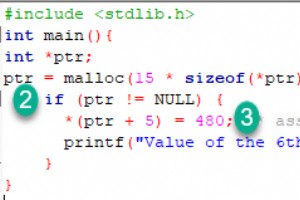
What Is malloc() in C? In the C Standard Library, malloc()—short for “memory allocation”—dynamically reserves a contiguous block of memory at runtime. The function returns a void* pointer to the beginning of that block, which you can cast to any pointer type you need. Syntax ptr = (cast_type *)mallo
What is Dynamic Memory Allocation? Dynamic memory allocation lets a program request and release memory at run time. In C, the standard library provides four primary functions for this purpose – malloc(), calloc(), realloc(), and free() – all declared in stdlib.h. malloc(): Allocate a Single Block of
What are loops? A Loop executes the sequence of statements many times until the stated condition becomes false. A loop consists of two parts, a body of a loop and a control statement. The control statement is a combination of some conditions that direct the body of the loop to ex
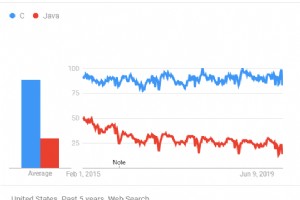
What is C? C is a procedural programming language created by Dennis Ritchie at Bell Labs in 1972. Designed to write system software, it blends low‑level hardware control with high‑level abstraction, earning its reputation as a middle‑level language. Its compact syntax and powerful pointer support ma

What is C? C is a middle‑level programming language that blends low‑level hardware control with high‑level abstraction. Developed at Bell Labs in 1972 by Dennis Ritchie, it was designed for system software and is still widely used for firmware and portable applications. What is C++? C++ builds on C
What Is C++? C++ is a hybrid programming language that blends the low‑level control of C with high‑level object‑oriented features first introduced by Simula 67. It supports both procedural and object‑oriented paradigms, making it an intermediate‑level language commonly called “C with classes.” What

What is a Structure? A structure is a user‑defined data type in C that groups logically related data items of different types into a single unit. Each member occupies its own contiguous memory location, so a structure can hold multiple values simultaneously. Example: a student record that stores a n
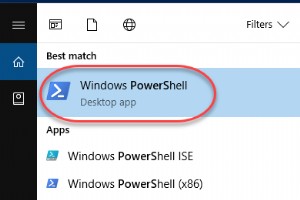
Let’s start learning Powershell Lessons. First, we will learn: What is PowerShell? Windows PowerShell is an object-oriented automation engine and scripting language. It is designed mainly for IT professionals and system administrators to control & automate the adminis
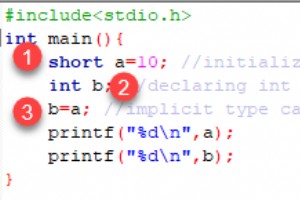
What Is Typecasting in C? In C, typecasting—or data conversion—is the process of converting a value from one data type to another. It’s a fundamental concept that every C programmer should master. Implicit Type Casting Implicit (or automatic) type casting occurs when the compiler silently converts o
Before diving into dynamic memory allocation in C, it’s essential to understand how memory is managed in the language. How Memory Management Works in C When you declare a variable with a primitive type, the compiler allocates space for it on the stack automatically. For example, a float typically oc
C Language