Industrial manufacturing
Metal

For decades, manufacturers have used stainless steel to make just about anything. From surgical equipment to towering skyscrapers, you can find stainless steel anywhere you go. The reason why manufacturers and businesses choose to use stainless steel is because it has many beneficial propertie
When people think of bronze, they often think of ancient civilizations and artwork. This metal alloy has many modern applications as well. Many machines and mechanisms rely on high silicon iron bronze to function. These are three applications of high silicon iron bronze alloy and why this type
For most people, the word “bronze” conjures up images of statues and sculptures. Indeed, some of the world’s most famous artworks consist of bronze, including Auguste Rodin’s The Thinker and the Statue of Liberty. But many people don’t realize that bronze i
Any time you see the word “bronze,” you can be sure there is at least some copper involved. Aluminum bronze is no different—this tough alloy gets its name from adding aluminum to the familiar mix of copper and tin. The result is a stronger, more corrosion-resistant material that finds a
Whether you’re working on a construction project or creating art, there comes a time when you’ll need some metal. When finding a metal supplier, you want to ensure you’re getting the best quality product for the best price. But with so many options on the market, it can be di
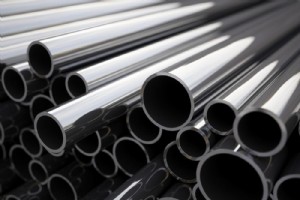
Image credit: Shutterstock/CHIARI VFX Steel is the generic term for a large family of iron-carbon alloys that are malleable, within some temperature range, immediately after solidification from the molten state. The principal raw materials used in steelmaking are iron ore, coal, and limestone. T
Steel is a malleable iron/carbon alloy containing from 0.10 to as much as 2% carbon, which determines the level to which it can be hardened. It is sometimes further alloyed with manganese, molybdenum, chromium, nickel, etc. to improve the ease with which it can be hardened and other characteristics
Stainless steel is an iron-chromium alloy that contains anywhere from 10 to 30% chromium which gives the metal high resistance to corrosion. Although there are many grades of stainless steel only a dozen or so are used with any regularity. For example, AISI Type 304 SS, having a chromium-nickel con
Forms of structural steel have long been standardized by AISI. In discussing beams, tees, and channels, reference is made to flanges and webs. The flange is identified as the flat portion which, in the case of a beam, would normally be situated at the top and the bottom of the beam. The web c
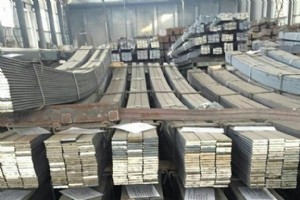
Welcome to the Thomasnet.com guide to the top US steel companies and global steel manufacturers. Steel is a versatile metal that is used in construction and as a core material for the manufacturing of a large range of products for commercial or consumer use. Prized for its strength, durability, and
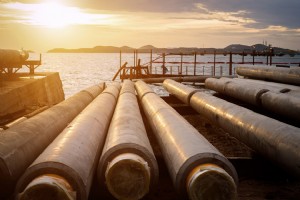
Or are they the same? Is carbon steel better than mild steel? Trick question! Mild steel is a type of carbon steel. The element carbon is present in all steel. Whenever this carbon is the main alloying element, the alloy is considered a carbon steel. Low-carbon steel is another name for mild steel.
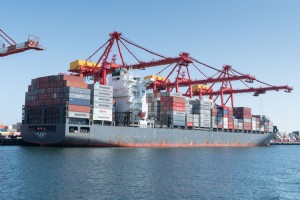
Specifying steel for overseas manufacture When manufacturing overseas, North American designers might need to navigate differences in spoken language. Engineering specification is also a language, and standard specifications for material and processes are defined differently in each country in the
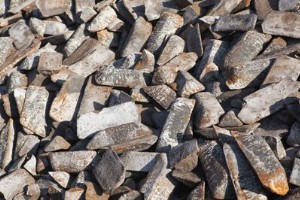
Ductile iron castings have many advantages Ductile iron—also referred to as spheroidal or nodular iron—is actually a group of irons that exhibit high strength, flexibility, durability, and elasticity due to their unique microstructure. Cast ductile iron normally contains over 3 percent carbon; it
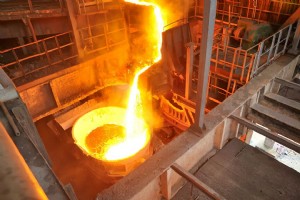
Foundries are facilities that produce metal castings and offer casting-related services Foundries are responsible for our current standard of living and industrial development, but most of us know next to nothing about them. So what is a foundry? Foundry Definition In simplified terms, a foundry

How to choose what your trench grates are made of Drainage is a ubiquitous part of construction. It’s so common that it often goes unnoticed unless something goes wrong and water backs up around it. Water management is important to all types of building and landscaping from culverts near fields to
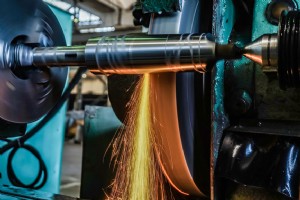
Precision shaping of metal products Making objects out of metal involves many manufacturing processes. One of these is machining, a necessary requirement of mass manufacture in the modern age. Machine tools cut, bore, grind, or otherwise shape metal by removing some of it with a cutting or grindin

An introduction to the production and properties of steel alloys According to the World Steel Association, 1869.9 million tons of steel were produced in 2019. This represents a 3.4% increase in output from 2018 and is more than double the output in 1999. The world has an ever growing need for stee

For color and extra corrosion resistance Stainless steel has a natural silver luster and resistance to corrosion. These qualities are what usually recommend the alloy compared to regular steel. For most customers it makes very little sense to cover the stainless in a powder coat or other finish. H
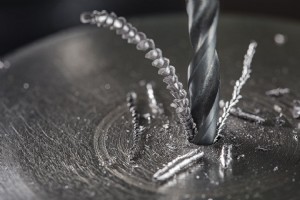
The metal composition and production of tool steels What is tool steel? Tool steels are exceptionally hard, tough, or wear-resistant alloys. Their properties come from both their chemistry and their production. As their name intimates, these steels are ready to work cutting, grinding, drilling, pu
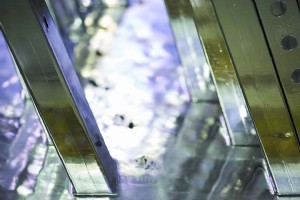
Why choose galvanized steel over stainless steel? We say we’re “galvanized” when something spurs us to action. So what does it mean when we use the term galvanized steel or metal? It turns out, it’s all about the shock. Ferrous metals contain iron and include 90% of the world’s metal manufac
Metal