Industrial manufacturing
Metal

Aluminum’s lightweight nature and excellent electrical conductivity make it a staple in numerous industries. Its malleability and ductility render it ideal for structural and fabrication tasks, offering robust resistance to stress and cracking while remaining highly weldable and formable. Corrosion
Corten Steel Basics While Corten and weathering steels are often used interchangeably, COR‑TEN® is a branded, trademarked alloy that combines corrosion resistance (COR) with high tensile strength (TEN). Because of its strong market presence, the term “Corten steel” has become synonymous with weathe
Stainless steel is celebrated for its elegant appearance and superior corrosion resistance, making it a top choice for countless industrial and consumer applications worldwide. With dozens of alloys available, selecting the best grade for your project can seem daunting—yet a clear understanding of y
Brass—a copper and zinc alloy—remains one of the world’s most widely used metals. Its bright gold hue, coupled with exceptional durability, corrosion resistance, and high electrical conductivity, makes it a favorite across many industries. Brass sheets and plates are far more malleable than bronze,
A2 steel is the industry’s most widely used tool‑steel bar, prized for its balanced blend of wear resistance, toughness, and affordability. As a medium‑carbon chromium alloy, it falls under the cold‑work tool‑steel family defined by the American Iron and Steel Institute (AISI) and the ASTM A682 stan
Thermal conductivity describes how swiftly a material transfers heat from hot to cool areas. High‑conductivity metals are indispensable in cookware, heat exchangers, and electronic cooling, while lower‑conductivity alloys serve as heat shields in high‑temperature systems such as aircraft engines. Be
Understanding the Four Core Types of Steel Steel’s exceptional strength and versatile properties make it the material of choice for construction, manufacturing, and countless industrial applications. While every steel alloy contains iron and carbon, the specific composition and alloying elements cre
Steel tubing is a versatile material used in everything from bicycle frames to aerospace components. Two of the most frequently cited steel grades are Chromoly and DOM. Most steel tubes are produced by cutting rolled steel into thin strips, then cold‑forming them into a tube shape and welding the en
Weldability determines how easily a metal can be joined and the quality of the resulting weld. Metals that are highly weldable require less skill, produce stronger joints, and reduce post‑processing costs, making them essential to any project’s success. After narrowing down the material options, the
Bronze is an alloy composed primarily of copper and tin, often blended with trace amounts of lead, silicon, and other elements. The combination of copper’s ductility with tin’s hardness results in a material that offers exceptional strength, corrosion resistance, and excellent thermal and electrical
Hot‑rolled and cold‑rolled steel share the same initial alloy composition, but their production paths diverge to yield distinct mechanical and aesthetic traits. Understanding these differences helps you select the material that best fits your design and budget. Manufacturing Overview Both grades beg
Strength can be measured in several ways—hardness, yield strength, compressive strength—but in engineering, tensile strength is often the most critical metric. It represents the force required to pull an object apart and determines how a material behaves under load. Chromium Chromium boasts the hig
To understand where metals originate, we first define “metal.” Metals are elemental substances that possess unique physical traits, such as excellent conductivity, malleability, and high density. Out of the 118 elements catalogued by the International Union of Pure and Applied Chemistry (IUPAC), the
When planning your next plumbing project, selecting the correct pipe material is essential for performance, longevity, and safety. While stainless steel and brass are available, the majority of installations use galvanized steel, copper, or plastic piping. Lead pipes and lead‑solder used on copper h
Understanding the exact melting temperatures of metals is essential for fabricators and welders. As a metal heats, it gradually softens and can begin to warp long before reaching its full melting point. For practical purposes, the melting point is defined as the temperature at which the metal become
Steel, an alloy of iron and a small amount of carbon, is engineered into a wide range of grades that differ by carbon content and the addition of other alloying elements such as chromium, manganese, or tungsten. These additives modify key properties—tensile strength, ductility, malleability, durabil
In construction and manufacturing, selecting the right metal thickness is crucial. The terms “sheet,” “plate,” and “foil” refer only to thickness differences. Metal plate – thickest category, ≥6 mm. Ideal for structural support, heavy machinery, and hygienic environments. Metal sheet – medium thick
Rust is the familiar orange‑brown flaky residue that forms when iron reacts with oxygen and water, producing iron oxides. In corrosive settings—whether from acids, salt spray, or industrial chemicals—metal surfaces can degrade rapidly if left untreated. Fortunately, several alloys are engineered to
Metal fatigue can cause sudden, catastrophic failures—such as a fan blade detaching from a jet engine—without any obvious warning. To prevent these incidents, engineers must first grasp how repeated stresses interact with a metal’s microstructure. How Stresses Lead to Fatigue When a metal componen
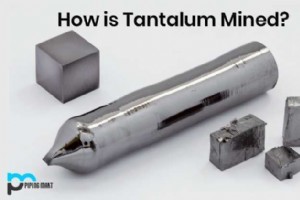
Tantalum is a refractory metal with a melting point of 3,017 °C and exceptional corrosion resistance, making it indispensable for high‑performance electronics, aerospace, and medical devices. How Tantalum Is Mined The metal is typically extracted from pegmatite veins, where it occurs in the mine
Metal