


Industrial manufacturing
Metal

Very good weldable cast material with very good casting properties. Castings are sensitive to impact loads.Application: fittingsPropertiesGeneralPropertyTemperatureValueConditionRelated StandardsDensity20.0 °C2.7 g/cm³T5WL 3.2364MechanicalPropertyTemperatureValueConditionRelated StandardsCommentElas
PropertiesGeneralPropertyValueConditionRelated StandardsDensity2.7 g/cm³H13EN 573-3, EN 1301MechanicalPropertyValueConditionRelated StandardsCommentElastic modulus70.0 GPaH13EN 573-3, EN 1301Plane-Strain Fracture Toughnes22.0 - 35.0 MPa·√mTypical for Wrought 6000 Series AluminiumPoisson's ratio
PropertiesGeneralPropertyValueConditionRelated StandardsDensity2.7 g/cm³FEN 573-3, EN 1715-3, EN 570MechanicalPropertyValueConditionRelated StandardsCommentElastic modulus70.0 GPaFEN 573-3, EN 1715-3, EN 570Hardness, Brinell40.0 [-]FEN 573-3, EN 570Plane-Strain Fracture Toughnes22.0 - 35.0 MPa·√mTyp
PropertiesGeneralPropertyValueConditionRelated StandardsDensity2.75 g/cm³T64EN 1706MechanicalPropertyValueConditionRelated StandardsCommentBending Fatigue Strength80.0 - 110.0 MPaT64EN 1706Elastic modulus72.0 GPaT64EN 1706Hardness, Brinell85.0 [-]T64EN 170690.0 [-]T64EN 1706Poisson's ratio0.33
PropertiesGeneralPropertyValueConditionRelated StandardsDensity2.75 g/cm³T6EN 1706MechanicalPropertyValueConditionRelated StandardsCommentBending Fatigue Strength80.0 - 110.0 MPaT6EN 1706Elastic modulus72.0 GPaT6EN 1706Hardness, Brinell95.0 [-]T6EN 1706Poisson's ratio0.33 [-]Typical for Cast 2x
The alloy AlFeSi is alloyed for increasing the strength increase with Fe and Si. The material belongs to the nature-hard aluminum materials. A strength increase can be achieved only by cold forming. The alloy AlFeSi is very well cold and warm formable and has a good thermal and relatively good elect
Cold-rolled narrow strip made of the mild steel C40E will be delivered in thicknesses up to 6 mm for quenching and tempering in following conditions: - soft annealed or soft annealed and little rerolled (+A or +LC), - cold rolled (+CR). The delivery condition annealed to globular carbides (+AC) can
Materion Performance Alloys’ nickel beryllium strip Alloy 360 (UNS number N03360) combines unique mechanical and physical properties. Properties of nickel beryllium Alloy 360 strip that a designer can use include ultimate tensile strength approaching 300,000 psi (2000 MPa), yield strength up to 245
Materion Performance Alloys’ nickel beryllium strip Alloy 360 (UNS number N03360) combines unique mechanical and physical properties. Properties of nickel beryllium Alloy 360 strip that a designer can use include ultimate tensile strength approaching 300,000 psi (2000 MPa), yield strength up to 245
The aviation material NiCr20Ti with the material number 2.4630 is contained in the Werkstoff-Leistungsblatt der Deutschen Luftfahrt editions WL 2.4630-1 : 1993-08, WL 2.4630-2 : 1993-08, WL 2.4630-3 : 1993-08, WL 2.4630-4 : 1993-08 and WL 2.4630-100 : 1993-08. DIN 17742 among other things contains t
The highly creep-resistant aviation material NiCr20TiAl with the material number 2.4631 is contained in the Werkstoff-Leistungsblatt der Deutschen Luftfahrt editions WL 2.4631-1 : 1993-08, WL 2.4631-2 : 1993-08 and WL 2.4631-100 : 1993-08. DIN 17742 among other things contains the material NiCr20TiA
Properties: - good resistance to water and steam - application in quenched and tempered state with fine grounded or polished surface Application: - for turbine blade, axis, bolts, valves, plunger, surgical instrumentsPropertiesGeneralPropertyTemperatureValueDensity20.0 °C7.7 - 7.71 g/cm³MechanicalPr
Material X17CrNi16-2 is comparable to X 20 CrNi 17-2 acc. to DIN 17440 : 1985-07. It is a heat treatable 17 per cent Cr-steel with high resistance to water, weak acids and bases as well as to stronger oxidizing acids (e.g. nitric acid). Application for high-stress machine components in pump and comp
Material X39Cr13 is comparable to X 38 Cr 13 acc. to DIN 17440 : 1985-07. The material is used for the production of cutting tools (knife blades, scissors, cutting surgical instruments), ball bearing balls, abrasion resistant components for controlling and pump parts, springs, piston rods, screws. A
The austenitic-ferritic material X2CrNiMoCuWN25-7-4 is used in solution annealed condition in the form of warm rolled sheet, rods, wire rod and profiles. It is resistant to intercrystalline corrosion also in sensitized condition.PropertiesGeneralPropertyTemperatureValueDensity20.0 °C7.8 g/cm³Mechani
Material X30Cr13 is comparable to X 30 Cr 13 acc. to DIN 17440 : 1985-07. The material is used for the production of cutting tools (knife blades, scissors, cutting surgical instruments), ball bearing balls, abrasion resistant components for controlling and pump parts, springs, piston rods, screws. A
The austenitic-ferritic material X2CrNiMoN25-7-4 is used in solution annealed condition in the form of cold rolled strip, warm rolled strip and warm rolled sheet as well as for rods, wire rod and profiles. It is resistant to intercrystalline corrosion also in sensitized condition.PropertiesGeneralPr
Material X50CrMoV15 is comparable to X 45 CrMoV 15 acc. to DIN 17440:1985-07. Hardenable steel of high strength and high abrasion resistance for all kinds of cutting tools, especially for partial hardened cutting tools, for ball bearing balls, wear resistant components, controlling and pump parts. R
The steel is used for rail vehicle engineering acc. to the selected standard DIN 5512-1.PropertiesGeneralPropertyTemperatureValueDensity20.0 °C7.85 g/cm³MechanicalPropertyTemperatureValueElastic modulus-100.0 °C217 GPa20.0 °C212 GPa100.0 °C207 GPa200.0 °C199 GPa300.0 °C192 GPa400.0 °C184 GPa500.0 °C
PropertiesGeneralPropertyTemperatureValueCommentDensity23.0 °C7.8 - 7.9 g/cm³Typical for Low Carbon SteelMechanicalPropertyTemperatureValueCommentElastic modulus23.0 °C200 - 215 GPaTypical for Low Carbon SteelElongation20.0 °C21 - 24 %Elongation, transverse20.0 °C19 - 22 %Poisson's ratio23.0 °C
Metal

Red vs. Yellow Brass: Composition, Uses, and Key Differences
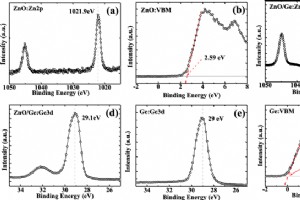
Lowering Metal–Ge Contact Resistance with ZnO Interlayers and Argon Plasma: Achieving Ohmic Al Contacts on n‑Ge

Control Any Device with Your TV Remote Using Arduino IR – Step-by-Step Tutorial

ASTM A312 vs ASTM A182: Key Differences & Choosing the Right Material for Your Application

