


Industrial manufacturing
Metal

CuZn15 (CW502L) is an unhardenable wrought alloy. High hardness and strength parameter are achievable by cold forming only. Thermal and electrical conductivity are lower than for CuZn10. Corrosion resistance is similar to pure copper. Processing properties: warm forming: moderately cold forming: go
Fully austenitic steel of high scaling temp. of 1150°C in air (highest application temp. in air), warranted scaling resistance for wide and fast thermal fluctuation, but no resistance in reducing athmosphere. Excellent creep behaviour and high deformation resistance. Application for furnace componen
CuSn8, mat. No. CW453K, is comparable to the DIN-make CuSn8, mat. No. 2.1030, acc. to DIN 17662 : 1983-12. Properties of the CuSn-alloy are predominantly determined by the tin-content. Tensile strength, yield point and hardness increase according to the rising cold forming grade, elongation after fr
CuSn6, mat. No. CW425K, is comparable to the DIN-make CuSn6, mat. No. 2.1020, acc. to DIN 17662 : 1983-12. Properties of the CuSn-alloy are predominantly determined by the tin-content. Tensile strength, yield point and hardness increase according to the rising cold forming grade, elongation after fr
Steel X6CrNiSiNCe19-10 shows a highest application temperature of up to 1050 °C in air.PropertiesGeneralPropertyTemperatureValueDensity20.0 °C7.8 g/cm³MechanicalPropertyTemperatureValueCommentElastic modulus23.0 °C195 GPaTypical for Austenitic Stainless SteelElongation20.0 °C40 %Elongation A8020.0 °
Steel X10NiCrSiNb35-22 shows a highest application temperature of up to 1100 °C in air.PropertiesGeneralPropertyTemperatureValueDensity20.0 °C8 g/cm³MechanicalPropertyTemperatureValueCommentElastic modulus23.0 °C200 GPaTypical for Duplex Stainless SteelElongation20.0 °C40 %Hardness, Brinell20.0 °C20
The material X10CrAlSi25, mat. No 1.4762 is a heat-resistant steel of max. scaling resistance at 1150 °C (highest application temp. in air). The steel is highly resistant to oxidizing, sulfureous athmosphere. Low resistance in nitrogenous, oxygen deficient gases. The temp. limit in permanent operati
The material X10CrAlSi18, mat. No 1.4742 is non-scaling up to max. 1000°C (highest application temp. in air). The steel is resistant to oxidizing, sulfureous gases and shows mean resistance in reducing and carburizing gases. Application for oven components, gadgetries and for single parts of mean me
The heat-resistant steel Stahl X10CrAlSi13, mat. No 1.4724 shows a max. application temperature of 850°C (highest application temp. in air). The material is resistant to oxidizing, sulfureous athmosphere and shows mean resistance to reducing and carburizing gases. Application for oven components, va
= 99,9% and a high residual copper-content. Tensile strength and Brinell hardness are increasable by cold forming. SF-Cu (Cu-DHP) is hydrogen resistant and shows the lowest thermal and electrical conductivity of the pure copper materials. Processing properties: hot forming: very good cold forming:
Steel C50E is suitable for larger parts (heavy forged parts) in vehicle manufacturing, engine and machine engineering (e.g. transmission parts, shafts, wheel hubs).As a bright steel product it is used in the form of bars, bright, straight, in different conditions (see DIN EN 10277).PropertiesGeneral
Steel C35E is suitable for slightly higher loaded components with higher dimensions (large forged parts) and more complex form as well as higher demands on uniformity of qualities and surface appearance in vehicle manufacturing and machine engineering (e.g. transmissin parts, crankshafts).As a brigh
Steel C60 is suitable for parts of high strength and increased wear resistance requirements in vehicle manufacturing, engine and machine engineering, surface hardenable (e.g. transmission parts, shafts, axles). Further application in tool making. Lowest working temperature -25 °C.PropertiesGeneralPr
Steel C35 is suitable for components of slightly higher strength requirements and still low ductility requirements in vehicle manufacturing, engine and machine engineering (e.g. gears, bolts, clutch parts). Lowest working temperature -25 °C, favorable creep behaviour up to 480 °C.PropertiesGeneralPr
Copper aluminum plates, sheet and circles for boilers, pressure vessels and hot water storage units.PropertiesGeneralPropertyTemperatureValueDensity20.0 °C7.6 g/cm³MechanicalPropertyTemperatureValueCommentElastic modulus-253.0 °C128 GPa-195.0 °C123 GPa-100.0 °C122 GPa20.0 °C120 GPa50.0 °C120 GPa100.
Material CuZn39Pb2, mat. No. CW612N, is an unhardenable wrought alloy. to the comparable make CuZn39Pb2, mat. No. 2.0380 acc. to DIN 17660 : 1983-12 applies: High hardness and strength parameter are achievable by cold forming only. Thermal and electrical conductivity are lower than for the unleaded
Cold-rolled narrow strip made of the mild steel C45E will be delivered in thicknesses up to 6 mm for quenching and tempering in following conditions: - soft annealed or soft annealed and little rerolled (+A or +LC), - cold rolled (+CR). The delivery condition annealed to globular carbides (+AC) can
Cold-rolled narrow strip made of the mild steel C35E will be delivered in thicknesses up to 6 mm for quenching and tempering in following conditions: - soft annealed or soft annealed and little rerolled (+A or +LC), - cold rolled (+CR). The delivery condition annealed to globular carbides (+AC) can
Cold-rolled narrow strip made of the mild steel C30E will be delivered in thicknesses up to 6 mm for quenching and tempering in following conditions: - soft annealed or soft annealed and little rerolled (+A or +LC), - cold rolled (+CR). The delivery condition annealed to globular carbides (+AC) can
CuZn36 (CW507L) is an unhardenable wrought alloy. High hardness and strength parameter are achievable by cold forming only. Thermal and electrical conductivity are lower than for CuZn33. Corrosion resistance is similar to pure copper. Processing properties: warm forming: good cold forming: very goo
Metal
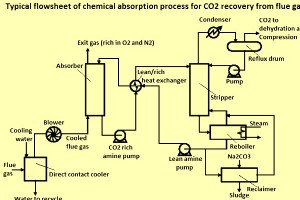
Carbon Capture & Storage Technologies: Safeguarding the Planet and Boosting Energy Efficiency
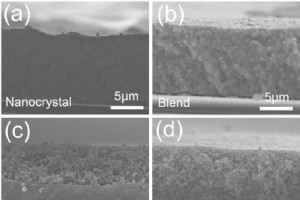
Hybrid TiO₂ Nanocomposite Coating Achieves 80% Diffuse Reflectance and Suppressed Specular Glare
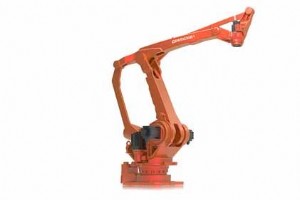
Robot Machine Tending: Definition, Function, and Industrial Benefits
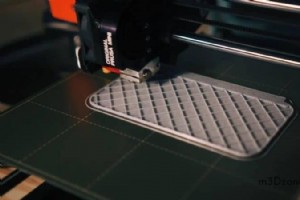
Avoid 3D Printing Issues: Prevent Top Layer Problems & Ensure High-Quality Prints

